
A common issue in today’s society is how to combat pollution. With daily scares of global warming being pumped through the media, it is not a wonder that its a hot topic of the agenda of many governments, and rightly so.
Pollution, more commonly known to economists as a ‘negative environmental externality’ directly affects other agents’ welfare in the economy. This effect is not paid for. Carbon taxes and emissions trading are ways of dealing with this problem. Both essentially try to limit polluting by putting a price on doing so.
A Carbon tax (also known as a Pigouvian tax) is used to combat a negative externality by placing a tax on the polluter to raise their private marginal cost of production.
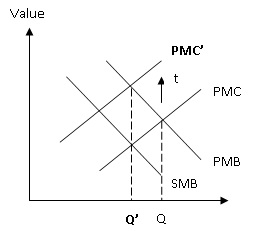
A simple analysis in the diagram above shows how they work. By placing a tax of ‘t’ on a producer (creating a negative externality), it raises their private marginal…
View original post 439 more words
 Utopia, you are standing in it!
Recent Comments