Celebrating humanity's flourishing through the spread of capitalism and the rule of law
29 Sep 2026 Leave a comment
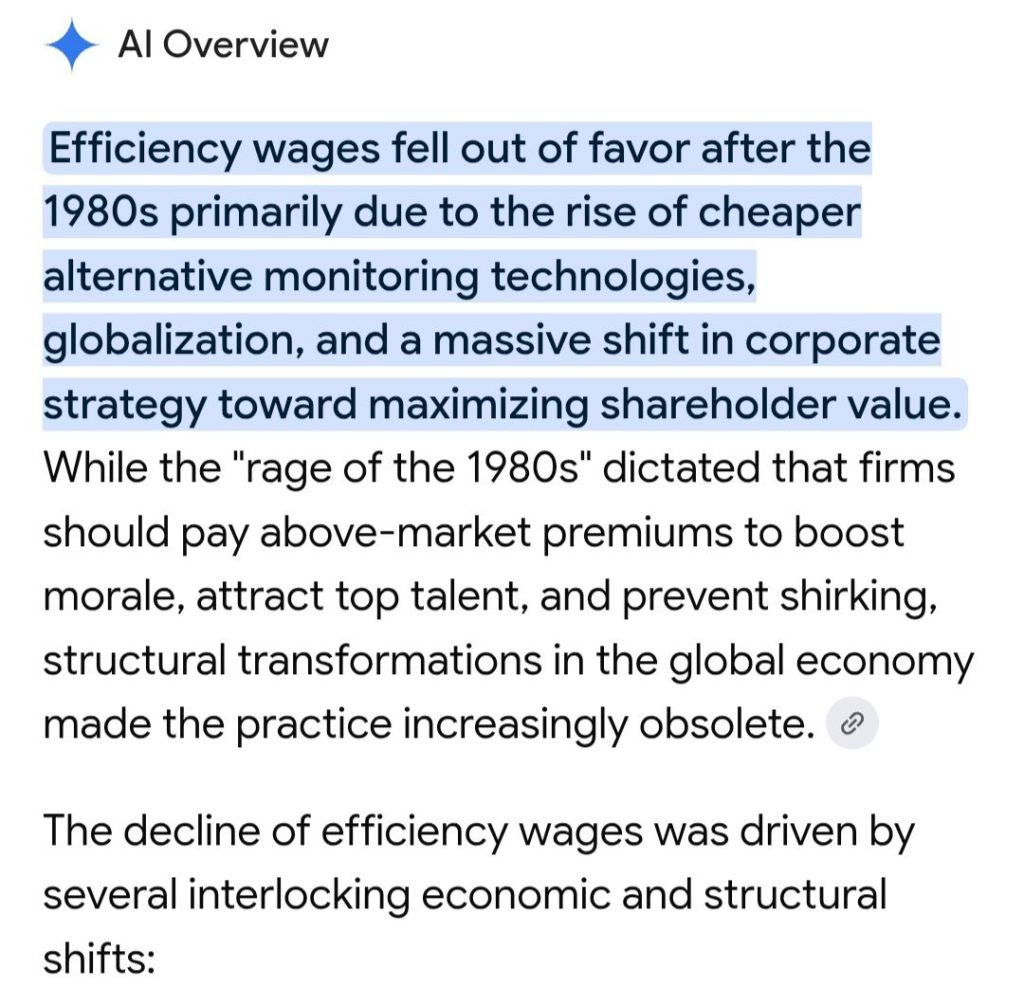
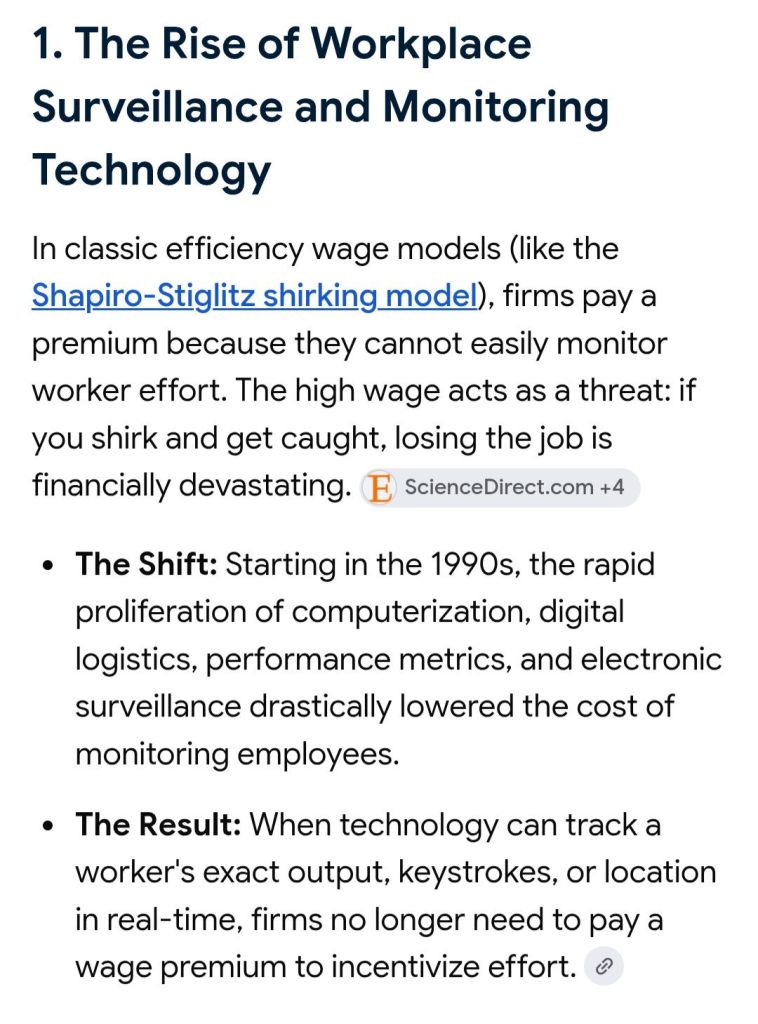
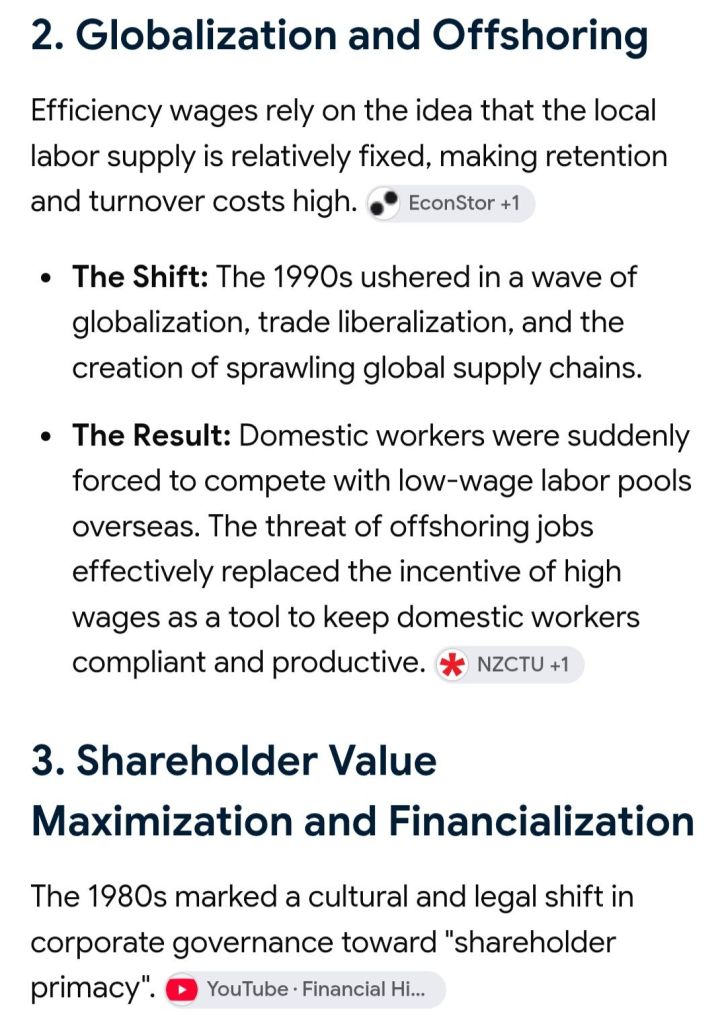
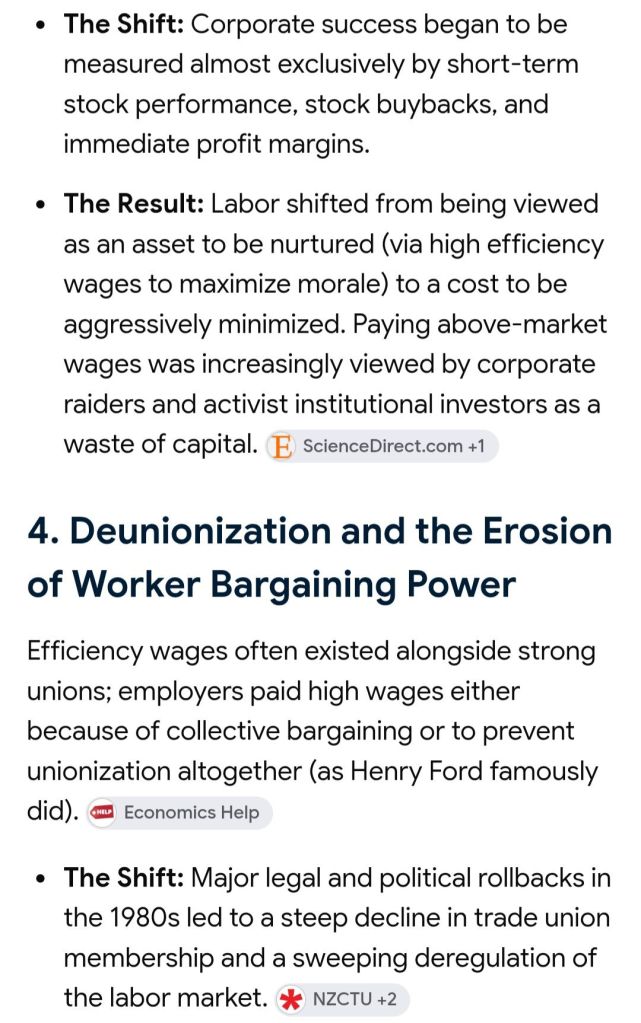
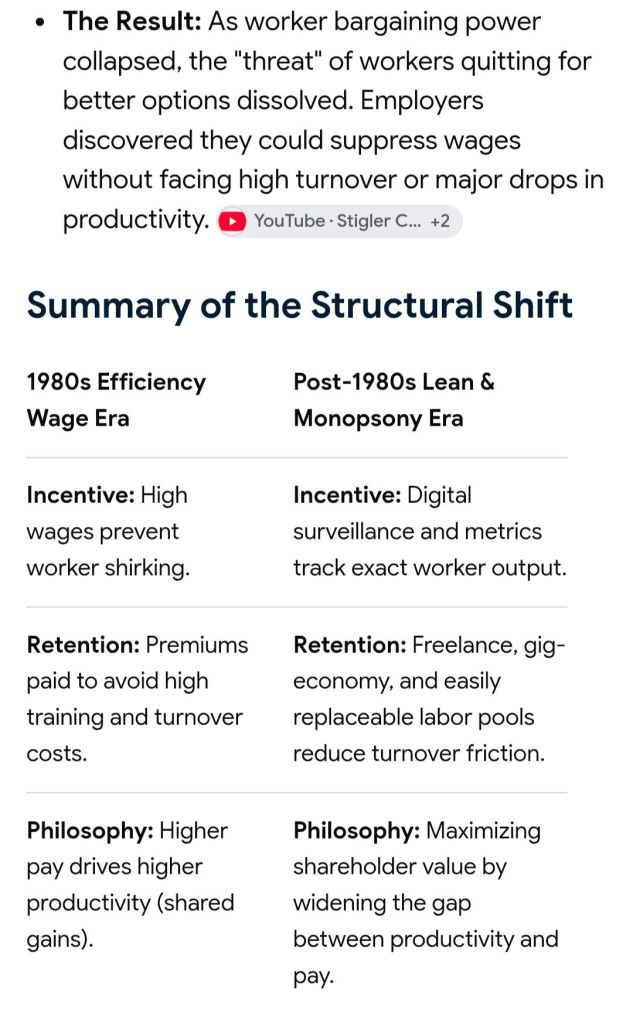
in applied price theory, economic history, history of economic thought, human capital, industrial organisation, international economics, labour economics, labour supply, occupational choice, poverty and inequality, survivor principle, unemployment Tags: efficiency wage
22 Sep 2026 Leave a comment
in Adam Smith, applied price theory, economic history, history of economic thought, income redistribution, industrial organisation, international economics, politics - USA, Public Choice, rentseeking Tags: free trade, tarrifs

He who dies with the most hoarded cash does not, in fact, win.
President Trump Stubbornly Clings to Archaic Mercantilist Economics
21 Sep 2026 Leave a comment
in applied price theory, history of economic thought, industrial organisation, international economics Tags: free trade, tariffs
There are many arguments put forward for why trade should be restricted. In my ECONS102 class last week, as part of our topic on international trade and globalisation we covered five of the most common, each of which has a little story that goes along with it:The jobs argument: Trade with other countries will lower…
The unfair competition argument and the push for a ‘Temu tax’
15 Sep 2026 Leave a comment
in international economics, law and economics, politics - USA, Public Choice Tags: child labour, free trade, tarrifs
The Cato Institute, Michael McConnell, and I filed an amicus brief in litigation challenging Trump’s massive Section 301 tariffs, which use “forced labor” as a pretext for sweeping protectionism.
Our New Amicus Brief in the Section 301 Tariff Case
11 Sep 2026 Leave a comment
in applied price theory, economics of information, economics of regulation, industrial organisation, international economic law, international economics, politics - Australia, politics - New Zealand, regulation
Bilateral, plurilateral, and multilateral are words that New Zealand’s civil service love. There is nothing that can’t be improved by doing it in concert with others. Sometimes there’s good reason for just doing stuff. New Zealand made the right decision when it unilaterally slashed all of its tariffs. It also progressed all the other trade agreements that helped…
The case for unilateral recognition
06 Sep 2026 Leave a comment
in David Friedman, international economics
Tweet… is from page 179 of David Friedman’s superb 1996 book, Hidden Order: A capital inflow occurs because foreign investors can get a higher real interest rate here than at home. If the reason the interest rate is high is, as sometimes asserted, that Americans have become increasingly impatient, unwilling to give up present utility…
Quotation of the Day…
05 Sep 2026 Leave a comment
in applied price theory, industrial organisation, international economics
Tweet… is from page 213 of Menzie Chinn’s and Douglas Irwin’s superb 2025 textbook, International Economics: The past few decades have been an era of globalization. Most countries have moved to reduce trade barriers and take advantage of growing world trade. How have they done so? One way a country can reduce its tariff and…
Quotation of the Day…
08 Aug 2026 Leave a comment
in Economics of international refugee law, international economic law, international economics, International law, labour economics, labour supply, law and economics, politics - USA Tags: economics of immigration
At the end of June the Spanish Supreme Court ruled that migrants arriving by sea could not be summarily deported. A few weeks later 60,000 people from Morocco crossed in the Spanish enclave of Ceuta, almost doubling their population in a few days. People smugglers exploit situations. This is why you need harsh preventive measures.…
The power of incentives with illegal migration
21 Jun 2026 Leave a comment
in applied price theory, Austrian economics, development economics, economic history, history of economic thought, international economics, law and economics, property rights
Clay tablets unearthed in Asia Minor reveal a sophisticated commercial order emerging spontaneously nearly four thousand years before economists explained how markets work. By Surse Pierpoint of The American Institute for Economic Research.”A clay tablet from Kanesh, in what is now central Turkey, contains the founding charter of a twelve-partner trading company. Twelve merchants pooled thirty-three…
Ancient Clay Tablets Show Markets Worked 4,000 Years Before Economists Explained Them
15 Jun 2026 Leave a comment
in applied price theory, development economics, growth miracles, history of economic thought, industrial organisation, international economics, politics - USA Tags: free trade
TweetHere’s a letter to the Wall Street Journal. Editor: Writing about U.S. trade deficits, Greg Ip declares that “by exporting so much, China effectively forces its trading partners to run deficits” (“The Global Economy Is Threatened Again by Trade Imbalances,” June 12). Wrong. U.S. trade deficits occur whenever foreigners sell more to us than they…
Greg Ip Is Mistaken Again About U.S. Trade Deficits
13 Jun 2026 Leave a comment
in applied price theory, development economics, econometerics, economic growth, economic history, economics of climate change, economics of regulation, energy economics, environmental economics, environmentalism, fiscal policy, global warming, human capital, income redistribution, industrial organisation, international economics, labour economics, labour supply, macroeconomics, Public Choice, public economics Tags: climate activists, climate alarmism, regressive left
The world’s poor deserve better than another utopia designed for them by the globalist intelligentsia. They deserve cheap energy, open markets, secure property rights, and the freedom to industrialise on terms they choose for themselves. That is what worked in East Asia. It is what will work in South Asia, Africa and Latin America. And…
Piketty’s Eco-Marxist Utopia: Why Degrowth and Global Redistribution Will Trap the Poor in Poverty
03 Jun 2026 Leave a comment
in constitutional political economy, economic history, economics of regulation, international economics, law and economics, politics - New Zealand, property rights Tags: constitutional law
Oral submissions to the Foreign Affairs, Defence and Trade Committee
Inclusion of UNDRIP in India FreeTrade Agreement
02 Jun 2026 Leave a comment
in applied price theory, Austrian economics, economic history, history of economic thought, industrial organisation, international economics, politics - USA, Public Choice, rentseeking, survivor principle Tags: free trade, tarrifs
TweetHere’s a letter to F&D Magazine, a publication of the IMF. Editor: U.S. Trade Representative Jamieson Greer wrote more than 2,100 words about trade yet managed to get correct approximately nothing (“Economics for the Real Economy,” June 2026). Just listing his errors would take nearly as many words, so I here address only one of…
Jamieson Greer’s Ignorance of Economics and History Is Alarming
28 May 2026 Leave a comment
in applied price theory, budget deficits, economic growth, fiscal policy, history of economic thought, international economics, macroeconomics, politics - USA
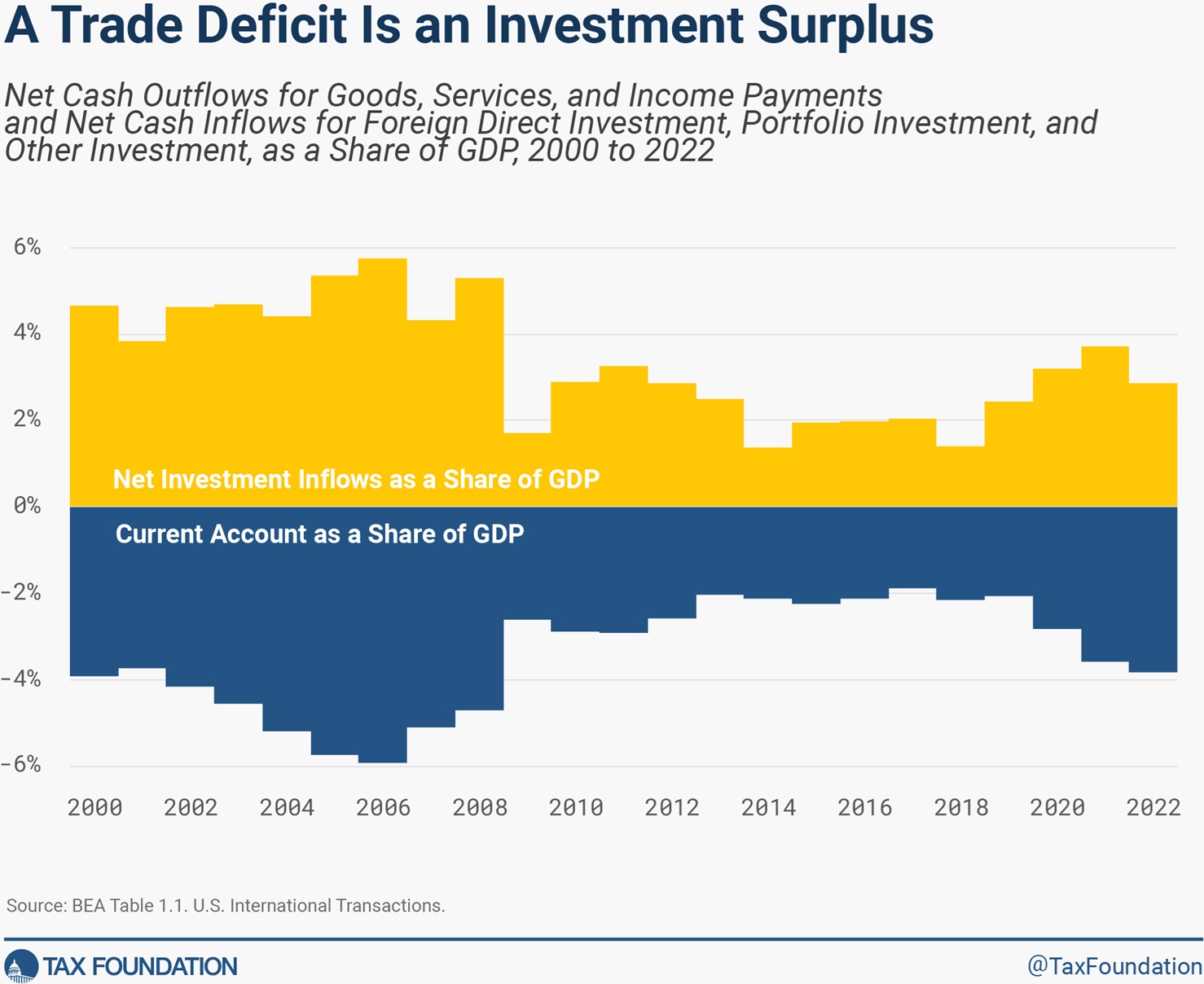
Looking at Part I and Part II, and considering the focus of today’s column, this series should actually be entitled “Trade Deficit Literacy.” That’s because the material I cite explains that a trade deficit is merely the flip side of an investment surplus. And it is good that the United States is a magnet for […]
Trade Deficit Illiteracy, Part III
26 May 2026 Leave a comment
in applied price theory, history of economic thought, international economics

Tweet… is from pages 171-172 of Menzie Chinn’s and Douglas Irwin’s excellent 2025 textbook, International Economics: The Lerner Equivalence Theorem – that an import tariff is equivalent to an export tax – carries a powerful message: a country that tries to protect import competing industries from foreign competition may be able to help those industries…
Quotation of the Day…
Celebrating humanity's flourishing through the spread of capitalism and the rule of law
Celebrating humanity's flourishing through the spread of capitalism and the rule of law
Celebrating humanity's flourishing through the spread of capitalism and the rule of law
Celebrating humanity's flourishing through the spread of capitalism and the rule of law
Celebrating humanity's flourishing through the spread of capitalism and the rule of law
Celebrating humanity's flourishing through the spread of capitalism and the rule of law
Celebrating humanity's flourishing through the spread of capitalism and the rule of law
A History of the Alt-Right
Econ Prof at George Mason University, Economic Historian, Québécois
Celebrating humanity's flourishing through the spread of capitalism and the rule of law
Scholarly commentary on law, economics, and more
Beatrice Cherrier's blog
Celebrating humanity's flourishing through the spread of capitalism and the rule of law
Celebrating humanity's flourishing through the spread of capitalism and the rule of law
Celebrating humanity's flourishing through the spread of capitalism and the rule of law
Why Evolution is True is a blog written by Jerry Coyne, centered on evolution and biology but also dealing with diverse topics like politics, culture, and cats.
Celebrating humanity's flourishing through the spread of capitalism and the rule of law
A rural perspective with a blue tint by Ele Ludemann
DPF's Kiwiblog - Fomenting Happy Mischief since 2003
Celebrating humanity's flourishing through the spread of capitalism and the rule of law
The world's most viewed site on global warming and climate change
Tim Harding's writings on rationality, informal logic and skepticism
A window into Doc Freiberger's library
Let's examine hard decisions!
Commentary on monetary policy in the spirit of R. G. Hawtrey
Thoughts on public policy and the media
Celebrating humanity's flourishing through the spread of capitalism and the rule of law
Politics and the economy
A blog (primarily) on Canadian and Commonwealth political history and institutions
Reading between the lines, and underneath the hype.
Economics, and such stuff as dreams are made on
"The British constitution has always been puzzling, and always will be." --Queen Elizabeth II
Celebrating humanity's flourishing through the spread of capitalism and the rule of law
Celebrating humanity's flourishing through the spread of capitalism and the rule of law
WORLD WAR II, MUSIC, HISTORY, HOLOCAUST
Undisciplined scholar, recovering academic
Celebrating humanity's flourishing through the spread of capitalism and the rule of law
Res ipsa loquitur - The thing itself speaks
In Hume’s spirit, I will attempt to serve as an ambassador from my world of economics, and help in “finding topics of conversation fit for the entertainment of rational creatures.”
Researching the House of Commons, 1832-1868
Articles and research from the History of Parliament Trust
Reflections on books and art
Posts on the History of Law, Crime, and Justice
Celebrating humanity's flourishing through the spread of capitalism and the rule of law
Exploring the Monarchs of Europe
Cutting edge science you can dice with


Recent Comments