By Vijay Jayaraj India’s External Affairs Minister, Dr. Subrahmanyam Jaishankar, used the U.N. General Assembly gathering to say something that climate scaremongers like Al Gore and John Kerry have spent… The post India Rejects UN Climate Politics in Favor of Industrialization appeared first on Watts Up With That?.
India Rejects UN Climate Politics in Favor of Industrialization
India Rejects UN Climate Politics in Favor of Industrialization
07 Oct 2026 1 Comment
in development economics, economics of climate change, energy economics, environmental economics, environmentalism, global warming, growth disasters, growth miracles, International law, resource economics Tags: India
The Sting in the India Trade Deal
16 May 2026 Leave a comment
in comparative institutional analysis, constitutional political economy, development economics, economic history, economics of regulation, international economic law, international economics, International law, law and economics, politics - New Zealand, property rights Tags: India, preferential trading agreements
A Constitutional Trojan Horse: advancing change through political stealth Trade Minister Hon Todd McClay has announced that the New Zealand-India free trade agreement has been signed and that the formal parliamentary treaty scrutiny process is now under way. The full text of the agreement is now public and has been referred to Parliament’s Foreign Affairs, Defence and Trade Committee […]
The Sting in the India Trade Deal
Quotation of the Day…
25 Apr 2026 Leave a comment
in applied price theory, history of economic thought, industrial organisation, international economics, labour economics, labour supply Tags: India

Tweet… is from page 150 of Columbia University economics professor Arvind Panagariya’s brilliant 2019 book, Free Trade and Prosperity: In India, Bihar is the poorest state and Kerala one of the richest. Going by the Gini coefficient, Bihar is among the states with the least inequality and Kerala among those with the highest inequality. If…
Quotation of the Day…
The world’s three best cuisines
03 Jan 2026 1 Comment
in economics of media and culture Tags: China, India

In light of the absence of news as well as my recurring insomnia, which has made me unable to brain, I’m posting a list of what I consider the three best cuisines in the world. What I mean by this is that if I were constrained to eat only one nation’s cuisine for the rest…
The world’s three best cuisines
Three that Made a Revolution
25 Dec 2025 Leave a comment
in development economics, growth disasters, growth miracles Tags: India
Another excellent post from Samir Varma, this time on the 1991 reforms in India that launched India’s second freedom movement: Three men you’ve probably never heard of—P.V. Narasimha Rao, Manmohan Singh, Montek Singh Ahluwalia—may be the three most important people of the late 20th century. Bold claim. Audacious, even. Let me defend it. Here are…
Three that Made a Revolution
Inside India’s endless trials
03 Sep 2025 1 Comment
in comparative institutional analysis, development economics, economic history, economics of crime, growth disasters, growth miracles, law and economics, property rights Tags: India
The FT’s Krishn Kaushik covers the courts in India: …in one recent example a Delhi court concluded a property dispute after 66 years. Both the original litigants were dead. Still, the lawyer for one of the warring parties cautioned that the conclusion was in fact not the end, as the ruling would be appealed. Three […]
Inside India’s endless trials
The Indian Wedding
08 Aug 2025 1 Comment
in economics of love and marriage, law and economics Tags: India, marriage and divorce
Another great piece by Samir Varma on Indian marriages—where deep traditions endure, even as subtle revolutions unfold around the edges.. It starts with this kicker: When I told my mother I was marrying my girlfriend, an Italian Jew, she called all my friends in the US asking them to break us up. When that failed, […]
The Indian Wedding
A Great Enrichment
06 Aug 2025 Leave a comment
in development economics, economic history, growth disasters, growth miracles, transport economics, urban economics Tags: India
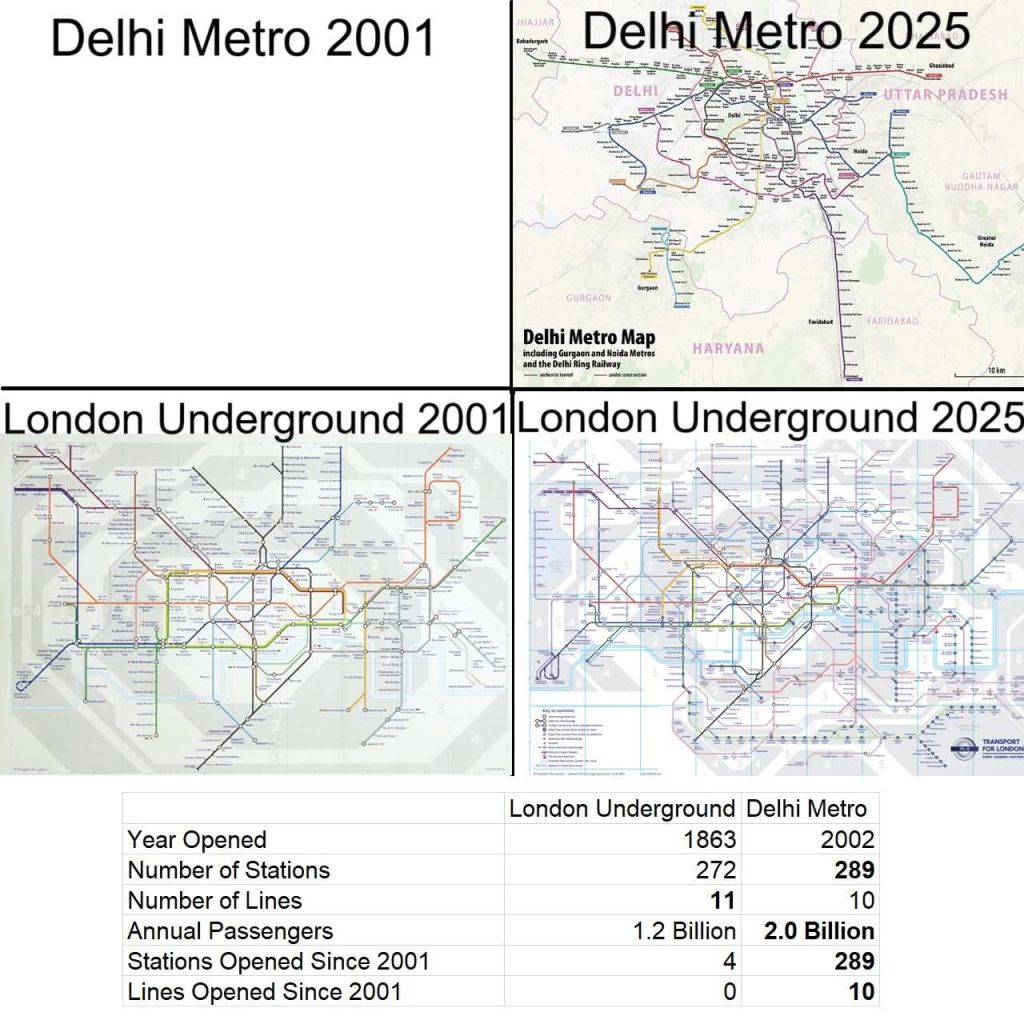
The Tragedy of India’s Government-Job Prep Towns
04 Aug 2025 Leave a comment
in applied price theory, development economics, economics of bureaucracy, economics of regulation, growth disasters, growth miracles, labour economics, labour supply, occupational choice, Public Choice Tags: India
In Massive Rent-Seeking in India’s Government Job Examination System I argued that the high value of government jobs has distorted India’s entire labor market and educational system. India’s most educated young people—precisely those it needs in the workforce—are devoting years of their life cramming for government exams instead of working productively. These exams cultivate no […]
The Tragedy of India’s Government-Job Prep Towns
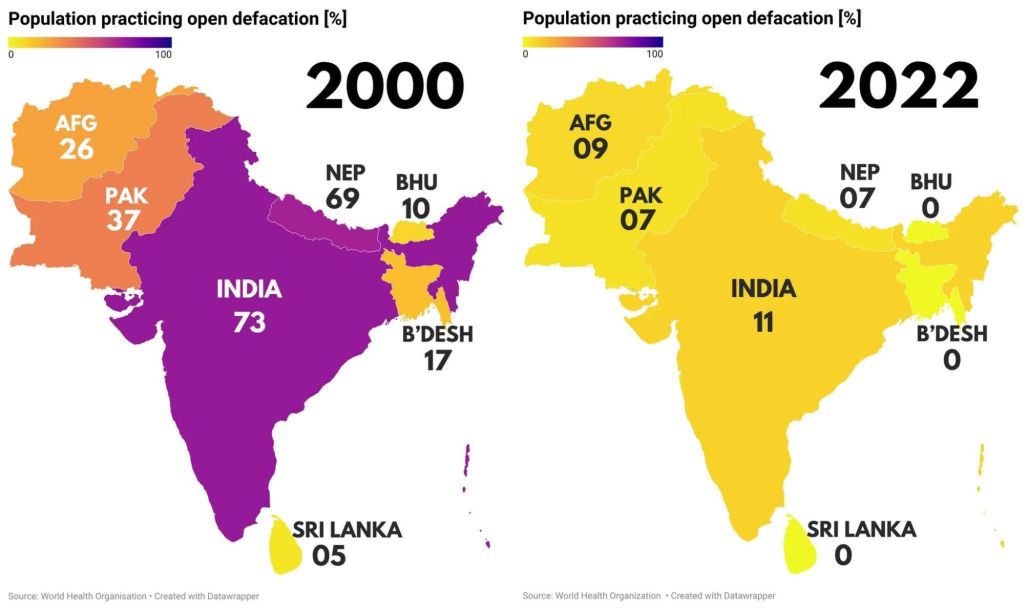
#TheGreatEscape
11 Jul 2025 Leave a comment
in development economics, economic history, growth disasters, growth miracles, health economics Tags: India, Pakistan
Massive Rent-Seeking in India’s Government Job Examination System
03 Jul 2025 1 Comment
in applied price theory, development economics, economics of bureaucracy, economics of education, growth disasters, growth miracles, labour economics, occupational choice, personnel economics, Public Choice Tags: India
In India, government jobs pay far more than equivalent jobs in the private sector–so much so that the entire labor market and educational system have become grossly distorted by rent seeking to obtain these jobs. Teachers in the public sector, for example, are paid at least five times more than in the private sector. It’s […]
Massive Rent-Seeking in India’s Government Job Examination System
No Exit, No Entry
05 Jun 2025 Leave a comment
in applied price theory, development economics, economics of bureaucracy, economics of regulation, growth disasters, growth miracles, industrial organisation, labour economics, labour supply, law and economics, property rights, Public Choice, survivor principle Tags: employment law, India
In our textbook, Modern Principles, Tyler and I contrast basic U.S. labor law, at-will employment—where employers may terminate workers for any reason not explicitly illegal (e.g., racial or sexual discrimination), without notice or severance—with Portugal’s “just cause” regime, which requires employers to prove a valid reason, give advance notice, pay severance, and endure extensive regulatory […]
No Exit, No Entry
India Rejects Carbon Tax, Backs Fossil Fuels and Trade in Defiance of Green Policies
03 Jun 2025 1 Comment
in development economics, economics of climate change, energy economics, environmental economics, environmentalism, global warming, growth disasters, growth miracles Tags: carbon tax, India
India won’t bow to carbon taxes and it won’t join an unscientific climate war that sacrifices its future. The U.K. and EU would do well to listen, lest they find themselves on the losing end of an Asian-dominated trade battle over manufactured goods.
India Rejects Carbon Tax, Backs Fossil Fuels and Trade in Defiance of Green Policies
What does India want – and what is New Zealand willing to give?
25 Mar 2025 Leave a comment
in applied price theory, comparative institutional analysis, development economics, economic history, economics of education, growth disasters, growth miracles, human capital, income redistribution, industrial organisation, international economic law, international economics, labour economics, labour supply, occupational choice, politics - New Zealand, poverty and inequality, Public Choice, rentseeking, survivor principle Tags: India, preferential trade agreements
Chris Trotter writes – What does India want from New Zealand? Not our dairy products, that’s for sure, it’s got plenty of those. Indeed 45 percent of the Indian population are small-scale farmers, most of them running a few head of cattle – not to eat, you understand – but to milk. If it once […]
What does India want – and what is New Zealand willing to give?
How to Visit India for Normies
25 Jan 2025 Leave a comment
in applied price theory, comparative institutional analysis, development economics, economic history, growth disasters, growth miracles, international economics Tags: India

In the comments to my post, India has Too Few Tourists, many people worried about the food, the touts and the poverty. Many of these comments are mistaken or apply only if you are traveling to India on the cheap as an adolescent backpacker (nothing wrong with that but I suspect the MR audience is […]
How to Visit India for Normies


Recent Comments