Anthropic’s economic team, including Anton Korinek and Chad Jones, have a valuable new paper, Economic Scenarios for Transformative AI. They make their assumptions explicit and provide a scenario explorer that lets you change them. How capable will AI become? How quickly will firms adopt it? Will it augment workers or automate their tasks? You can…
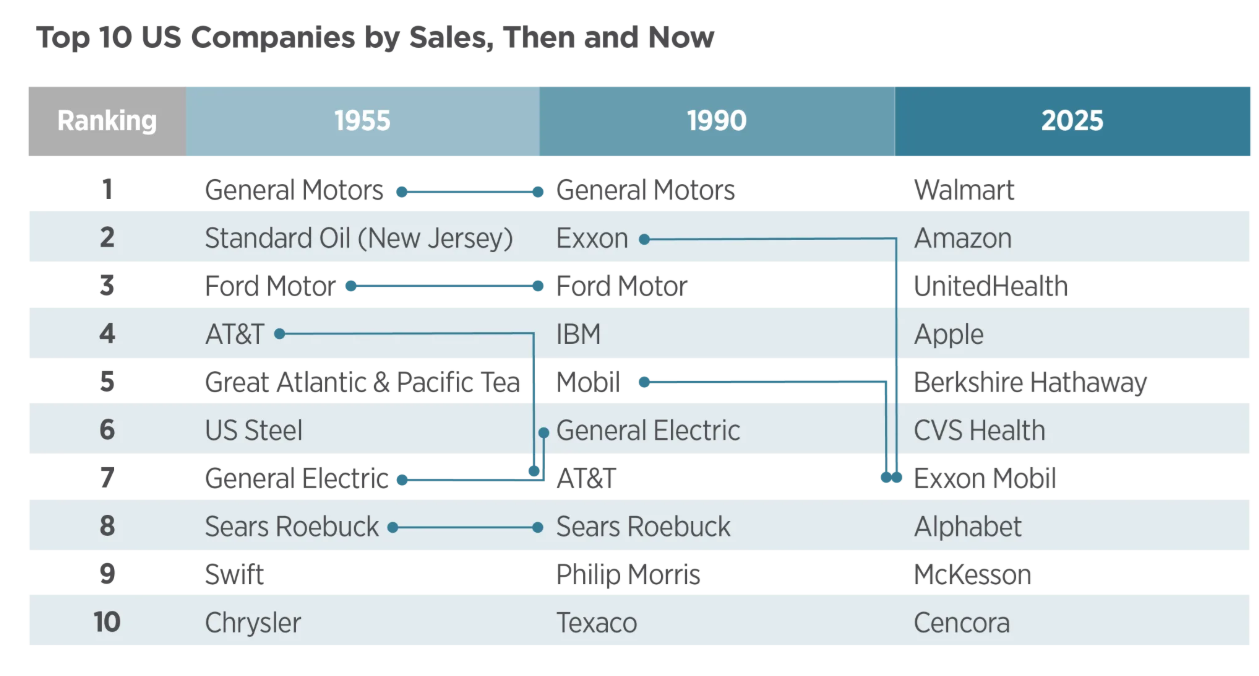
Big firms are playing a larger role in the US economy–but also in the economies of high-income countries around the world. Yueran Ma, Mengdi Zhang, and Kaspar Zimmermann compile the evidence in “Business Concentration Around the World: 1900-2020” (University of Chicago Becker-Friedman Institute for Economics, February 27, 2026, the link offers a readable overview and a followup link…
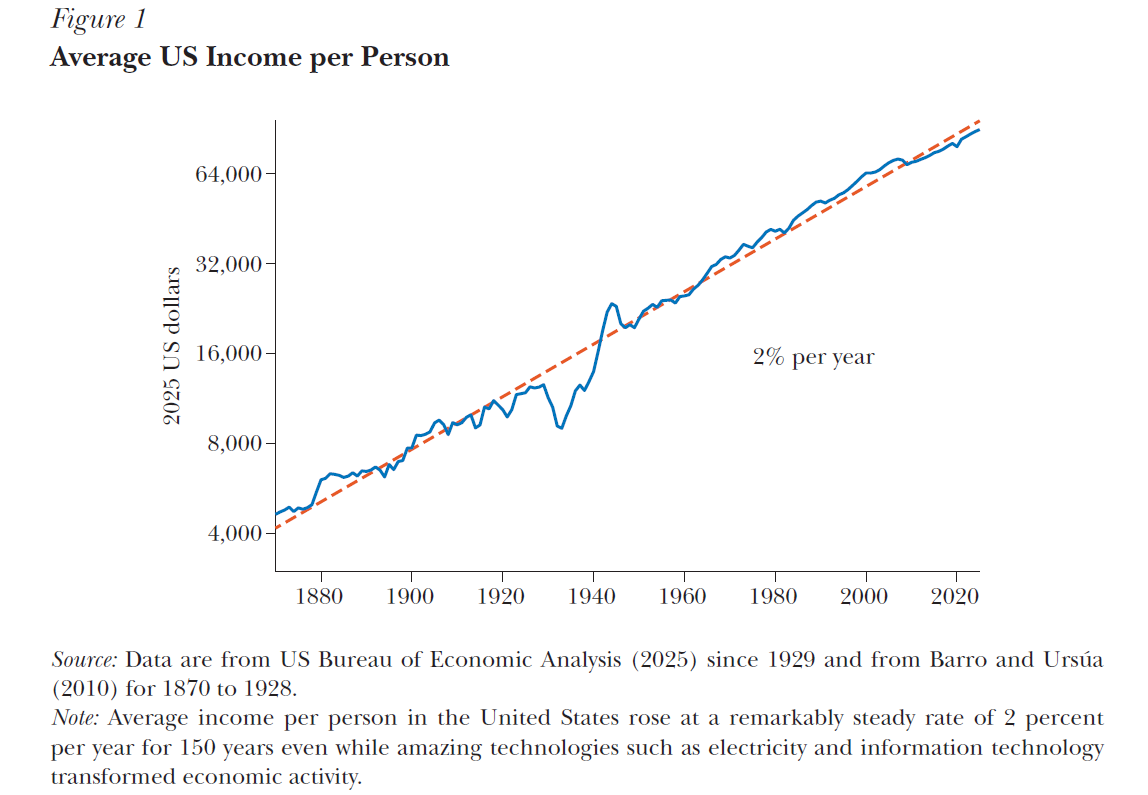
It is of course impossible to predict the effects of new AI technologies on total economic growth in a precise way, but there are strong reasons to believe that the effect will be modest for a decade or two, anyway. Charles Jones Jones explores some of the reasons in “AI and Our Economic Future,” in…
By Anton Korinek, Charles I. Jones, Szymon Sacher, Tess Cotter, and Peter McCrory, a strong line-up from Anthropic. They are sober, reasoned, scientific, and (for the most part) dynamically consistent. Here is the paper, here is the abstract: This paper presents a framework for assessing the economic consequences of AI between 2026 and 2030. In…
Is new technology that replaces a worker a good thing? We have a tendency, it seems to me, to believe that most previous inventions turned out to have overall net social benefits, but to be worried that all future inventions will instead have overall net social costs. Philipp Ager and Davide Coluccia tackle the question of…
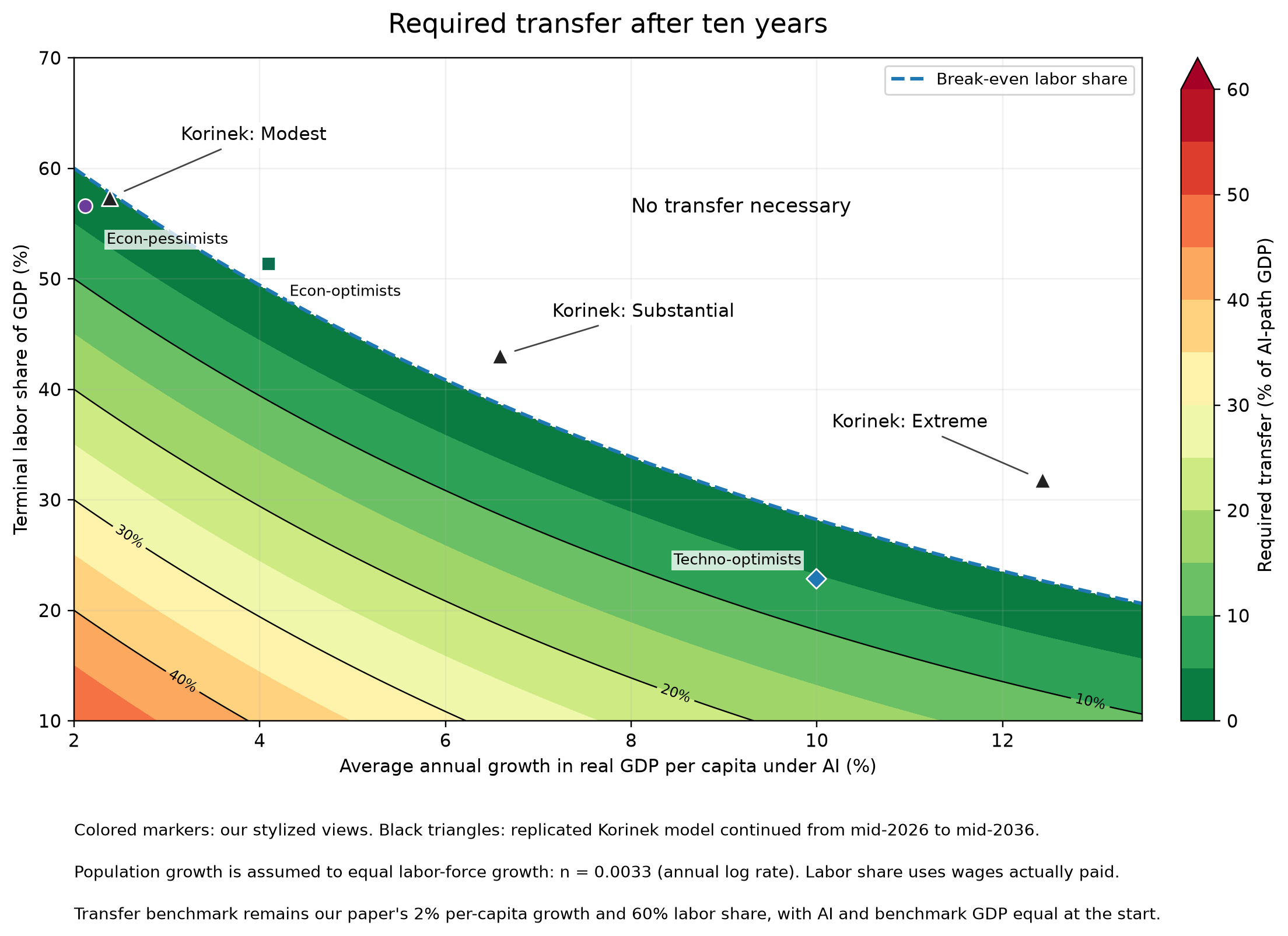
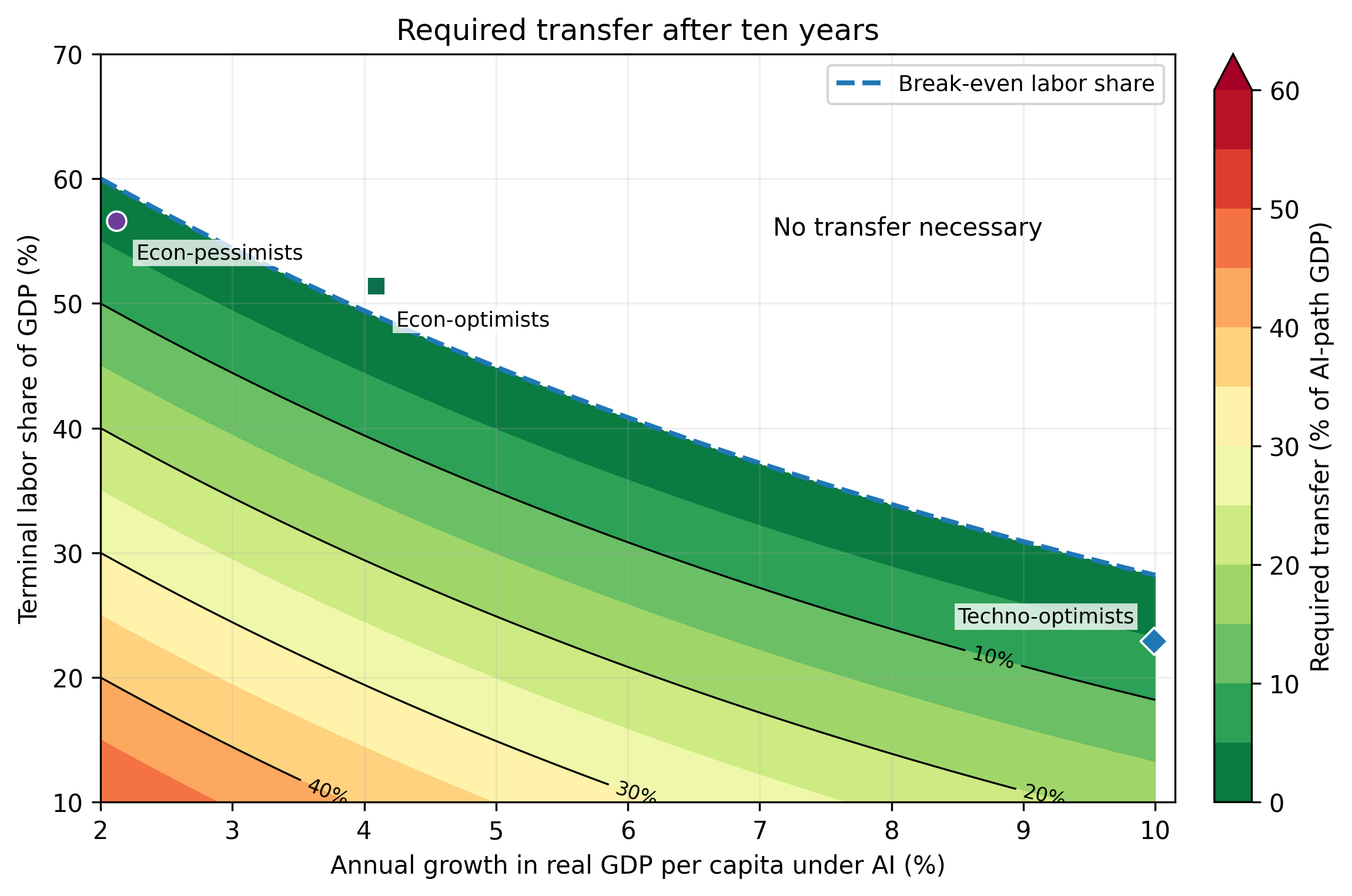
How much redistribution will AI require? A common scenario is that AI raises output enormously, but labor’s share of income collapses. GDP per capita goes up but workers get poorer, and making workers whole requires massive redistribution. In my latest paper, I run the numbers and conclude that this is probably incorrect. The idea is…
Even though Germany privatized Deutsche Telekom in 1996, the federal government retained a substantial ownership stake. This partial state ownership status, which remains to this day, presents a textbook example of how this type of arrangement distorts incentives and delays the competitive dynamism necessary for technological progress. Through the late 1990s and into the 2000s, Deutsche Telekom…
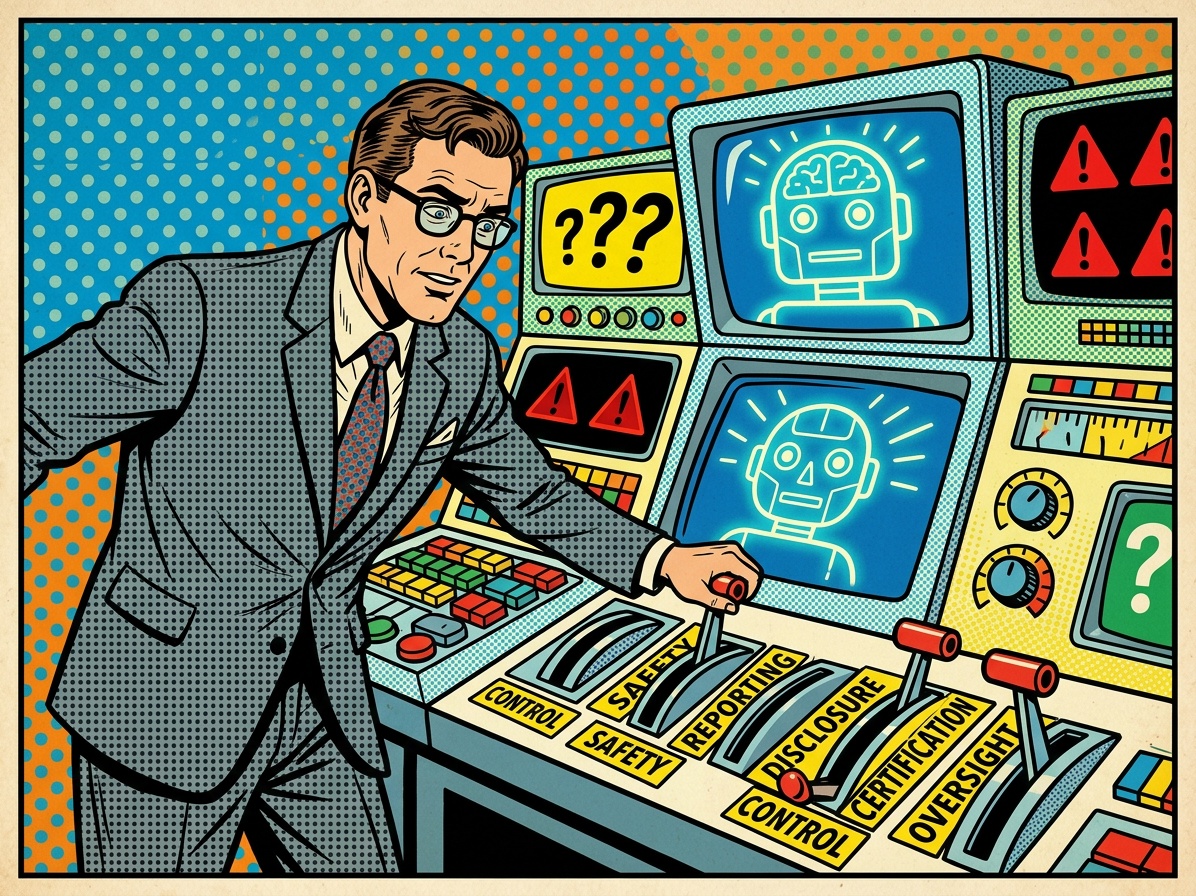
Everyone in Washington seems to agree that artificial intelligence must be governed. The only real dispute is who gets the steering wheel. Congress? Federal agencies? State legislatures? Some newly minted task force with a long acronym and a taste for reporting requirements? That debate is already too narrow. President Donald Trump’s recent executive order on…
We do not know whether technological unemployment swept across England in the wake of the British Industrial Revolution. In this paper, I propose an approach to quantify jobs lost to, and created by, creative destruction in the 19th century. Using over 170 million individual records from the full-count British census (1851–1911), I generate sub-industry “task”…
Everyone knows the Luddites smashed looms. What is less appreciated is that the loom was the first serious programmable device — the direct ancestor of the computer. Thus, the Luddites weren’t just the first to resist automation. They were the first to attack AI. The Jacquard loom, introduced in France circa 1805, used a chain…
In our textbook, Modern Principles, Tyler and I emphasize that Congress and the President are subject to a higher law, the law of supply and demand. In an excellent column, Jason Furman gives a clear example of how difficult it is to fight the law of inelastic demand: …Today a given number of autoworkers can…
Big mergers make headlines. They don’t always make antitrust problems. In a previous commentary, I explored the antitrust implications of a potential acquisition of Warner Bros. Discovery (WBD). That uncertainty is now resolved. On Feb. 27, Paramount Skydance Corp. agreed to acquire WBD for roughly $110 billion in enterprise value—$31 per share, all cash. The…
Computers nowadays come in all shapes and sizes from a smartphone to the super computer Mira. An essential requirement nowadays is that computers are portable. It may be hard to believe but the history of portable computers goes back 45 years, even when I write it ’45 years’ I can’t believe it . I was […]
Tweet… is from page 103 of Historical Impromptus, a 2020 collection of some of Deirdre McCloskey’s work on economic history; this quotation, specifically, is from McCloskey’s 2000 review, in the Minnesota Journal of Global Trade, of Thomas Friedman’s The Lexus and the Olive Tree and John Gray’s False Dawn [original emphasis]: Globalization encourages the capitalist…
Why Evolution is True is a blog written by Jerry Coyne, centered on evolution and biology but also dealing with diverse topics like politics, culture, and cats.
In Hume’s spirit, I will attempt to serve as an ambassador from my world of economics, and help in “finding topics of conversation fit for the entertainment of rational creatures.”





Recent Comments