TweetMegan McArdle writes insightfully about California’s pending proposal to soak the rich. Three slices: These days, legislators generally don’t enact tax hikes so confiscatory that they trigger an immediate, obvious response. They adjust income tax rates by a few percentage points, fiddle with the deductions or impose new levies on some tiny portion of the…
Some Links
Some Links
26 Oct 2026 Leave a comment
in applied price theory, entrepreneurship, fiscal policy, human capital, income redistribution, labour economics, labour supply, macroeconomics, politics - USA, poverty and inequality, Public Choice Tags: California, taxation and entrepreneurship, taxation and investment
The Economic Consequences of Different Ways of Propping Up Social Security
24 Oct 2026 Leave a comment
in fiscal policy, income redistribution, macroeconomics, politics - USA, Public Choice, public economics Tags: social insurance
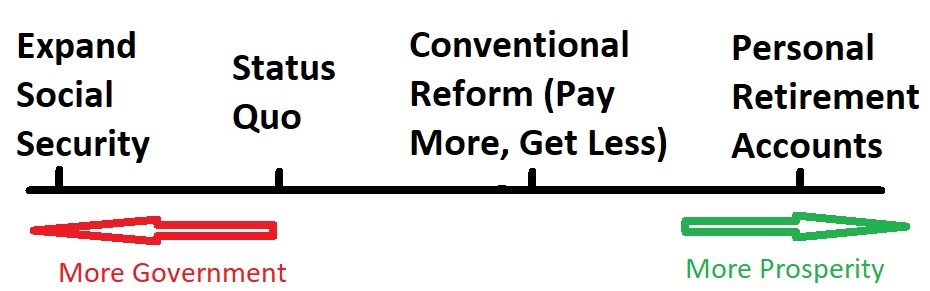
My Ph.D. dissertation last century was about Australia’s system of personal retirement accounts, so I have a long-time interest in how to fix America’s Social Security system. Which leads me to a good news-bad news situation. The good news is that politicians will probably be forced to deal with Social Security at some point in […]
The Economic Consequences of Different Ways of Propping Up Social Security
What Happens to Representative Ilhan Omar’s Congressional Seat if the United States Files Suit to Denaturalize Her?
23 Oct 2026 1 Comment
in politics - USA Tags: constitutional law
[This post was co-authored with Professor Seth Barrett Tillman.] There have been many news reports suggesting that the United States… The post What Happens to Representative Ilhan Omar’s Congressional Seat if the United States Files Suit to Denaturalize Her? appeared first on Reason Magazine.
What Happens to Representative Ilhan Omar’s Congressional Seat if the United States Files Suit to Denaturalize Her?
The Law Society has a problem
22 Oct 2026 Leave a comment
in law and economics, liberalism, Marxist economics, politics - New Zealand Tags: free speech, political correctness, regressive left
I blogged in March about an outrageous decision by a Law Society Standards Committee decision which fined Stephen Franks and Franks Ogilvy for the sin of “being lawyers”. I wrote: The Legal Complaints Review Officer overturned the decision, noting: The very purpose of a lawyer or firm sending a letter on behalf of a client…
The Law Society has a problem
Guest Post: Woke 1 was crazy. Are you ready for Woke 2?
22 Oct 2026 Leave a comment
in discrimination, economics of crime, gender, law and economics, liberalism, Marxist economics, politics - New Zealand, politics - USA Tags: free speech, political correctness, regressive left
A guest post by Alex Penk: “Woke 1” was crazy. Don’t take my word for it; that’s what Alexandria Ocasio-Cortez said. The globally influential US politician made the comment when asked to explain some of her past positions, like defunding the police, and the internet went, well, crazy. But the most interesting thing is what the…
Guest Post: Woke 1 was crazy. Are you ready for Woke 2?
Measure to reform the California recall process (Yes on 5)
22 Oct 2026 Leave a comment
in constitutional political economy, politics - USA, Public Choice Tags: California, constitutional law

In this November’s election, Californians are presented with a proposed state constitutional amendment to reform the process of recalling and replacing elected officeholders. It was placed on the ballot by the state legislature as Proposition 5. I am in favor, and I urge California voters to support it. Below are some excerpts from the voter […]
Measure to reform the California recall process (Yes on 5)
Not A Right to Silence Issue
20 Oct 2026 Leave a comment
in economics of crime, law and economics, politics - New Zealand Tags: 2026 general election, crime and punishment, law and order
How Politicians Misunderstand Highly Nuanced Legal Concepts David Harvey writes – The National Party announced a policy that proposes to remove the right to silence that can be invoked by adults who may (or may not) have information surrounding the cause of death of a child under 12. The term “right to silence” has a […]
Not A Right to Silence Issue
“Why Was the Fed Created?” with @GeorgeSelgin
20 Oct 2026 Leave a comment
in business cycles, economic history, financial economics, great depression, history of economic thought, macroeconomics, monetary economics, politics - USA, Public Choice, rentseeking Tags: monetary policy
The Federal Lands: An Economic Property Rights Perspective
19 Oct 2026 1 Comment
in economics of bureaucracy, economics of regulation, law and economics, politics - USA, property rights, Public Choice, public economics Tags: tragedy of the commons
The US federal government owns and administers 472,892,659 acres or 21% of the land area of the lower 48 states, the country’s largest landowner. The resource is held and managed as a collective resource, the Federal Lands, through political and bureaucratic interpretation of the Multiple Use principle and generally, the biological aim of maximum sustained-yield.…
The Federal Lands: An Economic Property Rights Perspective
Some Progressives Tried To Abolish the Tipped Minimum Wage. Now They’re Backtracking.
19 Oct 2026 Leave a comment
in applied price theory, economics of regulation, labour economics, minimum wage, politics - USA, poverty and inequality Tags: offsetting behavior, regressive left, unintended consequences
Policymakers across the country are confronting the unfortunate—and predictable—economic results of prohibiting restaurants from paying servers a lower base wage supplemented by tips.
Some Progressives Tried To Abolish the Tipped Minimum Wage. Now They’re Backtracking.
BRINK: INSIDE THE RACE TO FREE THE OCTOBER 7TH HOSTAGES by Brett McGurk
18 Oct 2026 Leave a comment
in defence economics, politics - USA, war and peace Tags: Gaza Strip, Israel, Middle-East politics, regressive left, war against terror

(Children’s toys and personal items lie on the bloodstained floor of a child’s bedroom, following a deadly infiltration by Hamas gunmen, in Kibbutz Beeri in southern Israel, October 17) The role of the Gaza War which began with the Hamas massacres of October 7, 2023, plays an important role in our current political climate. The […]
BRINK: INSIDE THE RACE TO FREE THE OCTOBER 7TH HOSTAGES by Brett McGurk
Steve Vladeck’s “Hard Questions About Court Expansion”
17 Oct 2026 Leave a comment
in politics - USA Tags: constitutional law, regressive left
A leading critic of the conservative majority on the Supreme Court oultines reasons why court-packing is a bad response to its flaws.
Steve Vladeck’s “Hard Questions About Court Expansion”
What Happens When 2 Dan Sullivans Run for the Same Senate Seat?
17 Oct 2026 Leave a comment

Should it be illegal to run for office against someone with your same name?
What Happens When 2 Dan Sullivans Run for the Same Senate Seat?
Socialism at Its Finest: The U.S. Transit Industry
16 Oct 2026 Leave a comment
in Marxist economics, politics - USA, transport economics, urban economics
A recent Gallup poll found that 43 percent of Americans have a positive view of socialism, the highest share since the polling firm began asking the question in 2010. The greatest support, 57 percent, comes from people under age 35 who weren’t yet born when the fall of the Soviet … Continue reading →
Socialism at Its Finest: The U.S. Transit Industry
Gangs are organised crime, not a community group
16 Oct 2026 1 Comment
in economics of crime, law and economics, Marxist economics, politics - New Zealand Tags: 2026 general election
The Herald reports: Green Party co-leader Chlöe Swarbrick won’t say if she would have advised her MP Hūhana Lyndon against meeting with members of the Mongrel Mob. After being asked the question twice, Swarbrick said she needed to “understand more of the context as to what has played out here”, although she earlier said having…
Gangs are organised crime, not a community group


Recent Comments