Stop the War: A tale of two sieges: what have Yazidis in Iraq got that Palestinians in Gaza have not?

soupyone's avatarThe real Stop the War

A tale of two sieges: what have Yazidis in Iraq got that Palestinians in Gaza have not?

On the 14th August 2014 Stop the War published an article which said that the threat to the Yazidis on Mount Sinjar had never been.

That article has been deleted but you can find an archive of it here.

There was no hunting of the thousands to a trapped death. The water had not run out. The US air strikes that broke the siege and saved them were an illegitimate act of war.

It was, said Stop the War, the ‘false story’ of a ‘Yazidi crisis.’

And why had it not happened?

Because if it had happened, the contrast to the siege of Gaza would have been less acute. There is no other evidence in the Stop the War piece than that.

It is a strange view

View original post 279 more words

Preacher In Northern Ireland Arrested For Calling Islam Satanic In Sermon

jonathanturley's avatarJONATHAN TURLEY

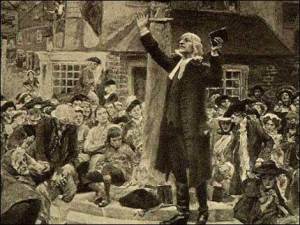
wesley_preach_470x352We have been discussion how England has seen the rise of calls for speech prosecutions. The trend appears to be accelerating under David Cameron. While seen across Europe, this trend has been especially pronounced free speech rights in the Westin England ( here and here and here and here and here and here and here and here and here and here and here). In one of the most vivid examples of the decline of free speech in England, an evangelical preacher named James McConnell, 78, from Northern Ireland has been charged criminally for calling Islam “satanic.” The preacher is charged with spreading a “grossly offensive” message for what should be considered (and protected) as religious and political speech.

View original post 535 more words

Global Warming Explained

Tony Heller's avatarReal Climate Science

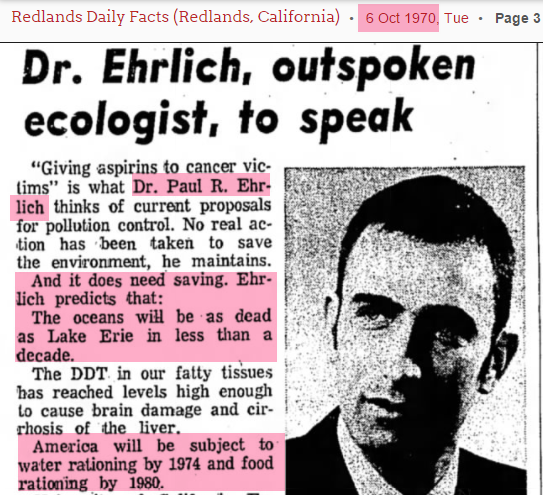
Paul Ehrlich from Stanford says climate change is a mortal threat. He also said that the oceans would be dead by 1980, and that the US will have food and water rationing by 1980.

2015-12-14-20-34-276 Oct 1970, Page 3 – at Newspapers.com

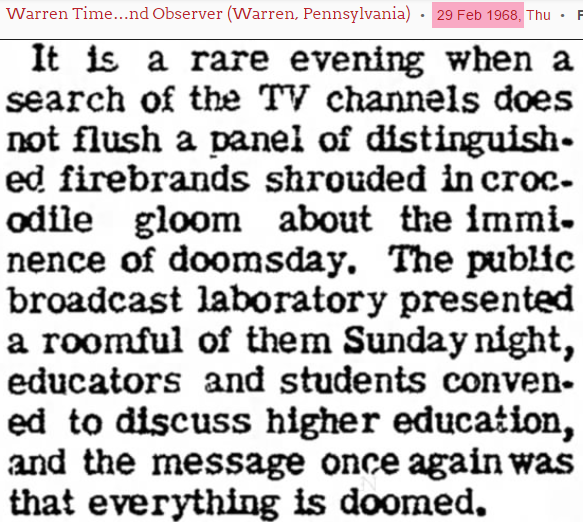
Academics, public radio, politicians with messiah complexes, and newscasters jump from one apocalypse to the next. It doesn’t matter what the apocalypse is, just has to be something to make them feel important.

2015-12-14-20-22-2529 Feb 1968, Page 4 – at Newspapers.com

View original post

Choices that lead to poverty @GarethMorgannz @povertymonitor

The best evidence that poverty can be a choice is the success of the 1996 US welfare reforms and other carrot and stick approaches to poverty reduction. Poverty in the USA dropped dramatically in the mid-1990s after being stable for decades.

The stick is the most important part of poverty reduction programs that have succeeded. The poverty is not a choice movement deny to themselves the most successful child poverty reduction tool of modern times.

The success of the 1996 US federal welfare reforms were not discussed in an experts report on solutions to child poverty published a few years ago by the Children’s Commissioner. It should have been.

After decades of no progress against child poverty, five-year time limits on federal welfare assistance along with mandatory work requirements encouraged a large number of single mothers to find work. Many of these single mothers who joined the workforce in the USA were high school dropouts with small children.

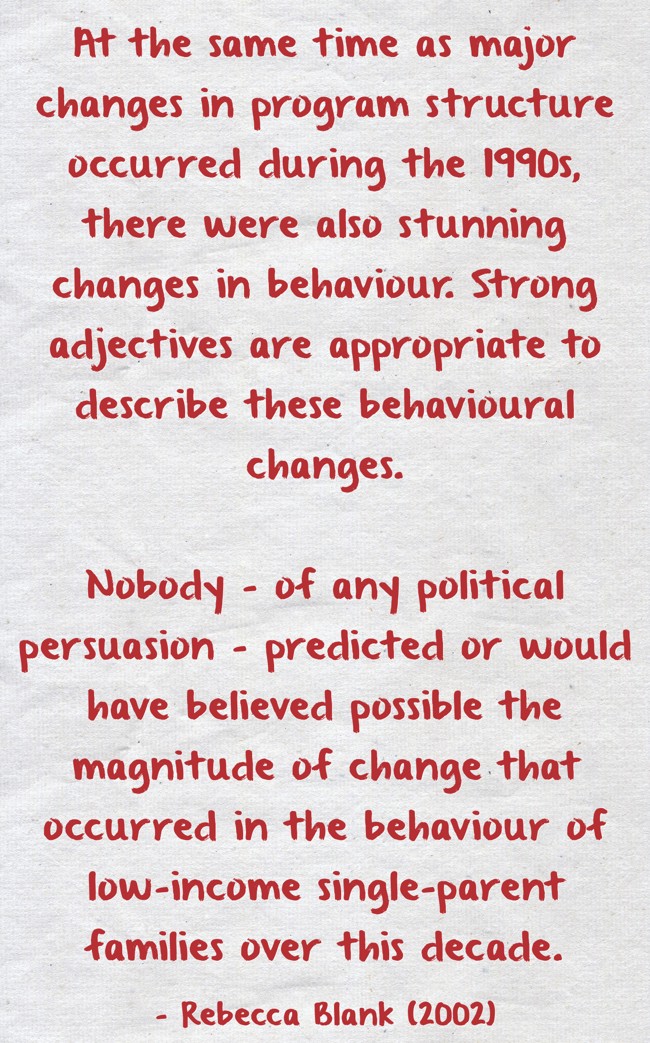
Child poverty fell dramatically among minorities after the 1996 US federal welfare reforms. Everybody was surprised by the massive increases in the employment of single mothers and the reductions in child poverty. Nobody expected young mothers with small children to have so much control over their destiny.

That ability of single mothers to find a job as a condition of welfare benefits after the 1996 US federal welfare reform contradicts the belief that poverty is not a choice.

Child poverty is concentrated among single mothers and in particular single mothers on a welfare benefit. The subsequent declines in welfare participation rates and gains in employment were largest among the single mothers previously thought to be most disadvantaged: young (ages 18-29), mothers with children aged under seven, high school drop-outs, and black and Hispanic mothers.

When welfare benefits are linked to work requirements, the 1996 US federal welfare reforms showed that a surprisingly large number of single mothers can find and keep a job. Employment are never married mothers increased by 50% after these US reforms; employment of single mothers with less than a high school education increased by two-thirds; employment of single mothers aged of 18 to 24 approximately doubled.

Brian Caplan has been among those to link self-destructive behaviours to many of those in poverty. He argues there are a number of reasonable steps that healthy adults can take to avoid poverty for them and their children:

  1. Work full-time, even if the best job you can get isn’t fun.
  2. Spend your money on food and shelter before getting cigarettes and cable TV.
  3. Use contraception if you can’t afford a child.

Caplan specifically includes among the undeserving poor the children of poor or irresponsible parents.

Caplan along with Charles Murray point out that a number of pathologies are particularly prevalent among poor:

  1. alcoholism: Alcohol costs money, interferes with your ability to work, and leads to expensive reckless behaviour.
  2. drug addiction: Like alcohol, but more expensive, and likely to eventually lead to legal troubles you’re too poor to buy your way out of.
  3. single parenthood: Raising a child takes a lot of effort and a lot of money.  One poor person rarely has enough resources to comfortably provide this combination of effort and money.  
  4. unprotected sex: Unprotected sex quickly leads to single parenthood.  See above.
  5. dropping out of high school: High school drop-outs earn much lower wages than graduates.  Kids from rich families may be able to afford this sacrifice, but kids from poor families can’t.
  6. being single: Getting married lets couples avoid a lot of wasteful duplication of household expenses.  These savings may not mean much to the rich, but they make a huge difference for the poor.
  7. non-remunerative crime: Drunk driving and bar fights don’t pay.  In fact, they have high expected medical and legal expenses.  The rich might be able to afford these costs.  The poor can’t.

Caplan is disputing that healthy adults who are poor are victims. That is central to the poverty is not a choice movement: the poor are victims. Many are not, especially the healthy adults.

Policy debates about how to reduce poverty must break out of poverty is not a choice mentality because as Caplan says:

Being poor is a reason to save money, work hard, and control your impulses.

The choices people can make to avoid poverty are finish high school, seek a full-time job, delay children until you marry, and avoid crime. Working against this is as women’s labour market opportunities improved, their interest in low-status men has declined. As Charles Murray explains, working class males have become less industrious:

In 2003-5, men who were not employed spent less time on job search, education, and training, and doing useful things around the house than they had in 1985. They spent less time on civic and religious activities. They didn’t even spend their leisure time on active pastimes such as exercise, sports, hobbies, or reading…

How did they spend that extra leisure time? Sleeping and watching television.  The increase in television viewing was especially large – from 27.7 hours per week in 1985 to 36.7 hours in 2003-5…

The demand to date and marry such men has declined because raising children as a solo mission has become more viable for mothers.

Saying poverty is not a choice undermines important messages about help but hassle that must be woven into the heart of the incentive structures of social insurance and the welfare state.

What are the payoffs of energy efficiency?

https://www.facebook.com/bjornlomborg/photos/pb.146605843967.-2207520000.1449096461./10152770007988968/?type=3&src=https%3A%2F%2Fscontent.fakl1-1.fna.fbcdn.net%2Fhphotos-xpt1%2Fv%2Ft1.0-9%2F10599127_10152770007988968_6958377830101792861_n.jpg%3Foh%3Dc27734f7dc6369d0a3c03c96e2d9f673%26oe%3D56E7F610&size=440%2C548&fbid=10152770007988968

Statistical illusions about U.S. poverty @JulieAnneGenter @povertymonitor

hating woodrow wilson before it was cool

fabiorojas's avatarorgtheory.net

For a long time, I have loathed Woodrow Wilson. It shocked me that a massive racist and war monger, who then bungled the post-WWI peace, should be praised over Warren G. Harding, who was anti-lynching, pro-peace, tolerant of dissent, and anti-asset forfeiture (as it existed in his day). So I am happy to see that the Black student movement at Princeton is drawing attention to the horror that was the Wilson presidency.

Many folks think that the demands of Princeton students are unreasonable. But I think that asking for Wilson’s name to be removed from the policy school is very reasonable given that he  booted thousands of Blacks from their jobs in the Federal government. Critics often say that students are too sensitive and can’t tolerate truly free speech. If that is true, then the charge applies even more so to Wilson himself who oversaw the Palmer raids, which…

View original post 86 more words

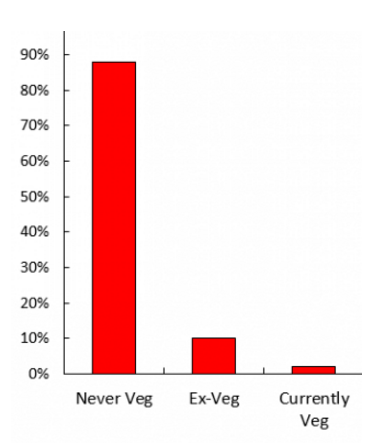
84% of Vegetarians and Vegans Return to Meat

Source: 84% of Vegetarians and Vegans Return to Meat. Why? | Psychology Today

“The Cost of Fighting ISIS Compared to Iraq and Afghanistan”

matthew.obenhaus's avatarThe Gymnasium

chartoftheday_4138_the_cost_of_fighting_isis_compared_to_iraq_and_afghanistan_n

This is an interesting graph from Statista just to grasp the budgetary enormity of the wars in Iraq and Afghanistan as well as the drastic (I would argue way too premature) of drawdown in the focus and expenditures in Iraq that began in earnest in 2008, resulting in the power vacuum that led to the rise of ISIS. This is to say nothing of the lack of wisdom involved in the original Iraq invasion, but one should not double down on foolishness and compound mistakes. The budget and focus on ISIS will necessarily grow in the near future, and the fight and focus on radical jihadist terror, be it directed against ISIS or whatever group takes their mantle, will be decades in coming.

View original post

Economists are from Mars, Electric Cars are from Venus

Where are the “shalls” in the Paris treaty? @charles_finny @GreenCatherine

A Bihar village really did refuse to eat solar panels – it demanded ‘real’ electricity

RED PEAK WAS ALWAYS A MIDDLE CLASS GANG-PATCH

finetoothcolumn's avatarFine Tooth Column

Screen Shot 2015-12-12 at 17.59.53

My greatest fear about Red Peak was that it was less a popular movement and more of a brand logo for the Grey Lynn Farmers Market. A middle class gang-patch for expats residing in London flats and New York lofts. Despite a media-savvy social media campaign to get it on the referendum ballot, it only achieved 8.7% in the first round. Red Peak appealed to people like myself, my friend group, and social media connections. Inner-city suburbanites living in restored villas or bungalows who tend towards organic and/ or vegetarian diets, cycle to work, and profess cosmopolitan social values and centre-left to radical and green politics. The downside of this is a bubble mentality. Too often, we naturally assume the superiority of our lifestyle choices and superior thinking and tastes as opposed to the poor choices and tastes of others. We frequently mock ‘their’ cul-de-sac outer suburban, ‘meat and two-vege’…

View original post 368 more words

British union membership by public and private sector and gender since 1995

British union membership is very much a public sector phenomena. Outside of the public sector, union membership is low but stable for 20 years now.

image

Source: Office of National Statistics, Trade Union Membership 2014

The first mobile phone

Previous Older Entries

Bassett, Brash & Hide

Celebrating humanity's flourishing through the spread of capitalism and the rule of law

Truth on the Market

Scholarly commentary on law, economics, and more

The Undercover Historian

Beatrice Cherrier's blog

Matua Kahurangi

Celebrating humanity's flourishing through the spread of capitalism and the rule of law

Temple of Sociology

Celebrating humanity's flourishing through the spread of capitalism and the rule of law

Velvet Glove, Iron Fist

Celebrating humanity's flourishing through the spread of capitalism and the rule of law

Why Evolution Is True

Why Evolution is True is a blog written by Jerry Coyne, centered on evolution and biology but also dealing with diverse topics like politics, culture, and cats.

Down to Earth Kiwi

Celebrating humanity's flourishing through the spread of capitalism and the rule of law

NoTricksZone

Celebrating humanity's flourishing through the spread of capitalism and the rule of law

Homepaddock

A rural perspective with a blue tint by Ele Ludemann

Kiwiblog

DPF's Kiwiblog - Fomenting Happy Mischief since 2003

The Dangerous Economist

Celebrating humanity's flourishing through the spread of capitalism and the rule of law

Watts Up With That?

The world's most viewed site on global warming and climate change

The Logical Place

Tim Harding's writings on rationality, informal logic and skepticism

Doc's Books

A window into Doc Freiberger's library

The Risk-Monger

Let's examine hard decisions!

Uneasy Money

Commentary on monetary policy in the spirit of R. G. Hawtrey

Barrie Saunders

Thoughts on public policy and the media

Liberty Scott

Celebrating humanity's flourishing through the spread of capitalism and the rule of law

Point of Order

Politics and the economy

James Bowden's Blog

A blog (primarily) on Canadian and Commonwealth political history and institutions

Science Matters

Reading between the lines, and underneath the hype.

Peter Winsley

Economics, and such stuff as dreams are made on

A Venerable Puzzle

"The British constitution has always been puzzling, and always will be." --Queen Elizabeth II

The Antiplanner

Celebrating humanity's flourishing through the spread of capitalism and the rule of law

Bet On It

Celebrating humanity's flourishing through the spread of capitalism and the rule of law

History of Sorts

WORLD WAR II, MUSIC, HISTORY, HOLOCAUST

Roger Pielke Jr.

Undisciplined scholar, recovering academic

Offsetting Behaviour

Celebrating humanity's flourishing through the spread of capitalism and the rule of law

JONATHAN TURLEY

Res ipsa loquitur - The thing itself speaks

Conversable Economist

Celebrating humanity's flourishing through the spread of capitalism and the rule of law

The Victorian Commons

Researching the House of Commons, 1832-1868

The History of Parliament

Articles and research from the History of Parliament Trust

Books & Boots

Reflections on books and art

Legal History Miscellany

Posts on the History of Law, Crime, and Justice

Sex, Drugs and Economics

Celebrating humanity's flourishing through the spread of capitalism and the rule of law

European Royal History

Exploring the Monarchs of Europe

Tallbloke's Talkshop

Cutting edge science you can dice with

Marginal REVOLUTION

Small Steps Toward A Much Better World

NOT A LOT OF PEOPLE KNOW THAT

“We do not believe any group of men adequate enough or wise enough to operate without scrutiny or without criticism. We know that the only way to avoid error is to detect it, that the only way to detect it is to be free to inquire. We know that in secrecy error undetected will flourish and subvert”. - J Robert Oppenheimer.

STOP THESE THINGS

The truth about the great wind power fraud - we're not here to debate the wind industry, we're here to destroy it.

Lindsay Mitchell

Celebrating humanity's flourishing through the spread of capitalism and the rule of law

Alt-M

Celebrating humanity's flourishing through the spread of capitalism and the rule of law

croaking cassandra

Economics, public policy, monetary policy, financial regulation, with a New Zealand perspective

The Grumpy Economist

Celebrating humanity's flourishing through the spread of capitalism and the rule of law

International Liberty

Restraining Government in America and Around the World