The chasm between economics and sociologists could not be greater in terms of how each profession views social behaviour. The same in politics: Democrats easily out number Republican economists two or three to one; registered Democrats to Republicans come in at 44:1. Rachel Kling once offered a quick summary of every sociology course: “There’s poverty and America sucks.”
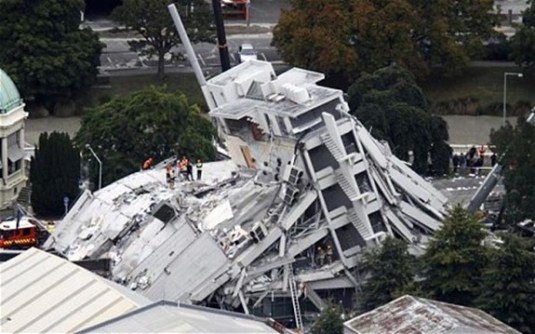
My first serious professional encounter with sociology was when I studied the sociology of natural disasters in the first half of 2011. This was after the February 2011 Christchurch earthquake.
The sociology of natural disasters literature dates back to World War 2 and was large and well established by the 1970s. Disaster sociology is a sub-discipline with university courses, dedicated research centres and special journals.
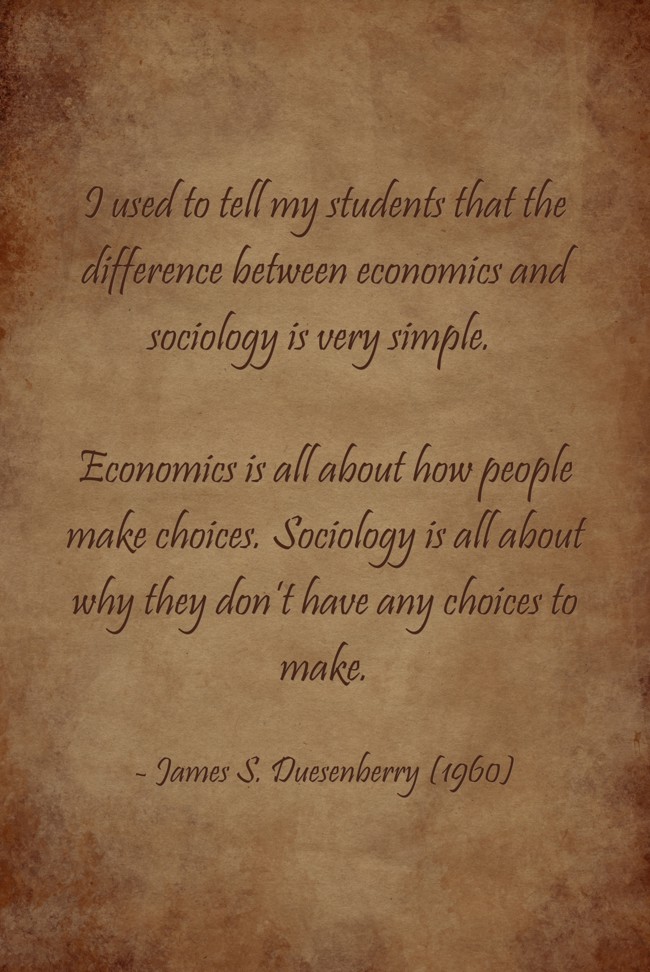
Sociologists study natural disasters to look at how society functions under great stress. If economics is all about how people make choices, and sociology is all about why they don’t have any choices to make, post-disaster recoveries should conform more to the sociological model.
Sociologists found that the common assumptions of post-disaster chaos, disaster shock and social paralysis and helplessness are not well-based on what is known of social behaviour during emergencies.
A central and mistaken assumption of post-disaster responses is emergencies result in drastically different social situations with social chaos. This social chaos is rectified by imposing outside military style command and control systems working from above that supplant the existing social and economic arrangements. Existing social and economic arrangements, including the market process, are seen as fragile in the face of emergencies and incapable of dealing with the disaster.
A better model is continuity, coordination and cooperation. There is post-disaster confusion and new and unexpected problems to confront, but existing social structures are the most effective way to respond.
The existing social structures have the capacity to make rational, informed decisions. An emergency is by its very nature characterised by decentralised and pluralistic decision-making built on local knowledge known only to those on the spot.
Social and economic units, families and businesses are all problem solvers in normal times, and this capacity, their experience and their idiosyncratic knowledge of their particular circumstances of time and place are not lost after a natural disaster.
Disaster forces both governments and citizens to adapt quickly and unexpectedly. Both survivors and those outside the disaster zone act on the basis of a large amount of place- and time-specific knowledge that is generally unavailable to government agencies. Regardless of the extent of the disaster, existing social and economic systems remain surprisingly intact.
Post-disaster coordination is improved if there is a considerable possibility for improvisation of solutions. A great many complex, non-routine tasks evolve after a disaster. These tasks are better dealt with by low levels of centralisation and minimum formality. Without the scope for improvisation, emergency management loses its flexibility in the face of changing conditions and uncertainty.
Post-disaster panic and looting are consistent myths that will not die. Anti-social behaviour after natural disasters is, in fact, rare. A major emergency management issue is the exact opposite of panic, social chaos and flight. The large majority of residents of disaster zones refuse to evacuate and strongly prefer to ride out the storm. Many residents have to be compelled to leave and restrained from returning under threat of arrest.
A central tenet of natural disasters sociology is that most communities can, to a large degree, spontaneously heal themselves.
People affected by a natural disaster obviously often need resources from the outside world such as food, water, and shelter. Most sociological scholars in the field say that this does not mean that the survivors also need outside direction and coordination. Even when the damage is extensive and the loss of life is great, survivors spontaneously marshal their remaining resources and adapt to their new environments.
Disaster sociology suggests it is a profound mistake for outside agencies to enter with the aim of supplanting important parts of the pre-disaster social and economic systems.
- The pre-disaster social and economic systems, including family and social ties, already have a long history of successfully solving the various social and economic problems that they were presented with day in and day out.
- After a natural disaster, time and again, these same pre-disaster social and economic systems and family and social networks survived to rapidly adapt to and solve the new set of social and economic problems that emerged using local knowledge to mobilise existing and incoming resources.
The economic literature on natural disasters, war damage and wartime mobilisations and demobilisations reached similar conclusions on post-disaster resilience despite the different assumptions on the ability of people to make choices.
The economics of disasters was pioneered by Jack Hirshleifer. His studies of recoveries from war damage, war communism and the Black Death were for the Rand Corporation in the 1960s in the context of civil defence and recovery after nuclear wars.
- Most economic studies of natural disaster recoveries show that the use of existing resources and inventories, rationing of what is available, and substitution of labour and other resources away from lower priority uses toward the disaster response and longer working hours are the foundations of the recovery process. Price controls and other regulatory responses lead to shortages and a lack of investment.
- Effective responses and recoveries from past earthquakes, annual hurricanes, tornadoes, fire and floods, and even catastrophic disasters such as the wartime bombings of German and Japanese cities, have always depended primarily on the resilience of the pre-existing social and economic systems that coordinated people’s daily lives in prior more normal times. If they were well-functioning, disaster recovery is much faster and more complete.
- The most important task for government after a disaster is to uphold the pre-existing basic rules of society: private property rights, enforcing contracts made prior to the disaster and upholding the rule of law. Uncertainty about the rules of the game inhibits the ability and the willingness to reinvest and anchor expectations around pessimistic outcomes.
Many commonly championed regulatory interventions make the disaster zone worse off.
When studying the economics of natural disasters in the first half of 2011 after the Christchurch earthquake, I happened to read George Stigler and Milton Friedman’s famous 1946 pamphlet Roofs or Ceilings for the first time. It was recently put on the Net.
That famous pamphlet on the dangers of rent controls started with a discussion of the 1906 San Francisco Earthquake and Fire! The purpose of this analysis by Friedman and Stigler was to compare how an earthquake and three-day long fire storm did far less damage to the ability of the housing market to service demand than did the World War 2 rent controls in the same city.
To return to my opening, the resilience and adaptability of society even under the great stress of a natural disaster might call sociology into question as a discipline. People can choose and make choices for themselves despite even the most terrible stresses such as from a natural disaster. People really do bounce-back from even the worst of set-backs.
 Utopia, you are standing in it!
1 Comment (+add yours?)