David Card’s research suggested that small rises in the minimum wage do not reduce employment by much.
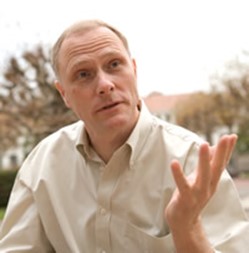
He said that he did not do much further research in the area because people were so personally unpleasant for him:
I haven’t really done much since the mid-’90s on this topic. There are a number of reasons for that that we can go into.
I think my research is mischaracterized both by people who propose raising the minimum wage and by people who are opposed to it.
… it cost me a lot of friends. People that I had known for many years, for instance, some of the ones I met at my first job at the University of Chicago, became very angry or disappointed.
They thought that in publishing our work we were being traitors to the cause of economics as a whole.
I also thought it was a good idea to move on and let others pursue the work in this area. You don’t want to get stuck in a position where you’re essentially defending your old research.
You need a thick hide and academic tenure to do research into the minimum wage these days. There are plenty of research topics that do not cost you friends.
Richard Tol has pointed out that maybe 20 or so academic economists work on climate change on a regular basis. Many of the key survey papers are written by the same few people, including him.

The reasons were that inter-disciplinary works is looked down on in the economics profession and government agencies do not like what economic research says about the costs and benefits of global warming so they pre-emptively do not fund it.
Richard Tol quit as the lead author of an economics chapter of the most recent of the IPCC report after a dispute about research techniques. Tol had been invited to help in the drafting in a team of 70 and was also the coordinating lead author of a sub-chapter about economics.
When he dissented about the quality and alarmist nature of the economics of the IPCC reports, they smeared him so badly as a fringe figure that you wonder why they hired him in the first place.
The co-chair of the IPCC working group that produced the report, said Richard Tol was outside the mainstream scientific community and was upset because his research had not been better represented in the summary:
“When the IPCC does a report, what you get is the community’s position. Richard Tol is a wonderful scientist but he’s not at the centre of the thinking. He’s kind of out on the fringe,” Professor Field said before the report’s release.
You cannot, on the one hand, say that you have hired the best and the brightest to work on “the greatest moral, economic and social challenge of our time” and then say that a dissenting member is a fringe figure. If that was true, rather than a smear, he would never have been hired in the first instance.
Nor would Richard Tol have been asked to write a 2009 survey of the economics of climate change for the leading surveys journal in all of economics – The Journal of Economic Perspectives. This fringe figure said in that survey in 2009 that:
Only 14 estimates of the total damage cost of climate change have been published, a research effort that is in sharp contrast to the urgency of the public debate and the proposed expenditure on greenhouse gas emission reduction.
These estimates show that climate change initially improves economic welfare. However, these benefits are sunk.
Impacts would be predominantly negative later in the century.
Global average impacts would be comparable to the welfare loss of a few percent of income, but substantially higher in poor countries.
Still, the impact of climate change over a century is comparable to economic growth over a few years.
The IPCC hired Tol because their economics of global warming chapters would have lacked credibility if he had not been on the team. LBJ said that it is better to have someone inside the tent pissing out than outside pissing in.
Richard Tol even has an academic stalker:
Bob Ward, has reached a new level of trolling. He seems to have taking it on himself to write to every editor of every journal I have ever published in, complaining about imaginary errors even if I had previously explained to him that these alleged mistakes in fact reflect his misunderstanding and lack of education. Unfortunately, academic duty implies that every accusation is followed by an audit. Sometimes an error is found, although rarely by Mr Ward.
Richard Tol blogs at http://richardtol.blogspot.co.nz/
 Utopia, you are standing in it!
Recent Comments