Charles Murray on the educational romanticism of the Left and of the Right
09 Jun 2014 Leave a comment
in economics of education, human capital, labour economics Tags: Charles Murray, The fatal conceit

HT: http://www.aei.org/publication/the-age-of-educational-romanticism/
Richard Posner on constructive criticism in public policy
09 Jun 2014 Leave a comment
in organisational economics, Richard Posner Tags: Richard Posner

Housing price booms and the restrictiveness of land-use regulation in the USA
09 Jun 2014 Leave a comment
in economics of regulation, rentseeking, urban economics Tags: housing prices, land use regulation

The picture tells a 1000 words.
In Praise of Cheap Labor | Paul Krugman (1997)
09 Jun 2014 Leave a comment
in development economics, growth miracles, international economics, labour economics, labour supply Tags: Paul Krugman, Sweatshop labour, The Great Enrichment, The Great Fact

The lofty moral tone of the opponents of globalization is possible only because they have chosen not to think their position through.
While fat-cat capitalists might benefit from globalization, the biggest beneficiaries are, yes, Third World workers.
After all, global poverty is not something recently invented for the benefit of multinational corporations…
wherever the new export industries have grown, there has been measurable improvement in the lives of ordinary people.
Partly this is because a growing industry must offer a somewhat higher wage than workers could get elsewhere in order to get them to move.
More importantly, however, the growth of manufacturing–and of the penumbra of other jobs that the new export sector creates–has a ripple effect throughout the economy. The pressure on the land becomes less intense, so rural wages rise; the pool of unemployed urban dwellers always anxious for work shrinks, so factories start to compete with each other for workers, and urban wages also begin to rise.
Some cats can’t jump
09 Jun 2014 1 Comment
in cats Tags: funny cat videos
https://www.youtube.com/watch?feature=player_embedded&v=QScxSMWOT-c#t=214
I laughed so hard at these clips that I cried.
I found the best writer on global warming to be Thomas Schelling
09 Jun 2014 2 Comments
in applied welfare economics, environmental economics, global warming, international economics, Thomas Schelling Tags: game theory, global warming
Tom Schelling has been involved with the global warming debate since chairing a commission on the subject for President Carter in 1980.
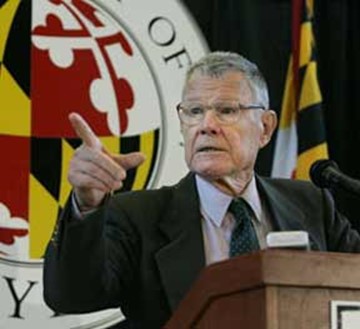
Schelling is an economist who specialises in strategy so he focuses on climate change as a bargaining problem. Schelling drew in his experiences with the negotiation of the Marshall Plan and NATO.
International agreements rarely work if they talk in terms of results. They work better if signatories promise to supply specific inputs – to perform specific actions now.
Individual NATO members did not, for example, promise to slow the Soviet invasion by 90 minutes if it happened after 1962.
NATO members promised to raise and train troops, procure equipment and supplies, and deploy these assets geographically.
All of these actions can be observed, estimated and compared quickly. The NATO treaty was a few pages long.
The Kyoto Protocol commitments were made not about actions but to results that were to be measured after more than a decade and several elections.
Climate treaties should promise to do certain actions now such as invest in R&D and develop carbon taxes that return the revenue as tax cuts. If the carbon tax revenue is fully refunded as tax cuts, less reliable countries, in particular, have an additional incentive to collect the carbon tax properly to keep their budget deficits under control.
Schelling is a genius at problem definition when he asked this
Suppose the kind of climate change expected between now and, say, 2080 had already taken place, since 1900.
Ask a seventy-five-year-old farm couple living on the same farm where they were born: would the change in the climate be among the most dramatic changes in either their farming or their lifestyle?
The answer most likely would be no. Changes from horses to tractors and from kerosene to electricity would be much more important.
Climate change would have made a vastly greater difference to the way people lived and earned their living in 1900 than today.
Today, little of our gross domestic product is produced outdoors, and therefore, little is susceptible to climate. Agriculture and forestry are less than 3 per cent of total output, and little else is much affected.
Even if agricultural productivity declined by a third over the next half-century, the per capita GNP we might have achieved by 2050 we would still achieve in 2051.
Considering that agricultural productivity in most parts of the world continues to improve (and that many crops may benefit directly from enhanced photosynthesis due to increased carbon dioxide), it is not at all certain that the net impact on agriculture will be negative or much noticed in the developed world.
As for the chances of a global treaty, Schelling has said:
The Chinese, Indonesians, or Bangladeshis are not going to divert resources from their own development to reduce the greenhouse effect, which is caused by the presence of carbon-based gases in the earth’s atmosphere.
This is a prediction, but it is also sound advice.
Their best defence against climate change and vulnerability to weather in general is their own development, reducing their reliance on agriculture and other such outdoor livelihoods.
Furthermore, they have immediate environmental problems — air and water pollution, poor sanitation, disease — that demand earlier attention.
 Utopia, you are standing in it!
Recent Comments