The American political system is complicated with the Republicans and Democrats moving around the political spectrum. Remember, Teddy Roosevelt’s Progressive Party, with its rather left wing agenda split from the Republicans, not from the Democrats in 1912.
Murray Rothbard saw a lot of anti-big government sentiments in the pre-1896 Democratic Party under the Third Party System, and especially in the Second Party System prior to the Civil War with Andrew Jackson and Martin Van Buren. The 19th century Democratic Party tended to be the party of peace, anti-militarism, and anti-imperialism. Rothbard referred to Grover Cleveland
The Third Party System was dominated by the newly created Republican Party, which supported national banks, railroads, high tariffs, homesteading rights and aid to the land-grant colleges.
The Fourth Party System from 1896 to 1932 was made up of a majority centrist Republican Party against a minority Democratic Party from the South together with urban Catholics in the Northern cities – a volatile brew – which soon had an ideology scarcely distinguishable from the Republicans.
Both parties under the Third party System that operated prior to 1896 comprised broad-based voting coalitions divided between the parties on racial, ethnic and religious lines with high voter turnout and strong partisanship.
- Methodists, Congregationalists, Presbyterians, and Scandinavian Lutherans were closely linked to the Republican Party.
- Catholics, Episcopalians, and German Lutherans, looked to the Democratic Party for protection from moralism and prohibition.
- The Democrats gained more support from the lower classes than did the Republicans.
Bourbon Democrat was a term used in the US from 1876 to 1904 for members of the Democratic Party, conservative or classical liberal, and especially those who supported President Grover Cleveland in 1884–1888 and 1892–1896. Rothbard referred to Grover Cleveland as “a hard-money laissez-faire Democrat” and
the continuity of quasi-libertarian thought that the Democrat Party brought to the United States throughout the nineteenth century
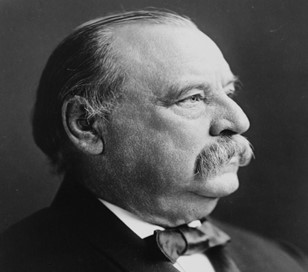
The Bourbon Democrats represented business interests, generally supporting the goals of banking and railroads but opposed to subsidies for them and were unwilling to protect them from competition.
Bourbon Democrats were promoters of laissez-faire capitalism (which included opposition to the protectionism that the Republicans advocated). The Bourbon Democrats opposed imperialism and U.S. overseas expansion, fought for the gold standard, and opposed bimetallism.
The notion that the Democratic Party was once the home of classical liberals in the USA at one time and the Republican Party was the party of regulation and big government is so foreign to the modern party divides in the USA today. Political parties in the United States certainly are big tents as they say.
 Utopia, you are standing in it!
Recent Comments