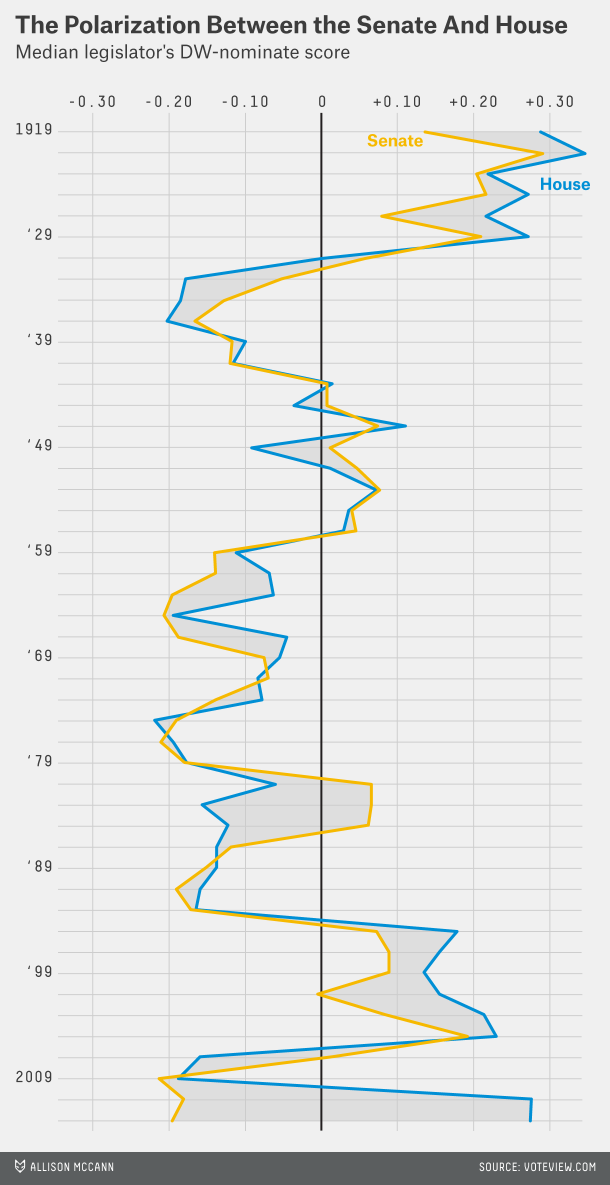
One of the lessons of public choice for constitutional design is there should be two Houses of Parliament and each should be elected by a different method and different geographical basis.
Lower houses tend to be elected in single member constituencies; upper houses tend to be elected in larger multi-member, state-wide or national constituencies by proportional representation.
This diversity in legislative arrangements ensures that more people are participating in decision-making and it is harder to pass new laws without majority support.
The two elected chambers will clash as each exerts its mandate to represent the will of the people who elected it. The laws that pass these two chambers elected by different methods must have substantial popular support.
When upper and lower houses are elected by similar methods, it is much easier to assemble a majority through vote trading and lobbying.
Data via fivethirtyeight.com
 Utopia, you are standing in it!
Recent Comments