Most people seem to give the same reason to me in conversations as to why they support the MMP voting system – Mixed Member Proportional representation.
The reason is profoundly democratic: their party vote always counts no matter where they live in the country or how safe or how marginal the local electorate might be.
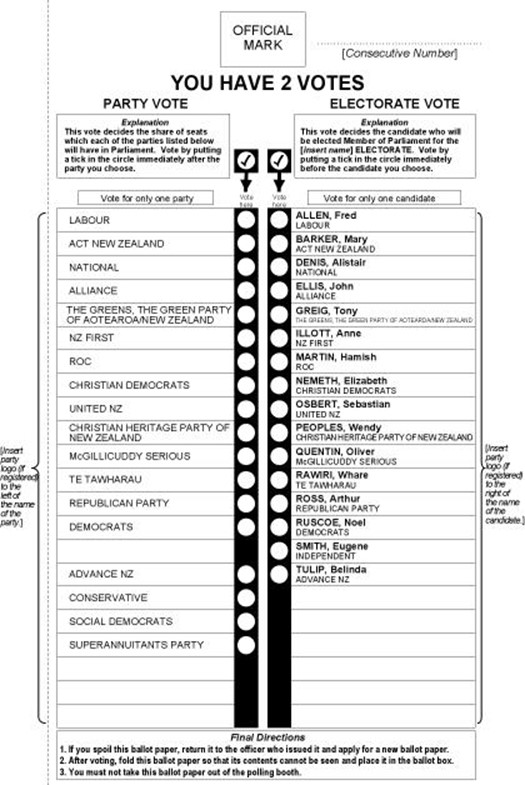
Under first past the post, it didn’t matter who you voted for if you lived in a safe electorate because the local MP of whatever political party would always be elected.
What is underplayed in these conversations is how close all elections are in New Zealand, and how likely it is that your vote might be decisive rather than just one of millions.
Under MMP, the last seat in Parliament is a contest between several parties. If anyone just gets a couple of dozen more votes, they get another seat.
In the current parliament of 121, the National Party Government has 59 seats, with the ACT party one seat and the United Future Party one seat.
One more seat for ACT or one less seat for the National Party would have made a big difference to the election outcome. ACT was only 45 votes short of getting that second seat in the 2011 General Election.
Note: Under MMP, the New Zealand House of Representatives is a mix of MPs from single-member electorates
and those elected from a party list, and a Parliament in which a party’s share of the seats roughly mirrors its share of the overall nationwide party vote. There is a minimum party vote threshold to get into Parliament. The party votes of those parties with less than 5% of the party vote do not count unless they win a constituency seat.
 Utopia, you are standing in it!
Recent Comments