

The economics of Christianity
23 Jul 2014 2 Comments
in applied price theory, economics of religion Tags: economics of religion, Robert Tollison

These are all worth reading:
- Sacred Trust: The Medieval Church as an Economic Firm by Robert D. Tollison, R. Ekelund, R. Hebert, G. Anderson, and A. Davis 1996.
- The Marketplace of Christianity by Robert B. Ekelund Jr. & Robert F. Hebert & Robert D. Tollison, 2008 -discusses the reformation, counter-reformation and thereafter.
- Economic Origins of Roman Christianity by Robert B. Ekelund Jr. and Robert D. Tollison 2011 (the 1st 1000 years).
See as well The Pope and the Price of Meat: A Public Choice Perspective by Richard Ault, Robert Ekelund and Robert D. Tollison in Kyklos which shows how self-interest, economic geography, and an expanded number of third-world voters in the College of Cardinals explain why Pope Paul IV changed the relative price of meat and altered penance rules in 1966.
This paper applies public choice and modern regulatory theory to the twentieth century Roman Catholic Church and attempts to discover why the decision was made in 1966 to absolve Catholics from the requirement that meat not be eaten on most Fridays of the year.
We provide a cartel analysis of the institutional backdrop and power structure of the College of Cardinals within the Church. In this framework, self-interest, the geographic production of beef and fish, and the expanded number of voters in the College of Cardinals are the keys to understanding why Pope PAUL VI decided to change the relative price of meat and to alter penance rules in 1966.

Bryan Caplan and the National Review on 100 Years of Milton Friedman
23 Jul 2014 Leave a comment
in economics
Does socialism deserve another chance?
22 Jul 2014 Leave a comment
in comparative institutional analysis Tags: Deidre McCloskey, The Great Enrichment, The Great Fact

…very many normal people of leftish views, even after communism, even after numerous disastrous experiments in central planning, even after trying to get a train ride from Amtrak or service from the Postal Service (not to mention service from the Internal Revenue Service or from the Immigration and Naturalization Service; you see I wax indignant: I am, after all, a free-market economist), think Socialism Deserves a Chance.
They think it obvious that socialism is after all fairer than unfettered capitalism. They think it obvious that regulation is after all necessary to restrain monopoly.
They don’t realize that free markets have partially broken down inequality (for example, between men and women; “partially,” I said) and partially undermined monopolies (for example, local monopolies in retailing) and have increased the income of the poor over two centuries by a factor of 18.



Poverty in the Age of the Xbox
22 Jul 2014 Leave a comment
in economics

This is the first in a series of three posts that looks at the measurement and politics of poverty in the United States
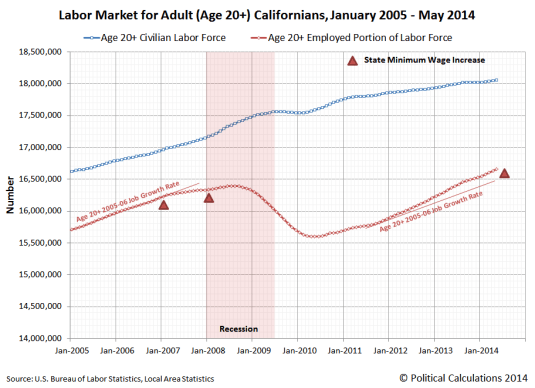
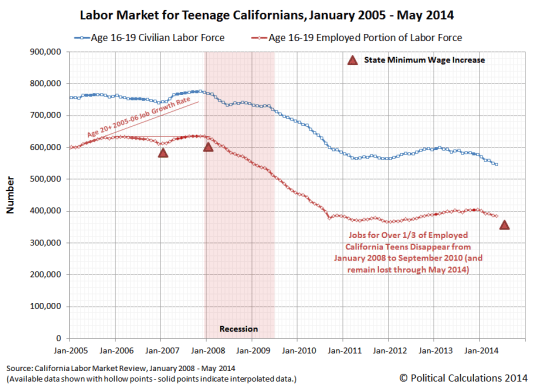
 As I reported last week, the poverty rate in the United States in 2010 soared. Under the official poverty line there are now more than 46 million individuals living in poverty. In today’s blog post I want to address one right-wing critique that has gained prominence recently. Robert Rector of the Heritage Foundation and others have made the argument that the poverty line is a misleading indicator of material wellbeing because the majority of people classified as poor actually enjoy a more “middle class” standard of living.
This is a surprising claim, especially because when left-leaning scholars talk about the poverty line in the United States, they typically come to exactly the opposite conclusion: pointing out how inadequate these budgets are for meeting the needs of low-income…
View original post 1,185 more words

Forensic statistics and drugs in sport
22 Jul 2014 Leave a comment
in applied price theory, economics of crime, sports economics Tags: doping, drugs in sport

Years ago, I read a newspaper article in the Sydney Morning Herald about how forensic statistics was used to detect drugs in sport through the differences in athletic performance between men and women in track and field.
Drugs in certain sports make women disproportionately stronger, and therefore reduces the disparity between them and men in sports that require pure strength.
In the 1980s, the gap between men and women in track and field performances had been narrowing. In 1992, major improvements were made in drug testing. In consequence, the gap between men and women in athletic performance started to widen again.
In about 1992, as I recall, athletic records for women that used to be broken several times in one major international meeting such as the Olympics suddenly stood for years before they were broken again.

HT: Phil Hurst and SecureGame
The Hockey Stick of Human Prosperity
22 Jul 2014 Leave a comment
On a timeline of human history, the standard of living resembles a hockey stick – flatlining and then skyrocketing in just the last few centuries.
Specialization and trade explains the astonishing growth of productivity and output in such a short amount of time—after millennia of famine, low life expectancy, and incurable disease
 Utopia, you are standing in it!
Recent Comments