Cute ‘Ninja’ Kitten Shows Doberman Who’s Boss
20 Sep 2014 Leave a comment
in cats Tags: cats and dogs, kittens
Aftermath of the Scottish Referendum
20 Sep 2014 Leave a comment
in economics

A few takeaways from the 55-45% victory for No in the Scottish independence referendum:
- The polls overestimated support for independence, just as in the 1995 Quebec referendum. Secession from a well-established democracy is extremely difficult due to voters’ risk-aversion and status quo bias.
- Scotland’s right to decide elicited salutary promises of decentralization from the British government. My book found that countries with legal secession saw more decentralization than countries without, and countries with legal secession never recentralized power in the post-World War 2 era, according to the measure of regional autonomy I used.
- While Westminster is likely to follow through on some additional powers for Scotland, they are not likely to approach anything like “devolution max.” For one thing, the Barnett formula will continue, suggesting the Scottish government’s budget will remain heavily dependent on transfers. For another, significant powers for Scotland will require wholesale constitutional reform, particularly to…
View original post 124 more words
The more accurate opinion polling question
19 Sep 2014 Leave a comment
in election campaigns, entrepreneurship, market efficiency Tags: opinion polls, prediction markets

“Regardless of whom they supported, which candidate did people expect to win? Americans consistently, and correctly, said that they thought Mr. Bush would.
A version of that question has produced similarly telling results throughout much of modern polling history, according to a new academic study.
Over the last 60 years, poll questions that asked people which candidate they expected to win have been a better guide to the outcome of the presidential race than questions asking people whom they planned to vote for, the study found.”
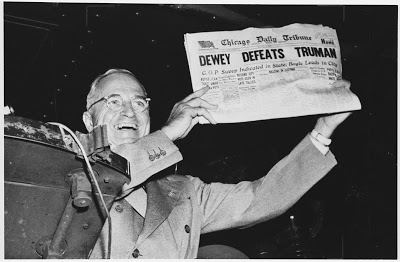
Via http://www.nytimes.com/2012/11/02/us/politics/a-better-poll-question-to-predict-the-election.html

Bad Population Reporting
19 Sep 2014 Leave a comment
in economics

So I spotted this article in the Guardian, by one Damian Carrington, who gives us an example of how not to write about new research. The article is about the release of this paper in Science, by Gerland et al.
Let’s take a little walk through the article to see how Mr. Carrington mangles nearly everything important about this research.
- The title of the article is “World population to hit 11bn in 2100”. The Gerland et al article is about using Bayesian techniques to arrive at confidence intervals for the size of global population, meaning that their article is about how much uncertainty there is in a population projection. The entire point of their work is that statements like “World population to hit 11bn in 2100” are stupid because they do not tell you about the uncertainty in that estimate.
- “A ground-breaking analysis….” is how the Gerland et al…
View original post 506 more words
Hey, Pope Francis: Markets are the solution, not the problem
19 Sep 2014 Leave a comment
in economics
Policy Failure and the Great Recession
19 Sep 2014 Leave a comment
in economics

The debate about the causes of the financial crisis and the great recession will continue for many years, and the facts and analysis that Robert Hetzel put forth in his new book The Great Recession: Market Failure or Policy Failure? should now be part of that debate. As I said in my comments for Cambridge University Press, “Hetzel applies his experience as a central banker and his expertise as a monetary economist to make a compelling case for rules rather than discretion, showing that ‘monetary disorder’ rather than a fundamental ‘market disorder’ is the cause of poor macroeconomic performance. At the same time, he acknowledges and discusses disagreements among those who argue for rules rather than discretion.”a
One area of disagreement among those who agree that deviations from sensible policy rules were a cause of the deep crisis is how much emphasis to place on the “too low for too…
View original post 931 more words
Daniel Kuehn Explains the Dearly Beloved Depression of 1920-21
19 Sep 2014 Leave a comment
in economics

In the folklore of modern Austrian Business Cycle Theory, the Depression of 1920-21 occupies a special place. It is this depression that supposedly proves that all depressions are caused by government excesses and that, if left unattended, with no government fiscal or monetary stimulus, would work themselves out, without great difficulty, just as happened in 1920-21. In other words, government is the problem, not the solution, and the free market is the solution, not the problem. If only (the crypto-socialist) Herbert Hoover and (the not-so-crypto) FDR had followed the wholesome example of the great Warren G. Harding, cut spending to the bone and cut taxes, the Great Depression would have been over in 18 months or less, just as the 1920-21 Depression was. And if Bush and Obama had followed the Harding example, our own Little Depression would have surely long since have been a distant memory.
In two recent…
View original post 612 more words
Frank Knight on the role of abstraction in economics as an exact science
19 Sep 2014 Leave a comment

‘There has been all along something odd in this affair’: The Malt Tax and the 1713 attempt to repeal the Union
19 Sep 2014 Leave a comment
in economics

300 years ago this month, arguments over the Malt Tax nearly brought the fledgling Union between England and Scotland to a quick end. Dr Robin Eagles tells us more…
Next year the people of Scotland will be offered the opportunity to vote for independence. Over 300 years ago England and Scotland were formally joined as part of a broader policy of securing the succession to the throne for the House of Hanover. In 1707 there was, of course, no referendum. Although a number of Scots supported it for both political and ideological reasons, unsurprisingly, a significant number of Scots (and English) objected to the decision.
The extent of Scots’ discontent with some of the practical aspects of Union was soon apparent and in the early summer of 1713 there was a serious effort to bring the still infant Union to an end. The catalyst for this was the proposal…
View original post 942 more words


 Utopia, you are standing in it!
Recent Comments