
Market inefficiency is revealed through a process of entrepreneurial discovery
13 Sep 2014 Leave a comment

What Motivates the Left, Envy or Greed?
12 Sep 2014 Leave a comment
in economics

Why do statists support higher tax rates?
The most obvious answer is greed. In other words, leftists want more tax money since they personally benefit when there’s a larger burden of government spending. And the greed can take many forms.
They may want bigger government because they’re welfare recipients getting handouts.
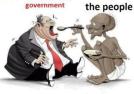 They may want bigger government because they are overpaid bureaucrats administering ever-growing programs.
They may want bigger government because they’re lobbyists manipulating the system and it’s good to have more loot circulating.
They may want bigger government because they’re one of the many interest groups feeding at the federal trough.
Or they may want bigger government because they are politicians seeking to buy votes.
But greed isn’t the only answer.
Some statists want higher tax rates for reasons of spite and envy.
Consider this poll from the United Kingdom. It shows that an overwhelming majority…
View original post 499 more words
The Story of the Only American Not on Earth on September 11th – The Atlantic
12 Sep 2014 Leave a comment
in politics - USA, war and peace Tags: 9/11

Excuse #52 for ‘the pause’ in global warming – natural climate variability as secular trends
12 Sep 2014 4 Comments
in economics
Whether Looking at Policy or Politics, Growth Trumps Fairness
12 Sep 2014 Leave a comment
in economics
Why is President Obama so fixated on a class-warfare agenda of higher taxes on the rich and government dependency for the poor?
Is it because a tax-the-rich agenda is good politics, as determined by clever pollsters who have tapped into the collective mind of American voters (and as demonstrated by this cartoon)?
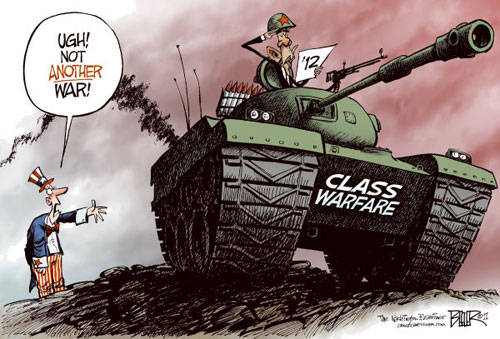 Or is the President ideologically committed to a redistributionist mindset, meaning that he will pursue class-warfare policies even if they rub voters the wrong way?
Since I can’t read the President’s mind, I’m not sure of the answer. I suspect he’s a genuine ideologue, but your guess is as good as mine.
But I can say with more confidence that his pursuit of class-warfare doesn’t resonate with voters.
Or, to be more specific, the American people aren’t susceptible to the politics of hate and envy so long as they’re offered a better alternative.
Let’s look at…
View original post 934 more words

Gerrymandering explained
12 Sep 2014 Leave a comment
in Public Choice, rentseeking Tags: democratic elections, gerrymandering, malapportionment, political accountability, political corruption


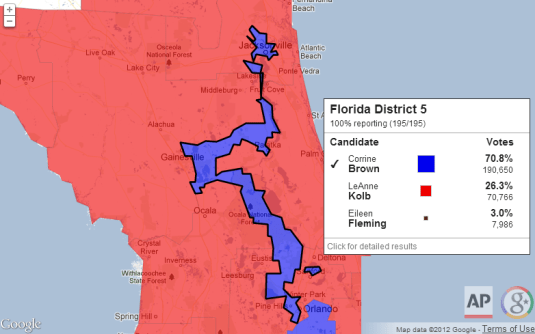
Politicians redraw the electoral boundaries to maximize their support in the newly created district. The obvious outcome is that you can get more seats for less votes.
The gerrymander is named after 19th-century Massachusetts Governor Elbridge Gerry. After Gerry took office in 1810, his Democratic-Republican party redrew the map of the state’s Senate districts in a particularly dramatic and unusual manner to weaken the opposing Federalist Party.

Gerry is less famous for signing the Declaration of Independence and refusing to sign the Constitution because it initially didn’t include a Bill of Rights.
Equal protection of birds under environmental law?
12 Sep 2014 Leave a comment
in environmental economics, environmentalism Tags: green hypocrisy, killer green technologies, solar power, wind farms

Exxon Mobil agreed to pay $600,000 in penalties after 85 migratory birds died of exposure to hydrocarbons at its natural gas facilities.
A common sight above the world’s largest solar thermal power plant is a streamer: a small plume of smoke that occurs without warning. The source is a bird that has inadvertently strayed into the white-hot heat above the plant’s many reflecting mirrors. No fines for the 28,000 birds killed in this way.

More than 573,000 birds are killed by U.S. wind farms each year. No fine.
the Obama administration issued an exemption in 2013 to allow wind power companies to kill or injure eagles without the fear of prosecution for up to three decades. The new rule is designed to address environmental consequences that stand in the way of the nation’s wind energy rush.


What the jihadists who bought “Islam for Dummies” tell us about radicalisation
10 Sep 2014 1 Comment
in economics, economics of crime, labour economics, occupational choice Tags: economics of oppositional identities, Jihadists, Terrorism is an occupational choice

Sarwar and Ahmed, who pleaded guilty to terrorism offences, purchased Islam for Dummies and The Koran for Dummies. MI5’s behavioural science unit found that
“far from being religious zealots, a large number of those involved in terrorism do not practise their faith regularly. Many lack religious literacy and could . . . be regarded as religious novices.” The analysts concluded that “a well-established religious identity actually protects against violent radicalisation”
Most evidence point to moral outrage, disaffection, peer pressure, the search for a new identity, for a sense of belonging and purpose as drivers of radicalisation. Anthropologist Scott Atran pointed out in testimony to the US Senate in March 2010:
“. . . what inspires the most lethal terrorists in the world today is not so much the Quran or religious teachings as a thrilling cause and call to action that promises glory and esteem in the eyes of friends, and through friends, eternal respect and remembrance in the wider world”. He described wannabe jihadists as “bored, underemployed, overqualified and underwhelmed” young men for whom “jihad is an egalitarian, equal-opportunity employer . . . thrilling, glorious and cool”.
Chris Morris, the writer and director of the 2010 black comedy Four Lions – which satirised the ignorance, incompetence and sheer banality of British Muslim jihadists – said:
Terrorism is about ideology, but it’s also about berks.
 Utopia, you are standing in it!
Recent Comments