Keynes v. Hayek: Enough Already

David Glasner's avatarUneasy Money

First, it was the Keynes v. Hayek rap video, and then came the even more vulgar and tasteless Keynes v. Hayek sequel video reducing the two hyperintellectuals to prize fighters. (The accuracy of the representations signaled in its portrayal of Hayek as bald and Keynes with a full head of hair when in real life it was the other way around.) Then came a debate broadcast by the BBC at the London School of Economics, and then another sponsored by Reuters with a Nobel Prize winning economist on the program arguing for the Hayek side. Now comes a new book by Nicholas Wapshott Keynes Hayek, offering an extended account of the fraught relationship between two giants of twentieth century economics who eventually came to a sort of intellectual détente toward the end of Keynes’s life, a decade or more after a few years of really intense, even brutal…

View original post 2,041 more words

Systemic Failure in Markets and Politics

Grover Cleveland's avatarPILEUS

Below is Mark Pennington’s first guest post.  As you can see, it will be an interesting week! – GC

Mark Pennington

I am delighted to have been invited to contribute as the guest blogger on Pileus this week and to air some of the central ideas in my new book, Robust Political Economy: Classical Liberalism and the Future of Public Policy. At the core of this book is a very basic but oft neglected idea – ‘failure’ is endemic to all social institutions because human beings are imperfect. By far the most important imperfection is that people are cognitively limited and thus they make mistakes. Robust institutions, therefore, are not those that eliminate failure, but those that reduce the consequences of inevitable human errors. Before we determine that a particular set of institutions ‘fail’ meanwhile, we must explain how and why an alternative set of institutions can do better.

View original post 553 more words

The End of Director’s Law?

Mike Gibson's avatarLet A Thousand Nations Bloom

Many have long believed that big government helps the poor at the expense of the wealthy. But back in the glory days of economics at the University of Chicago Aaron Director noticed a recurring theme in the way democracies cut the pie. Given the power to tax and redistribute, you might expect those on the bottom (plus one to gain a majority) would form a coalition to snatch away the wealth of the top 49 percent. But this doesn’t happen. Director teased out why: forming a winning coalition requires intelligence, effort, organization, endurance, resources, indignation…capabilities the poor simply do not have. This is part of the reason why they’re poor, after all. For the very same reasons they struggle in a free market, they fail in the political market too. By Director’s logic and contrary to popular belief, the big jackpot winners in democracy are the members of the motivated…

View original post 233 more words

Adam Smith on the power of one

Image

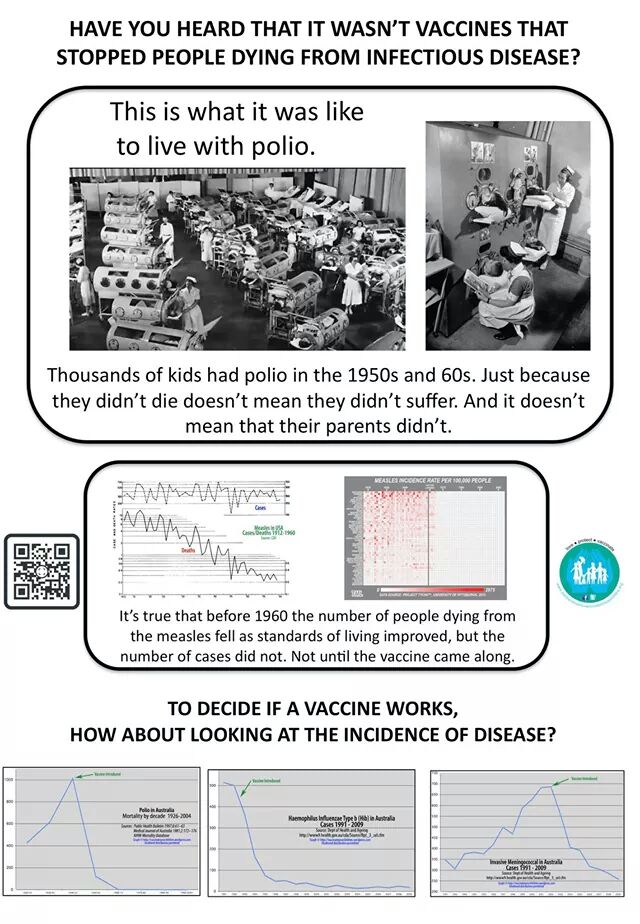
Life before vaccinations

image

Image

Environmental and Urban Economics: Professor Stavins’ Climate Change Piece in the NY Times Today

He makes the following points:

  • Global GHG emissions continue to rise
  • The UN’s goal for sharply reducing emissions over the next few decades will be a very difficult target to reach
  • It will be very costly to reach this goal
  • He cites current cost estimates of what we would have to sacrifice to achieve the carbon reductions…

To my deep surprise, he never mentions climate change adaptation.  That a very serious Harvard economist is not willing to even mention this topic says something on several levels.

The IPCC has only made a small investment in investigating the possibilities for adaptation to help us to minimize several of the threats we will face from climate change.

In my humble opinion, too many economists are working on the economics of climate change mitigation in part because there is so much demand by policy makers (and private consulting) for such studies.  But from a research perspective, we have hit sharp diminishing returns.

In contrast, we need active researchers to more fully explore the politically incorrect topic of climate change adaptation.

via Environmental and Urban Economics: Professor Stavins’ Climate Change Piece in the NY Times Today.

Making Money from Behavioral Social Science?

Peter G. Klein's avatarOrganizations and Markets

| Peter Klein |

Longtime readers of this blog expect skepticism about behavioral social science. One of my issues is the assumed, but unexplored, assumption that private actors and market institutions cannot deal with behavioral anomalies, and therefore government intervention is necessary to make people act “rationally.” But if we can really improve health outcomes by putting the chocolate cake behind the carrot sticks in the display case, why wouldn’t profit-seeking entrepreneurs exploit this fact? Consumers pay substantial price premiums for organic produce, grass-fed meats, and other healthy products, even when the purported health benefits are long-term and uncertain. Wouldn’t some patronize the behavioral-economics-influenced grocer? “Our shelves are arranged to encourage healthy food choices.” Add earth tones, hipster music, an onsite juice bar, and the place will make as much money as your local Whole Foods.

To be a little less flippant: consider adverse selection theory. Many people misread Akerlof’s famous paper as a…

View original post 182 more words

Not Many People Got Past Page 26 Of Piketty’s Book

Professor Jordan Ellenberg looked at the five most popular book passages in a number of current best-sellers, according to data from Amazon Kindle readers. He determined the average page number readers highlighted and divided that by the total number of pages in the book.

A high number, according to Ellenberg, means that readers are reading until the end. Donna Tartt’s Pulitzer Prize-winning blockbuster, The Goldfinch, for example, earned a score of 98.5 percent on the index.

Piketty’s book scored a dismal 2.4 percent. The latest of the five most popular highlights in Piketty’s book is located on page 26, according to the Ellenberg.

via Not Many People Got Past Page 26 Of Piketty’s Book.

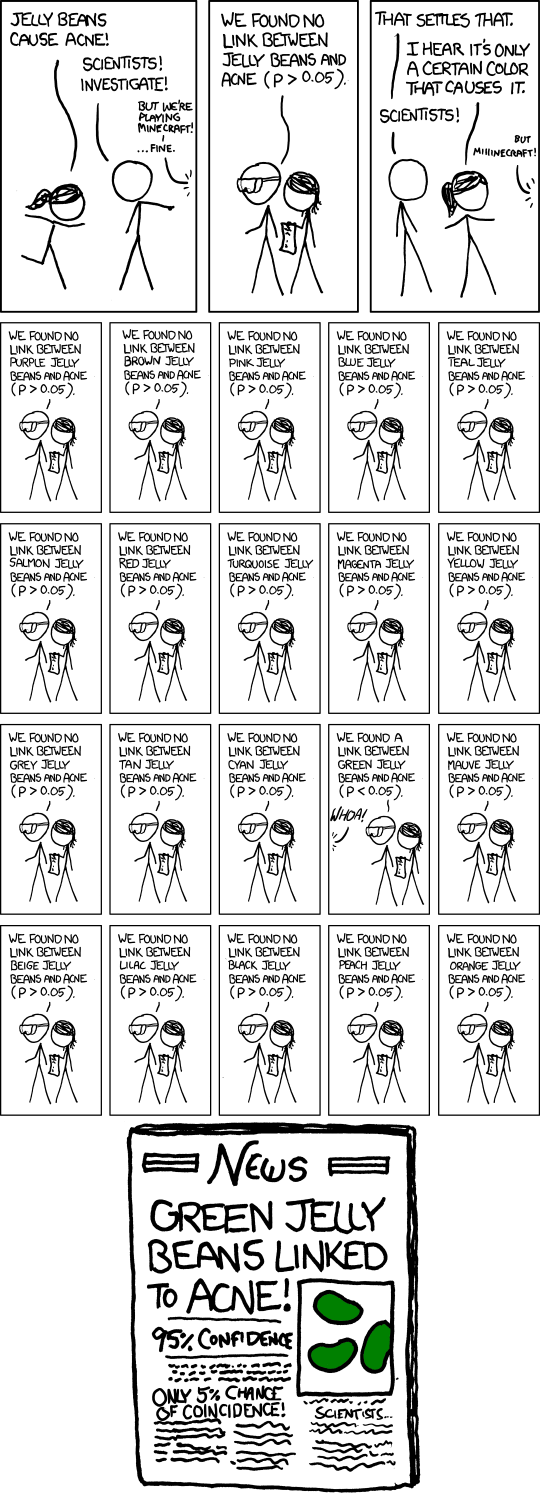
Data mining again

Examples of Spurious Relationships

Jim Rose's avatarUtopia, you are standing in it!

Observed Spurious RelationshipReason for Relationship (the Third Variable)
Amount of ice cream sold and deaths by drownings (Moore, 1993)Season: Ice cream sales and drownings tend to be high during the warm months of the year
Ministers’ salaries and price of vodkaArea (i.e., urban or rural): In urban areas, prices and salaries tend to be higher.
Shoe size and reading performance for elementary school childrenAge: Older children have larger shoe sizes and read better.
Number of doctors in region and number of people dying from diseasePopulation density: In highly dense areas, there are more doctors and more people die.
Number of doctors in region and number of people dying from diseasePopulation density: In highly dense areas, there are more police officers and more crimes.
Number of police officers and number of crimes (Glass & Hopkins, 1996)Population density: In highly dense areas, there are more…

View original post 162 more words

Earl Thompson

David Glasner's avatarUneasy Money

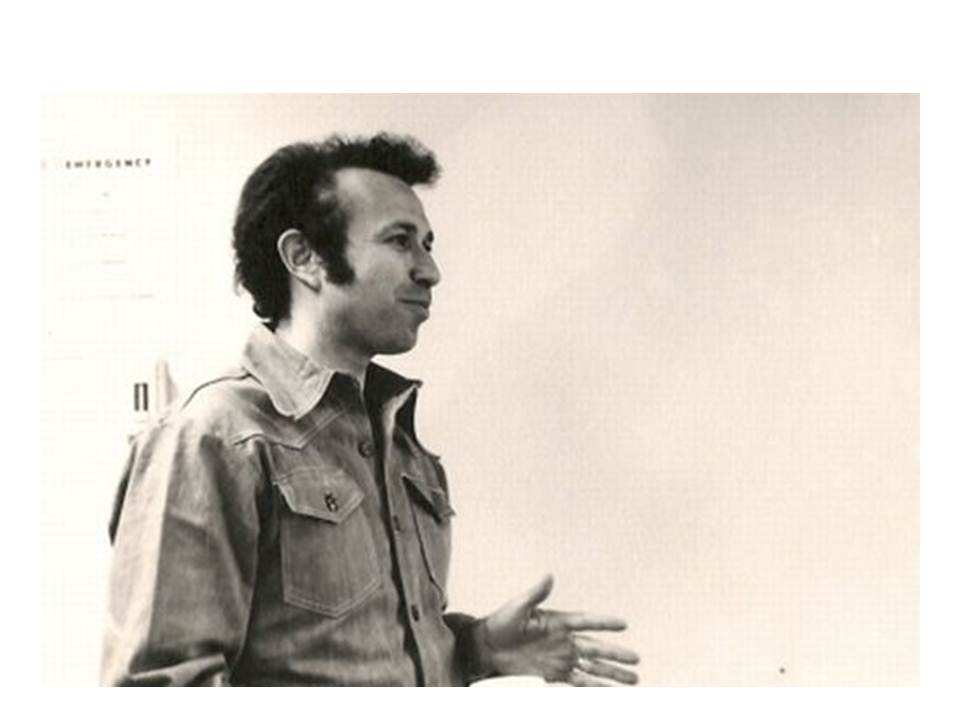
Sunday, July 29, will be the second anniversary of the sudden passing of Earl Thompson, one of the truly original and creative minds that the economics profession has ever produced. For some personal recollections of Earl, see the webpage devoted to him on the UCLA website, where a list of his publications and working papers, most of which are downloadable, is available. Some appreciations and recollections of Earl are available on the web (e.g, from Tyler Cowen, Scott Sumner,Josh Wright, and Thomas Lifson).  I attach a picture of Earl taken by a department secretary, Lorraine Grams, in 1974, when Earl was about 35 years old.

I first met Earl when I was an undergraduate at UCLA in the late 1960s, his reputation for brilliant, inconclastic, eccentricity already well established. My interactions with Earl as undergraduate were minimal, his other reputation as a disorganized and difficult-to-follow lecturer…

View original post 929 more words

Temporary Equilibrium One More Time

David Glasner's avatarUneasy Money

It’s always nice to be noticed, especially by Paul Krugman. So I am not upset, but in his response to my previous post, I don’t think that Krugman quite understood what I was trying to convey. I will try to be clearer this time. It will be easiest if I just quote from his post and insert my comments or explanations.

Glasner is right to say that the Hicksian IS-LM analysis comes most directly not out of Keynes but out of Hicks’s own Value and Capital, which introduced the concept of “temporary equilibrium”.

Actually, that’s not what I was trying to say. I wasn’t making any explicit connection between Hicks’s temporary-equilibrium concept from Value and Capital and the IS-LM model that he introduced two years earlier in his paper on Keynes and the Classics. Of course that doesn’t mean that the temporary equilibrium method isn’t connected to the…

View original post 1,017 more words

Now who would be against the single greatest medical innovation?

<em>Information via CDC. Image by Leon Farrant</em>

Image

think tanks vs. universities: a reply to eric crampton

fabiorojas's avatarorgtheory.net

Last week, I argued that academics face poor incentives. We are rewarded for solving hard problems, but rarely rewarded for simple, but important, problems. On Twitter, Eric Crampton suggested that my argument could be seen as a vote for think tanks as policy vehicles:

There’s a simple logic here. Policy is the whole point of think tanks. In practice, there would probably be a bias in favor of simple solutions as voters and politicians would have a tough time understanding complex solutions.

Still, I don’t see most think tanks as immune from perverse incentives. Rather, they have a different audience that imposes its own incentives. For example, an Atlantic article chronicles the decline of the Heritage Foundation as the primary source of high quality conservative policy work. The story is straightforward, the need for funding made it hard to resist the Tea Party. Heritage flipped on so many issues from…

View original post 69 more words

The growth versus redistribution

Image

Previous Older Entries Next Newer Entries

Bassett, Brash & Hide

Celebrating humanity's flourishing through the spread of capitalism and the rule of law

Truth on the Market

Scholarly commentary on law, economics, and more

The Undercover Historian

Beatrice Cherrier's blog

Matua Kahurangi

Celebrating humanity's flourishing through the spread of capitalism and the rule of law

Temple of Sociology

Celebrating humanity's flourishing through the spread of capitalism and the rule of law

Velvet Glove, Iron Fist

Celebrating humanity's flourishing through the spread of capitalism and the rule of law

Why Evolution Is True

Why Evolution is True is a blog written by Jerry Coyne, centered on evolution and biology but also dealing with diverse topics like politics, culture, and cats.

Down to Earth Kiwi

Celebrating humanity's flourishing through the spread of capitalism and the rule of law

NoTricksZone

Celebrating humanity's flourishing through the spread of capitalism and the rule of law

Homepaddock

A rural perspective with a blue tint by Ele Ludemann

Kiwiblog

DPF's Kiwiblog - Fomenting Happy Mischief since 2003

The Dangerous Economist

Celebrating humanity's flourishing through the spread of capitalism and the rule of law

Watts Up With That?

The world's most viewed site on global warming and climate change

The Logical Place

Tim Harding's writings on rationality, informal logic and skepticism

Doc's Books

A window into Doc Freiberger's library

The Risk-Monger

Let's examine hard decisions!

Uneasy Money

Commentary on monetary policy in the spirit of R. G. Hawtrey

Barrie Saunders

Thoughts on public policy and the media

Liberty Scott

Celebrating humanity's flourishing through the spread of capitalism and the rule of law

Point of Order

Politics and the economy

James Bowden's Blog

A blog (primarily) on Canadian and Commonwealth political history and institutions

Science Matters

Reading between the lines, and underneath the hype.

Peter Winsley

Economics, and such stuff as dreams are made on

A Venerable Puzzle

"The British constitution has always been puzzling, and always will be." --Queen Elizabeth II

The Antiplanner

Celebrating humanity's flourishing through the spread of capitalism and the rule of law

Bet On It

Celebrating humanity's flourishing through the spread of capitalism and the rule of law

History of Sorts

WORLD WAR II, MUSIC, HISTORY, HOLOCAUST

Roger Pielke Jr.

Undisciplined scholar, recovering academic

Offsetting Behaviour

Celebrating humanity's flourishing through the spread of capitalism and the rule of law

JONATHAN TURLEY

Res ipsa loquitur - The thing itself speaks

Conversable Economist

Celebrating humanity's flourishing through the spread of capitalism and the rule of law

The Victorian Commons

Researching the House of Commons, 1832-1868

The History of Parliament

Articles and research from the History of Parliament Trust

Books & Boots

Reflections on books and art

Legal History Miscellany

Posts on the History of Law, Crime, and Justice

Sex, Drugs and Economics

Celebrating humanity's flourishing through the spread of capitalism and the rule of law

European Royal History

Exploring the Monarchs of Europe

Tallbloke's Talkshop

Cutting edge science you can dice with

Marginal REVOLUTION

Small Steps Toward A Much Better World

NOT A LOT OF PEOPLE KNOW THAT

“We do not believe any group of men adequate enough or wise enough to operate without scrutiny or without criticism. We know that the only way to avoid error is to detect it, that the only way to detect it is to be free to inquire. We know that in secrecy error undetected will flourish and subvert”. - J Robert Oppenheimer.

STOP THESE THINGS

The truth about the great wind power fraud - we're not here to debate the wind industry, we're here to destroy it.

Lindsay Mitchell

Celebrating humanity's flourishing through the spread of capitalism and the rule of law

Alt-M

Celebrating humanity's flourishing through the spread of capitalism and the rule of law

croaking cassandra

Economics, public policy, monetary policy, financial regulation, with a New Zealand perspective

The Grumpy Economist

Celebrating humanity's flourishing through the spread of capitalism and the rule of law

International Liberty

Restraining Government in America and Around the World