
Instead of signing their name, Japanese stamp their name on forms, bank withdrawal slips and letters with a hanko (a signature stamp).
Without a hanko one can’t open a bank account in Japan or register for a university class. One professor told the Los Angeles Times, "I don’t exist in this society without my hanko."

Hankos are cylinders about the size of a piece of chalk. They have the person’s name carved at one end in Chinese characters and they leave an imprint after being stamped in ink.

Everyone from the Emperor to a homeless man living in a park has a hanko, and they are used for everything from finalizing a multi-million-dollar business deal to signing for packages delivered to one’s house.
The average Japanese has five hankos but only one is registered with the government to certify ownership and it is only used on important documents. Since these seals are considered too valuable to carry around, people have other seals to use for things like bank transactions and taking deliveries. A certificate of authenticity is required for any hanko used in a significant business transaction.
Many government documents have several hanko stamps. According to one estimate, typical bureaucrats puts his hanko on 100,000 documents in a 25 year career.
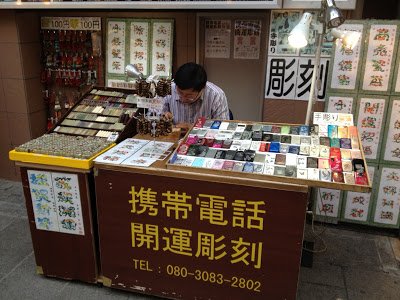
When I had a bank account in Japan, my hanko was the letters JR inside a circle. Anyone who stole that hanko could run of with my bank account balance. This did worry me and my friends at the International house . Anyone can go to a shop at the train station and get a hanko made with my initials on it.
 Utopia, you are standing in it!
Recent Comments