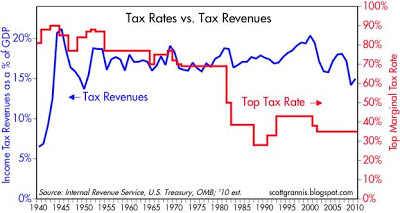
…in Deadweight Costs and the Size of Government (NBER Working Paper Number No. 6789) , [Gary Becker and Casey Mulligan] conclude that flatter and broader taxes also tend to encourage bigger government because taxpayers offer less resistance to increases in flat tax rates than in rates of more onerous and less efficient forms of taxation.
Any decline in the resistance of taxpayers leads to larger government budgets since an endless number of groups agitate for greater government support.
Flat tax rates, such as the VAT and Social Security taxes on earnings, usually start at very low levels but invariably increase over time.
The VAT is now 20 percent and higher in some countries. And payroll taxes began at a modest 2 percent in the 1930s in the United States, but have been increased 21 times to the present 15 percent combined rate on employees and employers.
 Utopia, you are standing in it!
Recent Comments