Rothbard really doesn’t like Adam Smith. Joseph Schumpeter wasn’t that fond of them either. Both didn’t like the fact that he gave little credit for the discoveries of prior economists.
George Stigler Adam Smith’s biggest fan among modern historians of economic thought.
Stigler made the point that multiple discoveries of new ideas is common.
Stigler’s best case for Adam Smith, which is a great case, is that after The Wealth of Nations, economics stayed discovered and became an organised discipline. Prior to that, it was a bunch of pamphlets and fragmented documents that repeated each other and was not moving forward.

The Celebrated Adam Smith
(Originally published as chapter 16 in An Austrian Perspective on the History of Economic Thought, Vol. I, Edward Elgar Press, 1995; Mises Institute, 2006. Sources on this chapter.)
The mystery of Adam Smith
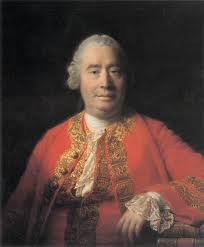 Adam Smith (1723-90) is a mystery in a puzzle wrapped in an enigma. The mystery is the enormous and unprecedented gap between Smith’s exalted reputation and the reality of his dubious contribution to economic thought.
Smith’s reputation almost blinds the sun. From shortly after his own day until very recently, he was thought to have created the science of economics virtually de novo. He was universally hailed as the Founding Father. Books on the history of economic thought, after a few well-deserved sneers at the mercantilists and a nod to the physiocrats, would invariably start with Smith as the creator of the discipline of economics…
View original post 19,644 more words
 Utopia, you are standing in it!
Recent Comments