– Updated
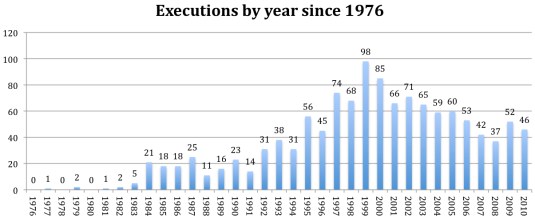
Many a data shyster will make hay with the above chart on the simple correlation between executions and the drop in the US murder rate.

The reality is there are so few executions and they are so infrequent with the exception of Texas that any purported correlation between the death penalty and murder rates requires careful study.

Indeed, for some condemned prisoners, gang bangers are an example, their life expectancy may be increased by the long time they spend on death row versus been murdered by a business associated or a business rival on the streets. As Levitt noted:
no rational criminal should be deterred by the death penalty, since the punishment is too distant and too unlikely to merit much attention.
As such, economists who argue that the death penalty works are put in the uncomfortable position of having to argue that criminals are irrationally overreacting when they are deterred by it.
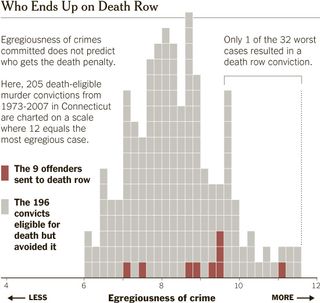
The occupational hazard of been murdered by business rival for gang bangers is higher than the chance of them been arrested, tried , convicted, and condemned to death and then executed after a long appeals process. Not surprisingly, Levitt argued that:
…the quality of life in prison is likely to have a greater impact on criminal behaviour than the death penalty.
Using state-level panel data covering the period 1950–90, we demonstrate that the death rate among prisoners (the best available proxy for prison conditions) is negatively correlated with crime rates, consistent with deterrence. This finding is shown to be quite robust.
In contrast, there is little systematic evidence that the execution rate influences crime rates in this time period.
 Utopia, you are standing in it!
Recent Comments