When an electorate seat becomes vacant in the New Zealand House of Representatives, there is a by-election. When there is a list seat vacancy, the vacancies are filled by the next person on the party list.

In Parliament of 120, and with mixed member proportional representation (MMP), virtually all New Zealand elections are close and have coalition governments. Through defections, since the introduction of MMP in 1996, two governments have lost their majority on the floor of the house and had to work for every vote or had to form into a new coalition in the middle of the Parliamentary term.
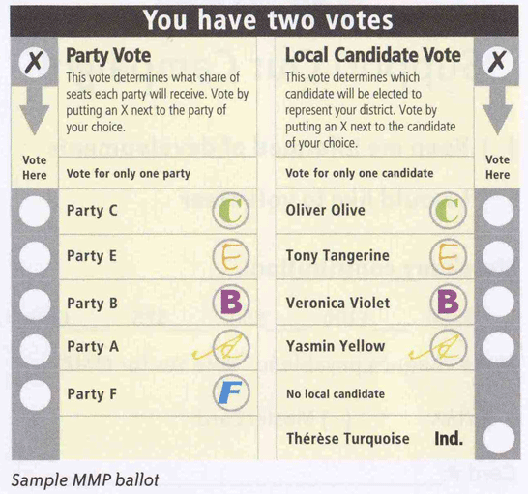
The major parties – the Labour Party and the National Party – have never won a majority in their own right. The National Party has 60 out of 121 seats in the current House of Representatives. That’s the closest anyone has got to governing in their own right. The Labour Party is never won more than 50 seats in the New Zealand Parliament since introduction of MMP.
There is a by-election shortly. It’s in a safe National Party seat. If the current casual vacancy and by-election was in a marginal seat, it’s possible that a by-election could upset the result of the recent General Election and distort the proportionality of Parliament.
The whole point of proportional representation is the parties win seats in Parliament equal to their party vote.
The solution to this constitutional risk is to abolish by-elections. In the Australian Senate, vacancies are filled by nominee of the same party from which the departing senator came from.
Casual vacancies in the House of Representatives for electorate seats could be filled by the next person on the party list or by a nominee of the registered political party from which the departing MP was elected in the General Election. That second option would allow the electorate seat to be filled by a party member who lives in the local area rather than the next member of the party list who could come from anywhere in the New Zealand.
 Utopia, you are standing in it!
Recent Comments