Why did environmentalists change her mind about pollution taxes being a ‘licence to pollute’?

When I was a lad, the environmental movement was dead set against pollution taxes. Robert N. Stavins and Bradley W. Whitehead said in 1992:

…for many years, market-based incentives were characterized by environmentalists, not only as impractical, but also as “licenses to pollute.” Over time, environmental groups have frequently applied a different and more rigorous standard in measuring market-based systems against their command-and-control counterparts, possibly because of their belief that market-based systems legitimize pollution by purporting to sell the right to pollute. This old suspicion likely continues among many rank-and-file environmentalists.

How times have changed. Now the environmental movement of the biggest champions of carbon taxes as well as carbon trading. What gives? Anything more than cynical political opportunism? Concede nothing until the last moment when it is tactically opportune to sideline opposition.
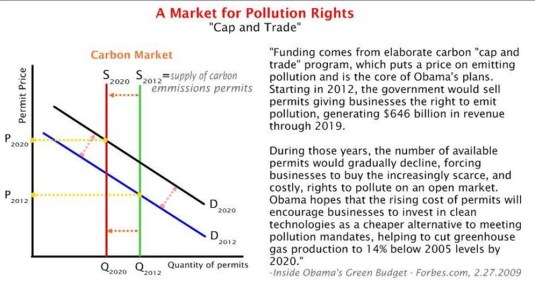
Initially, all environmental regulations were command and control regulations that specified quantities and the technologies to be mandated and gave no role to prices to ensure that the pollution reduction was done by those who could do it cheapest. Robert Crandall noticed the shift in position in his recent essay on pollution controls:

… environmentalists have increasingly realized that markets can work to allocate pollution reduction responsibilities efficiently among firms and across industries. Although the command-and-control approach is still the norm, environmental lobbyists and legislators have, on occasion, considered market-based approaches to pollution control. Most of the proposals for limiting global warming, for example, explicitly include market-based approaches for controlling carbon dioxide emissions.

The reason for the change in tactics by the environmental movement is quite straightforward. The deadweight cost of regulation and taxes that leads to increasing resistance from those subject to existing and proposed environmental regulations.

  • The deadweight losses of taxes, transfers and regulation are a constraint on inefficient policies (Becker 1983, 1985; Peltzman 1989).
  • The deadweight loss is the difference between winner’s gain less the loser’s losses from a tax or regulation-induced change in output. Changes in behaviour due to taxes and regulation reduce output and investment.
  • Policies that significantly cut the total wealth available for distribution by governments are avoided because they reduce the payoff from taxes and regulation relative to the germane counter-factual, which are other even costlier modes of redistribution (Becker 1983, 1985).

The rising deadweight cost of regulation due to technological change, and the dissipation of wealth through these rising costs progressively enfeebled environmental groups lobbying for more regulation. This allowed industry and consumers to win the initiative in resisting more environmental regulation. The cost of reducing carbon emissions is a classic example. Another is the United States acid rain allowance market.
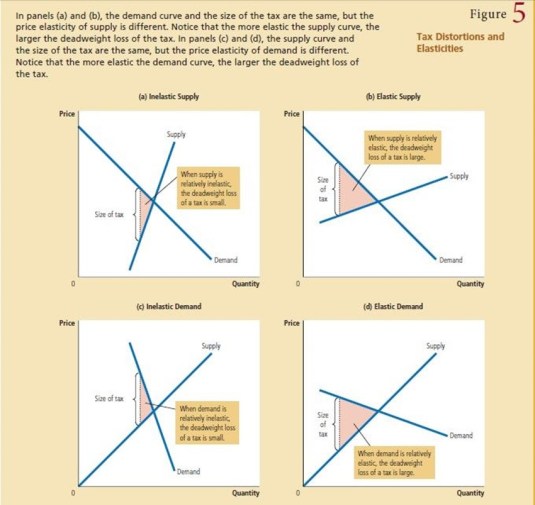
In the case of carbon emissions, the additional political pressure that the winners had to exert to keep the same reduction in carbon emissions had to overcome rising pressure from the losers such as carbon intensive industries and they consist customers to escape their escalating losses of complying with any sort of further carbon emission regulation.

Eventually, the fight was no longer worthwhile relative to the alternatives. Taxed, regulated and subsidised groups can find common ground in wealth enhancing policies and an encompassing interest in mitigating any reduction in wealth from public policies (Becker 1983, 1985; Peltzman 1989).

In the case of global warming, both the environmental movement, and carbon intensive industries, and consumers find common ground in finding a cheaper way of reducing carbon emissions. That is done by agreeing to either carbon trading or carbon taxes. Coalitions of environmentalists and industry also form where carbon emission taxes or trading disadvantage the competition of some industries and some competitors within the same industry.

Carbon trading was a classic example of these dark coalitions. There’s a big difference in their cost to industry depending on whether carbon trading quotas are auctioned or given away to the incumbent firms for free or at a discount price.

Leave a comment

This site uses Akismet to reduce spam. Learn how your comment data is processed.

The Undercover Historian

Beatrice Cherrier's blog

Matua Kahurangi

Celebrating humanity's flourishing through the spread of capitalism and the rule of law

Temple of Sociology

Celebrating humanity's flourishing through the spread of capitalism and the rule of law

Velvet Glove, Iron Fist

Celebrating humanity's flourishing through the spread of capitalism and the rule of law

CAMERA UK

COMMITTEE FOR ACCURACY IN MIDDLE EAST REPORTING AND ANALYSIS

Why Evolution Is True

Why Evolution is True is a blog written by Jerry Coyne, centered on evolution and biology but also dealing with diverse topics like politics, culture, and cats.

Down to Earth Kiwi

Celebrating humanity's flourishing through the spread of capitalism and the rule of law

NoTricksZone

Celebrating humanity's flourishing through the spread of capitalism and the rule of law

Homepaddock

A rural perspective with a blue tint by Ele Ludemann

Kiwiblog

DPF's Kiwiblog - Fomenting Happy Mischief since 2003

The Dangerous Economist

Celebrating humanity's flourishing through the spread of capitalism and the rule of law

Watts Up With That?

The world's most viewed site on global warming and climate change

The Logical Place

Tim Harding's writings on rationality, informal logic and skepticism

Doc's Books

A window into Doc Freiberger's library

The Risk-Monger

Let's examine hard decisions!

Uneasy Money

Commentary on monetary policy in the spirit of R. G. Hawtrey

Barrie Saunders

Thoughts on public policy and the media

Liberty Scott

Celebrating humanity's flourishing through the spread of capitalism and the rule of law

Point of Order

Politics and the economy

James Bowden's Blog

A blog (primarily) on Canadian and Commonwealth political history and institutions

Science Matters

Reading between the lines, and underneath the hype.

Peter Winsley

Economics, and such stuff as dreams are made on

A Venerable Puzzle

"The British constitution has always been puzzling, and always will be." --Queen Elizabeth II

The Antiplanner

Celebrating humanity's flourishing through the spread of capitalism and the rule of law

Bet On It

Celebrating humanity's flourishing through the spread of capitalism and the rule of law

History of Sorts

WORLD WAR II, MUSIC, HISTORY, HOLOCAUST

Roger Pielke Jr.

Undisciplined scholar, recovering academic

Offsetting Behaviour

Celebrating humanity's flourishing through the spread of capitalism and the rule of law

JONATHAN TURLEY

Res ipsa loquitur - The thing itself speaks

Conversable Economist

Celebrating humanity's flourishing through the spread of capitalism and the rule of law

The Victorian Commons

Researching the House of Commons, 1832-1868

The History of Parliament

Articles and research from the History of Parliament Trust

Books & Boots

Reflections on books and art

Legal History Miscellany

Posts on the History of Law, Crime, and Justice

Sex, Drugs and Economics

Celebrating humanity's flourishing through the spread of capitalism and the rule of law

European Royal History

Exploring the Monarchs of Europe

Tallbloke's Talkshop

Cutting edge science you can dice with

Marginal REVOLUTION

Small Steps Toward A Much Better World

NOT A LOT OF PEOPLE KNOW THAT

“We do not believe any group of men adequate enough or wise enough to operate without scrutiny or without criticism. We know that the only way to avoid error is to detect it, that the only way to detect it is to be free to inquire. We know that in secrecy error undetected will flourish and subvert”. - J Robert Oppenheimer.

STOP THESE THINGS

The truth about the great wind power fraud - we're not here to debate the wind industry, we're here to destroy it.

Lindsay Mitchell

Celebrating humanity's flourishing through the spread of capitalism and the rule of law

Alt-M

Celebrating humanity's flourishing through the spread of capitalism and the rule of law

croaking cassandra

Economics, public policy, monetary policy, financial regulation, with a New Zealand perspective

The Grumpy Economist

Celebrating humanity's flourishing through the spread of capitalism and the rule of law

International Liberty

Restraining Government in America and Around the World

Environmental and Urban Economics

Celebrating humanity's flourishing through the spread of capitalism and the rule of law

Supply and Demand (in that order)

Celebrating humanity's flourishing through the spread of capitalism and the rule of law