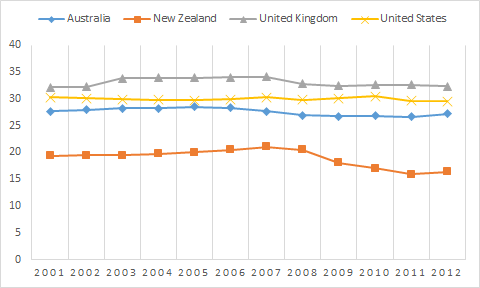
Figure 1: Direct taxes on the average worker in Australia, New Zealand, USA and UK, 2001 – 2012
Source: OECD Factbook 2014
Taxes on the average worker measure the ratio between the amount of taxes paid by the worker and the employer on the country average wage and the corresponding total labour cost for the employer. This tax wedge measures the extent to which the tax system on labour income discourages employment.
The taxes included in the measure are personal income taxes, employees’ social security contributions and employers’ social security contributions. For the few countries that have them, it also includes payroll taxes. The amount of these taxes paid in relation to the employment of one average worker is expressed as a percentage of their labour cost (gross wage plus employers’ social security contributions and payroll tax).
An average worker is defined as somebody who earns the average income of full-time workers of the country concerned in Sectors B-N of the International Standard Industrial Classification (ISIC Rev. 4). The average worker is considered single without children, meaning that he or she does not receive any tax relief in respect of a spouse, unmarried partner or child.
 Utopia, you are standing in it!
Recent Comments