With 99% of global R&D undertaken overseas, Steven Joyce, the Minister for Economic Development, simply missed the point in an op-ed today as to what was important in raising New Zealand’s economic growth potential. As a technology follower, the issue is New Zealand’s ability to import and absorb the latest technological innovations from overseas. The extent of local

Source: Steven Joyce: A chance for a land of milk and money – Politics – NZ Herald News.
Different national abilities to absorb technology innovations that were developed by the countries at the global frontier such as the USA will result in different national growth rates for countries that are technological followers (Acemoglu et al. 2006; Aghion and Howitt 2005, 2006; Howitt 2008). As a technological follower nation such as New Zealand approaches the global technological frontier, the types of institutions required for successful technology absorption changes markedly.
The world growth rate is driven by discoveries in the technologically leaders such as the USA, Japan, Germany, UK and France (Barro and Sala-i-Martin 1999). The richest OECD member countries are rich because they use almost all of the available global pool of useful technological knowledge. Their further growth is limited to growth in the global pool of technological knowledge (Parente 2001).
Technological followers such as Australia, Canada, and New Zealand converge toward the global technological leaders because copying is cheaper than innovation over some range. The cost of imitation is estimated to be 40 to 90 per cent of the cost of an innovation (Barro and Sala-i-Martin 1999). This ability of economic development latecomers to grow rapidly by importing and copying frontier technologies is the ‘advantage of backwardness’ (Gerschenkron 1952).
Appropriate institutions and distance from the global technology frontier
The kind of institutions and economic policies that are appropriate to sustain convergence and technology transfer evolve and become more demanding as a country approaches the global technological frontier (Acemoglu et al. 2006; Aghion and Howitt 2005, 2006). The key point from the discussion of endogenous growth theory that is to follow is that institutions that favour the implementation of imported technologies may not necessary favour innovation (Aghion and Howitt 2005, 2006).
The political, tax and regulatory institutions that favour the more ready-made implementation of more standardised imported technologies do not necessarily favour the growing demand for the domestic innovations in New Zealand as the global technological frontier nears. There is a growing demand for more highly skilled workers to master and adapt the leading-edge technologies to the distinctive circumstances of each New Zealand workplace.
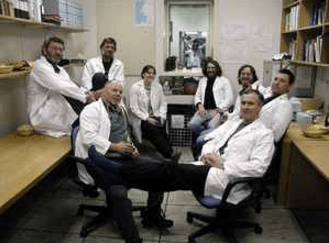 By innovation, I do not mean the lab coats model of R&D where boffins invent new products. By innovation, I mean workplace innovation where New Zealand workers master the latest technologies so they can squeeze every drop out of these new and upgraded products and adapt them to New Zealand markets.
Innovation is much more than the R&D that leads to design blueprints for new or upgraded products and production process. Technology transfer is much more than the unpacking of imported new equipment and production processes, the reading of the associated blueprints and operating manuals and some training when the latest imported technology is more complex and less established.
Technologies can be ranked in the level of human capital required in workers. Some technologies are routine in operation and implementation. Others can be much more complex and require local innovations in how the technology is operated and the workers need to be highly educated, well-trained and able to follow quickly the latest technological developments (Nelson and Phillips 1966).
Innovation is getting harder
As technology progresses, each new and upgraded product is a smaller and smaller increment and what came before. Innovation is haunted by fishing-out effects. The easier innovations are discovered first with more and more R&D and adaptation efforts required for further successes. With technological knowledge ever accumulating, and a greater complexity of new innovations, each new generation of innovators and workers that used new technologies face an increasing educational and research burden.
R&D efforts, human capital investments and on-the-job learning must be spread more and more thinly over a greater number of different sectors, products and production processes. Product proliferation requires a society to make ever-increasing investments in R&D, in human capital and in on-the-job learning to innovate and adopt and adapt new technologies at the same pace as before.
The trend rate of productivity growth did not accelerate over the 20th century despite a massive rise in investments in human capital and R&D because of the rising cost of discovering and adapting new technological knowledge. The number of both R&D workers and highly educated workers increased many-fold over the 20th century in New Zealand and other OECD member countries including the global industrial leaders such as the USA, Japan and major EU member states.
Trend productivity growth did not accelerate because innovation is simply getting harder. As modern technology advances, each new technology is more complex and the number of products and production processes proliferate exponentially.
Technology absorption is getting harder
In implementation models of technology diffusion, the imported technology is very much ready-made and proven rather than a recent innovation. Implementation it is more of an issue for developing countries where they lack many technologies. They are introducing proven technologies that spread widely in developed countries decades previous. It is really about unpacking the box and plugging it in.
Far from the frontier, the technology gap is so large so that growth in productivity from each innovation on the relatively old predecessors is large. As a laggard moves closer to the global technological frontier, the impact of each successive technology import will decline. The newer technology is a smaller and smaller upgrade on what it replaces (Aghion and Howitt 2005, 2006, 2009).
Close to the global technological frontier, there is less room for copying and easy adoption of well-established technologies. Many of the latest technologies are small upgrades on the previous product. Skill and entrepreneurial endeavour is needed to harvest all of the latest available quality improvement.

As technology followers such as New Zealand approach the global technological frontier, the institutions appropriate for continued productivity growth change. As a country moves closer to the global technological frontier, the impact of each successive technology import will decline. The latest imported technology is usually a smaller and smaller upgrade on before. A more skilled workforce and greater entrepreneurship is needed to squeeze out all of the available productivity and product quality gains from the latest imported technologies. This is in contrast to Mr. Joyce’s lab coats model where boffins spend R&D handouts from him.
As a country nears the global technological frontier, the impact of each successive technology imports is smaller. The newest imported technology is a smaller and smaller upgrade on what it replaced. A more skilled and experienced workforce is needed to meet the challenge to squeeze out all of the available productivity and product quality gains from the latest technologies (Ha and Howitt 2007).
The initial incarnations of new production technologies and new products are often expensive and bug-infested. Skilled and seasoned operators are needed to oversee their introduction and testing. Later versions of new products and processes are far more reliable and much cheaper to run. There are gradual improvements in quality of the product and in the way in which and the scale on which the product is produced and maintained. As a new technology becomes more established, there is less demand in the adopting firms for more skilled labour and an increased demand for less skilled labour (Greenwood 1999).
A leading reason behind the one to two decade or longer delay in any new technology moving from use by 10 per cent of an industry to 90 per cent use are the complexities of mastering new technologies. Jovanovic and Lach (1997) found a 15-year lag to go from 10 per cent to 90 per cent use for the 21 innovations they reviewed. Even for transformational technologies ranging from electricity to the Internet, a host of secondary innovations had to be invented, adopted and mastered over several decades before the most was made on their potential.
Access to technologies depends upon having a suitably prepared workforce. The costs of technology absorption and imitation are lower the more abundant is human capital in the technology importing country (Nelson and Phelps 1966; Benhabib and Spiegel 2005). A high proportion of skilled workers in the labour force are an inviting market to develop technologies to compliment those skills (Acemoglu 2002, 2003).
Many technologies developed by the industrial leaders are designed to make best use of the skills that are in good supply in the workforces of these countries. These skills are less abundant in follower countries. Some of the tasks performed by skilled workers in the industrial leaders will be carried out by less skilled workers when they use the same technology in a follower country. Since the technology is designed for use by skilled workers, productivity will be lower in countries with less of the required human capital. This mismatch between skills and technology can lead to sizable differences in total factor productivity and output per worker (Acemoglu and Zilibotti 2001).
Why did the EU stop catching-up?
The end of the EU’s productivity convergence with the USA from the late 1980s has been partly attributed to not making the shift from technology implementation enhancing institutions to innovation enhancing institutions (Aghion and Howitt 2005, 2006). Different types of policies or institutions appear to be growth-enhancing at different stages of development.
The institutions of the EU member states may have become inappropriate to its increasing proximity to the global technological frontier. Many of the EU member states had caught up with USA in capital-labour ratios and labour productivity. The institutions of the EU were the appropriate growth-enhancing institutions during this prior period of catch-up with the USA. The EU then reached the world technology frontier by the 1990s and this exhausts capital accumulation and technological imitation as sources of growth for technology laggards. By the 1990s, Europe needed to develop institutions that promoted innovation.
The EU had to switch over to innovation enhancing institutions but it did not successfully make this move. This switch required regulatory and tax reforms and more national investment in R&D and higher education. The EU falls short on these new institutional requirements because it lags the USA by 25 to 50 per cent in R&D and higher education spending relative to GDP and in the educational attainment of the respective workforces (Aghion 2006). The institutions of the EU were appropriate to facilitating catch-up but not to the encouraging of innovation.
The end by 1990 of the EU’s productivity convergence on the USA has been partly attributed to not making the policy shift from technology implementation enhancing institutions to innovation enhancing institutions. EU members invested far less than the USA in R&D and tertiary education had more rigid labour and product markets, had less entry and exit of firms, and much higher taxes.
Implementation-based and innovation-based policy regimes
The intensity and mix of innovation and imitation in a country will depend on institutions, policies and the composition of human capital in ways that vary with a country’s distance to global technological frontier (Aghion and Howitt 2005, 2006, 2009). Imitation of the technological leaders may be enhanced by long-term investments in large existing firms.
Innovation depends more on skill adequacy and is enhanced by institutions which screen out managers and allow shareholders to dismiss those who underperform. Innovation often requires initiative, risk-taking, the selection of good projects and talents, and the weeding out of those that are not to be profitable (Aghion and Howitt 2005, 2006).
The political, tax and regulatory institutions that favour the more ready-made implementation of more standardised imported technologies do not necessarily favour the growing demand for the domestic innovations in New Zealand as the global technological frontier nears. There is a growing demand for more highly skilled workers to master and adapt the leading-edge technologies to the distinctive circumstances of each New Zealand workplace to stay ahead in rapidly changing competitive environments and meet the changing needs of customers.
Productivity growth is not manna from heaven. Every increase in productivity and in product quality and variety are the sum of many inventions that must be first discovered by prospective innovators building on past ideas and developed, tested, adopted and adapted by profit-minded entrepreneurs and workers. Investments in R&D, in human capital and in on-the job learning and in the entrepreneurial judgments about risking investments in the new technologies that all underpin further growth in productivity are all influenced by public policies.
Far from the global technological frontier, the policy regime and institutional background of a technological follower can promote implementation based growth with established firms and an emphasis on a good primary and secondary education of workers.
Closer to the global technological frontier, capital accumulation and technological imitation will have been exhausted as the main sources of growth (Aghion and Howitt 2005, 2006). A country must turn to innovation, which is the ability for firms and highly skilled workers to move rapidly into new technologies and products and improve production processes. This calls for different skill levels and entrepreneurial approaches to implementation (Aghion and Howitt 2005, 2006). Tertiary education will became much more of a priority closer to the frontier.
As a country moves closer to the global frontier, its technological capabilities must change from just implementing imported technologies to modern R&D. Modern R&D draws heavily on scientific knowledge and methods, and requires higher skill levels (Aghion and Howitt 2005, 2006, 2009). The implementation of the more sophisticated imported technologies requires a more skilled work-force.
Modern R&D uses resources, including skill labour, to generate new knowledge about technological possibilities and these endeavours use scientific principles and methods to build on previous knowledge (Aghion and Howitt 2005, 2006; Ha and Howitt 2007). Invention and the lab-coat vision of R&D is a small part of modern innovation. Only a small fraction of R&D expenditures even in the USA is actually spent on invention and basic research. Most R&D is about the development and the adaptation of ideas for practical uses in the workplace and elsewhere (Jovanovic 1997; Greenwood and Jovanovic 2001). The majority of spending on schooling, on-the-job training and learning by doing, 10-15 per cent of GDP or more, is about informing students of their menu of technological options and preparing them to adapt these options to a great variety of both known and yet to be discovered uses (Jovanovic 1997; Greenwood and Jovanovic 2001).
Institutions that foster technology absorption
Productivity growth in New Zealand is principally about making the most of technology transfer by absorbing and adapting overseas invented technologies. The nature of technology absorption changes as a country approaches the global technological frontier. New Zealand can no longer rely on its workforce and entrepreneurs implementing of more straight-forward new product designs and new production process invented in the research sectors and workplaces of the global leaders to keep local productivity growing at two per cent per year.
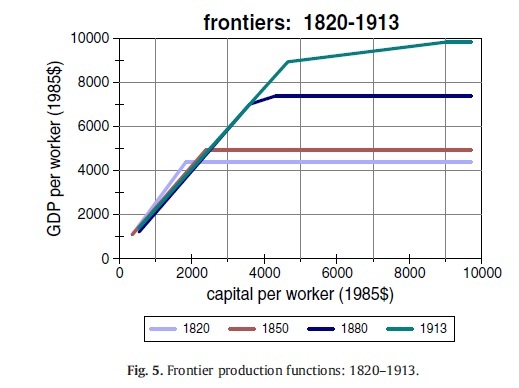
As an economy approaches the world technology frontier, there must be a switch from an implementation-based regime to an innovation-based policy regime with younger firms, fewer incumbents, better educated workers and more entry and exit. These newer and younger firms will be the standard bearers of the latest technologies. The threat of more new entry will induce incumbent firms to innovate more to parlay this growing threat of displacement be new entrants.
The local workforce must up-skill if the more leading edge technologies are to be understood and adapted. These technologies are designed to be used by more educated workers able to meet the challenges of operating complex technologies. The leading-edge technologies are more productive if paired with more highly skilled workers. Many secondary innovations and local adaptations are needed before the new technology can be fully mastered. These local technological adaptations are more complex and costly than for the prior technologies.
Close to the global technological frontier, firms and workers must be able and skilled enough to move rapidly into new activities and the latest technologies and be able to quickly improve and refine production processes and product designs. More and more of productivity growth will come from a rapid expansion of a locally based class of educated people who spend their careers exchanging ideas, solving work-related problems and generating new knowledge. Large productivity gains can be lost if there is a mismatch between technologies and the skills of the workers that operate it (Acemoglu and Aghion 2001).
Many legal and economic institutions must change. Changes are required to competition and entry policies, the funding to higher education, and the design of macroeconomic and tax policies that encourage investment, domestic savings and investment in human capital (Aghion and Howitt 2005, 2006, 2009). For example, more investments in higher education speeds transfer of the most complex frontier technologies.
The composition of human capital is important as the global technology frontier approaches. More and more university graduates are required to adapt the latest technologies successfully. This is partly because skilled labour is used intensively in the R&D process needed for the technology transfers.
It is also because the benefits from the diffusion of more complex technologies from the global leaders are faster where there are skilled local workers able to adapt these technologies and to use them most productively in-country. An effective education system will have a positive effect on long-run growth by increasing the efficiency of innovation technologies and investments, both of which are highly skill intensive, and by reducing the cost of skill labour, which in turn increases the profits that accrue to successful innovators and rapid technology adaptors.
Schumpeterian endogenous growth theory
The Minister of Economic Development is simply missed the second generation of endogenous growth theory and in particular Schumpeterian growth theory:
This new theory is explicit about who gains from technological progress, who loses, how the gains and losses depend on social arrangements, and how such arrangements affect society’s willingness and ability to create and cope with technological change.
The more demanding institutional requirements on countries that are closing in on the global technology frontier can make reform a prerequisite to continued current growth rather than higher trend growth. Entrepreneurial rewards drive invention and innovation and the import and adaptation of new technologies.
Innovation and adaptation becomes more complex as technology advances. Larger and longer investments are required in human capital to overcome the rising burden of knowledge to learn enough to continue innovating and adapting at the current pace. This made reforms to the adequacy of the rewards for entrepreneurship and human capital of increased importance in recent decades.
Lower company tax and less labour market regulation are the biggest contributions that government can make to raising the growth potential of the New Zealand economy. Instead, Stephen Joyce focuses on giving more and more handouts to boffins rent seeking boffins. The real innovators, the real entrepreneurs in the New Zealand economy responsible for importing and adapting the latest technologies from overseas must therefore carry an extra burden, a higher company tax, because of the success for rent seeking by boffins.
 Utopia, you are standing in it!
Recent Comments