
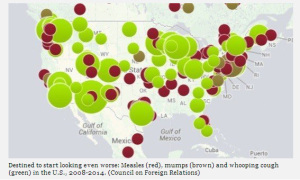
 The Los Angeles Times recently published a piece titled: “Measles is spreading, and the anti-vaccine movement is the cause”, and as you can imagine, this caught my attention.
Recently, I have had an empirical paper published in the open-access journal PLOS ONE, with Karen Douglas, my co-author and PhD supervisor. In two studies, we investigated the potential impact of anti-vaccine conspiracy beliefs – such as the belief that research on vaccine efficacy is manipulated to make profits for pharmaceutical companies -, and exposure to anti-vaccine conspiracy theories, on vaccination intentions.
In the first study, we surveyed 89 parents about their views on anti-vaccine conspiracy theories and then asked them to indicate their intention to have a fictional child vaccinated. It was found stronger belief in anti-vaccine conspiracy theories was associated with lower intentions to vaccinate. This relationship was found to be explained by three factors: perceived dangers…
View original post 264 more words
 Utopia, you are standing in it!
Recent Comments