
by Jan Stráský, Economist, OECD Economics Department
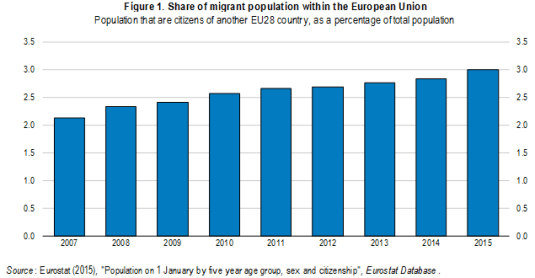
Labour market mobility in the European Union is increasing (Figure 1), but it remains too low to provide sufficient adjustment in the face of diverging labour market developments. This situation reflects non-policy factors, such as linguistic and cultural differences, but also policy barriers. In particular, difficulties in the recognition of professional qualifications are still a major hurdle.
Improvements in foreign language proficiency take time and require long-term policies. Publicly funded language courses aimed at cross-border workers are a useful tool, and should be provided. Even more important is to improve foreign language proficiency at an earlier stage, for example by considerably expanding the Erasmus student exchange programme that currently benefits only about 5% of European graduates.
Policy barriers to labour mobility in the EU have been reduced by a broader use of electronic procedures, such as the European Professional Card and the planned…
View original post 320 more words
 Utopia, you are standing in it!
Recent Comments