
Las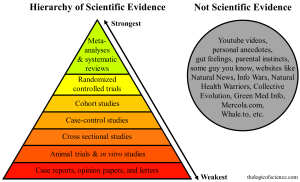 t week, I wrote a post on the hierarchy of scientific evidence which included the figure to the right. In that post, I explained why some types of scientific papers produced more robust results than others. Some people, however, took issue with that and accused me of committing a genetic fallacy because I was attacking the source of their information rather than the information itself. They were specifically unhappy about my claim that personal anecdotes, gut feelings, counter-factual websites, etc. did not constitute scientific evidence. After all, how dare I assert that their opinions weren’t as valuable as a carefully controlled study (note the immense sarcasm). In reality, of course, my argument was not fallacious, and they were simply misunderstanding how the genetic fallacy works. This misunderstanding is, however, quite common and somewhat understandable. The genetic fallacy can admittedly be very confusing. Therefore, I want to briefly explain what…
View original post 1,757 more words
 Utopia, you are standing in it!
Dec 27, 2016 @ 19:08:15
another very interesting post.
LikeLiked by 1 person