
Conspiracy theories have been shown to have potentially detrimental consequences on political, environmental, and health-related behaviour intentions. We have discussed these consequences on the blog previously. Recently, psychologists have extended this and explored how conspiracy theories may also impact our day-to-day working lives.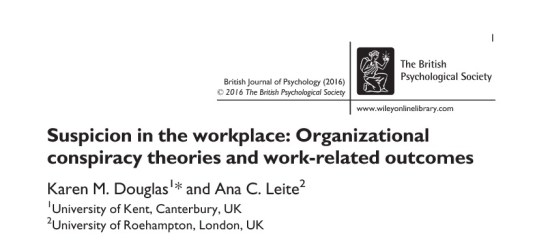
Prof. Karen Douglas and Dr Ana Leite define organisation conspiracy theories in their 2016 British Journal of Psychology paper as “notions that powerful groups (e.g., managers) within the workplace are acting in secret to achieve some kind of malevolent objective”. They argue organisation conspiracy theories are different from gossip and rumour, as organisation conspiracy theories are typically conspiracies between individuals, such as working together to get an employee fired.
Douglas and Leite found across three studies that organisation conspiracy theories were related to decreased organisational commitment and job satisfaction, thus then leading to increased turnover intentions. In other words, people were more likely to want to leave…
View original post 75 more words
 Utopia, you are standing in it!
Recent Comments