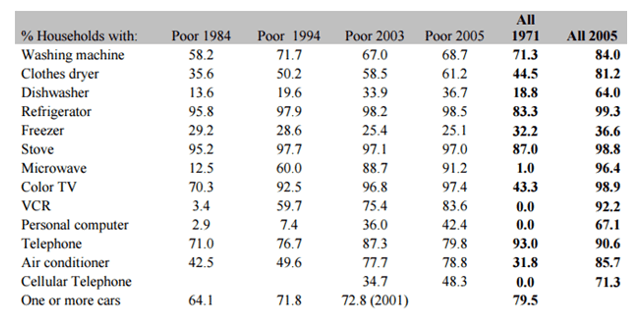
Poverty in America is no dishwasher
05 May 2017 Leave a comment
in economic history, politics - USA, poverty and inequality Tags: child poverty, family poverty, The Great Enrichment
The Russian Civil War: Every Other Day
04 May 2017 Leave a comment
in defence economics, economic history Tags: maps
Twenty five years on from Rushdie we are too frightened to say we are scared
04 May 2017 Leave a comment

British publishing is now such a neurotic and hypocritical business there are stories it cannot cover. Nor should it try. When journalists, writers and artists can’t be honest with their audience, when they can’t even be honest with themselves, silence is preferable to the damage their double-standards bring.
Last month our media commemorated the imminent anniversary of the fatwa against Salman Rushdie by trying and failing to report the threats to the life of Maajid Nawaz, the chief executive of Quilliam Foundation. In a vindication of Kipling’s “once you have paid him the Dane-geld/you never get rid of the Dane” fanatics are after Nawaz not because he satirised the founding myths of Islam, as Rushdie did, or projected sexist verses from the Koran on to a naked woman’s body, as Theo van Gogh and Ayaan Hirsi Ali did, but because – brace yourselves – he tweeted a picture of Jesus…
View original post 1,294 more words
Local polls and general elections: a Victorian perspective
04 May 2017 Leave a comment
in economics

As barometers of political opinion, local elections have long had a special place in British politics, offering useful (though not necessarily accurate) guides to national trends. The link between local and national polls, however, has always been complicated. As the pundits get to grips with this week’s local polls and what they might tell us about next month’s general election, spare a thought for the original pioneers (voters and parties) of England’s first town council elections.
England’s first municipal polls of 1835 were unbelievably complex by today’s standards. Held in the same year as the fourth(!) hotly contested general election to take place in less than five years, this new set of elections to create town councils quickly became highly politicised. What made 1835 especially unusual was the need to elect entire councils all in one go and then hold yet another poll to replace any councillors nominated as aldermen…
View original post 632 more words
Indian Muslim Village Bans Women Using Cell Phones In Public
04 May 2017 Leave a comment
in economics

 Muslim elders in an Indian village have banned women from using mobile phones in public because they might use the phones to speak with men. Any woman found using a cell phone faces a fine of $325, a huge amount for most villagers.
View original post 152 more words
The Most Complex International Borders in the World – Part 2
04 May 2017 Leave a comment
in International law Tags: economics of borders, maps
The heroes of the Age of Enlightenment were proud blasphemers
04 May 2017 Leave a comment
in economics of religion, liberalism Tags: atheism, Blasphemy, Freedom of religion





Submission to Select Committee on Employment Relations (Allowing Higher Earners to Contract Out of Personal Grievance Provisions) Amendment Bill
04 May 2017 Leave a comment
in applied price theory, labour economics, politics - New Zealand
This Bill will increase the wages of employees paid more than the contracting out limit. Currently, these workers share the risk of a job match turning out not as hoped with their employer. Their employers respond by reducing the wages they offer because of this additional risk placed on them if the job match turns out a disappointment. Asking an employee of any pay level to take on more of the risks of an unsuccessful job match will only happen if you offer them more wages.
Employment protection laws make it costlier to fire an employee, employers will be more cautious about hiring and will pay less because they carry the burden if a job match going wrong.
Not all job matches turn out to be as hoped and the further up the management hierarchy you go, the more likely that the Peter principle, that employees are promoted one or two levels beyond the level of maximum competence. Successful employees may simply take that one promotion to many. This increases the risk premium in managerial and executive labour markets. The way in which this risk premium is shared between employer and recruit influences how much they are paid.
Employers who failed to treat workers fairly and pay them the going wage risk an increase in job quit rates. A standard literature review result is businesses spend about one-fifth of an employee’s annual salary to replace that worker. It is costly to replace workers because of the productivity losses when someone leaves a job, the costs of hiring and training a new employee, and the slower productivity until the new employee gets up to speed in their new job. With large fixed costs of recruitment and training, employers cannot afford to behave whimsically if they wish to survive in competition with the rivals with more competitive wage and employment policies.

The Centre for American Progress was good enough to document the very substantial costs of
recruiting and training a replacement employee. Employers have every reason to protect their investments in training and recruitment by minimising job turnover costs.

A policy designed to protect workers from dismissal, over time, will increase the duration of unemployment spells through a chilling effect on job creation. Employment protection laws are a tax on job creation. With fewer vacancies posted, the unemployed will take longer to find jobs. The far longer average duration of unemployment in countries in Europe with strong employment protection is shown that to be true time again. Fewer jobs are created fewer people fired so fewer vacancies open so the unemployed spend longer searching for new jobs.

There are very high outflow rates from unemployment among the Anglo-Saxon and Nordic economies. The economies of Continental Europe stand in stark contrast. Unemployment outflow rates in these economies lie below 10% at a monthly frequency.
Graduate textbooks in labour economics show that a wide range of studies have found the predicted negative effects of employment law protections on employment and wages and on investment and the establishment and growth of businesses:
1. Employment law protections make it costlier to both hire and fire workers.
2. The rigour of employment law has no great effect on the rate of unemployment. That being the case, stronger employment laws do not affect unemployment by much.
3. What is clear is that is more rigourous employment law protections increase the duration of unemployment spells. With fewer people being hired, it takes longer to find a new job.
4. Stronger employment law protections also reduce the number of young people and older workers working age who hold a job.
5. The people who suffer the most from strong employment laws are young people, women and older adults. They are outside looking in on a privileged subsection of insiders in the workforce who have stable, long-term jobs and who change jobs infrequently.
Trial periods are common in OECD countries. There is plenty of evidence that increased job security leads to less employee effort and more absenteeism. Some examples are:
- Sick leave spiking straight after probation periods ended;
- Teacher absenteeism increasing after getting tenure after 5-years; and
- Academic productivity declining after winning tenure.
Jacob (2013) found that the ability to dismiss teachers on probation – those with less than five years’ experience – reduced teacher absences by 10% and reduced frequent absences by 25%.
Studies also show that where workers are recruited on a trial, employers have to pay higher wages. For example, teachers that are employed with less job security, or with longer trial periods are paid more than teachers that quickly secure tenure.
Workers who start on a trial tend to be more productive and quit less often. The reason is that there was a better job match. Workers do not apply for jobs to which they think they will be less suited. By applying for jobs that the worker thinks they will be a better fit, everyone gains in terms of wages, job security and productivity.
The only thing that is special about chief executives and others paid more than $150,000 is they are higher risk recruitments because of the costs of it going wrong. They also pose great costs on the firm if they leave unexpectedly.
Bang Dang Nguyen and Kasper Meisner Nielsen looked at how share prices reacted to 149 cases of the chief executive or another prominent manager dying suddenly in American companies between 1991 and 2008. If the shares rise on an executive’s death, he was overpaid; if they fall, he was not. Only 42% of the bosses studied were overpaid. Those with the bigger pay packages gave the best value for money as measured by the share-price slump when they passed away unexpectedly.
Share prices do speak to the value of the company and the contribution of its CEO. The share price of Apple went up and down by billions on the back of rumours about the health of Steve Jobs.
In terms of splitting of what some call the labour surplus increase from a firm hiring an executive, these employees retain on average about 71% and their employer keeps 29%. Others call this rent sharing. 71% going to the CEO might initially sound high, “but it’s not like he’s taking home more than he produced for the company,” says Nguyen.
In summary, this bill will increase the salaries of those affected by it. It will make it easier for them to find jobs especially if from less conventional backgrounds.
Offsetting behaviour alert: boxing headguards @EricCrampton
04 May 2017 Leave a comment
in health and safety, labour economics, occupational choice, sports economics Tags: health and safety, offsetting behaviour, unintended consequences
Syria’s war: Who is fighting and why [Updated]
04 May 2017 Leave a comment
in defence economics Tags: Syrian Civil War
 Utopia, you are standing in it!
Recent Comments