‘Not another one!’: going to the polls in historical perspective

Philip Salmon's avatarThe History of Parliament

With UK electors heading off to the national polls for the third time in as many years and as part of our Election 2017 series, Dr Philip Salmon, editor of the Victorian Commons, looks for similar levels of electioneering activity in earlier periods…

By June the UK will have clocked up its fifth general election this century – an average of one every 3.4 years. Although this is slightly higher than the 19th century average (one every 3.8 years) and the 20th century (one every 4), it is remarkably similar in terms of each century’s first two decades: five elections had taken place by 1818 and five by 1918, an average of one every 3.6 years. Add in last year’s referendum, however, and modern voters will have experienced two general elections separated by a gap of just two years, and three national polls in a…

View original post 692 more words

Re-assessing the (not so) Fixed-term Parliaments Act

Unknown's avatarThe Constitution Unit Blog

On Monday 22 May the Constitution Unit hosted a debate on the Fixed-term Parliaments Act. Against the backdrop of an early general election and a Conservative manifesto promise to scrap the Act, Carl Gardner and Professor Gavin Phillipson (Durham) argued the merits of the Act and the potential legal implications of its repeal. Kasim Khorasanee reports.

The Fixed-term Parliaments Act 2011 was enacted under the Conservative-Liberal Democrat coalition government to regulate when general elections were held. Previously general elections were required at least every five years but their exact timing was a matter of royal prerogative, in practice exercised by the Prime Minister. The Act fixed the length of each session of the House of Commons, unless an early general election could be called. The Act set out two mechanisms to call an early general election. The first – which was relied upon to call the 2017 general election –…

View original post 1,208 more words

Contingencies of Company Law: On the Corporate Form and English Company Law, 1500-1900

bbatiz's avatarThe NEP-HIS Blog

The Development of English Company Law before 1900

By: John D. Turner (Queen’s University Belfast)

Abstract: This article outlines the development of English company law in the four centuries before 1900. The main focus is on the evolution of the corporate form and the five key legal characteristics of the corporation – separate legal personality, limited liability, transferable joint stock, delegated management, and investor ownership. The article outlines how these features developed in guilds, regulated companies, and the great mercantilist and moneyed companies. I then move on to examine the State’s control of incorporation and the attempts by the founders and lawyers of unincorporated business enterprises to craft the legal characteristics of the corporation. Finally, the article analyses the forces behind the liberalisation of incorporation law in the middle of the nineteenth century.

URL: http://econpapers.repec.org/paper/zbwqucehw/201701.htm

Ditributed by NEP-HIS on: 2017-02-19

Review by Jeroen Veldman (Cass Business School, City University)

The…

View original post 1,669 more words

Corbyn, Terrorism and Intervention

The Gerasites's avatarThe Gerasites

By Harris Coverley

Let me just make a few things clear: after all these years I am still a socialist. I voted Labour in 2015 (and would do so all over again), and find myself broadly agreeing with a lot of what the current Labour manifesto has to offer. I never supported the Iraq War, and I feel the War in Afghanistan was mismanaged, as was the intervention in Libya. However, I cannot bring myself to vote Labour due to the leadership of Jeremy Corbyn, one of the most pressing issues of contention being his relationship to, and opinions of, terrorism.

This piece was originally two separate posts that I have edited together to form one full whole for publication here. The original posts can be found here and here.

On Corbyn’s Terrorism Speech, Islamist Terrorism and the Left’s “Terrorism Problem”

Firstly there is the issue of Corbyn’s speech,

View original post 4,440 more words

Washington Post Poll: Trump Would Still Beat Clinton

jonathanturley's avatarJONATHAN TURLEY

Hillary_Clinton_Testimony_to_House_Select_Committee_on_Benghazi

There is an interesting finding from a Washington Post poll that is rather buried in the story: “The new survey finds 46 percent saying they voted for Clinton and 43 percent for Trump, similar to her two-point national vote margin. Asked how they would vote if the election were held today, 43 say they would support Trump and 40 percent say Clinton.”  Given Trump’s dismal popularity (perhaps the least popular president in the first 100 days in office since the start of modern polling), it was a surprising result.  It comes at a time when Clinton has been listing a number of reasons for her historic defeat . . . except for herself.  This includes her explanation (and her supporters) that it was not Clinton but self-hating, misogynistic women who could not vote for any woman for President.

View original post 256 more words

Hillary Clinton: “I Take Responsibility For Every Decision I Made, But That’s Not Why I Lost”

Excellent summary

jonathanturley's avatarJONATHAN TURLEY

Hillary_Clinton_Testimony_to_House_Select_Committee_on_BenghaziWe have previously discussed how Clinton has blamed self-hating women, the Russians, and a long list of reasons for her loss . . . except for herself.   Despite losing the virtually unloseable election to Donald Trump, Clinton continues to be celebrated by Democratic insiders in speeches and continues to blame others for her historic loss.  That campaign was in full view this week with Clinton’s appearance at the annual Code Conference in Rancho Palos Verdes, California.  Clinton continues to evade tough questions about her own conduct while giving the false impression of taking responsibility.  This week she crafted a truly Clintonesque line: “I take responsibility for every decision I made, but that’s not why I lost.”  In other words, I take no responsibility.  As many on this blog know, I have been very critical of Trump but I have no more patience with Clinton or the establishment figures who brought about this…

View original post 1,172 more words

Top 10 Celebrities You Didn’t Know Were on Star Trek TV Shows

Is the Trade Deficit a Problem? Murray Rothbard

In one graph, why the #ParisAgreement is useless

Quantitative Macroeconomics| Nobel Laureate Tom Sargent

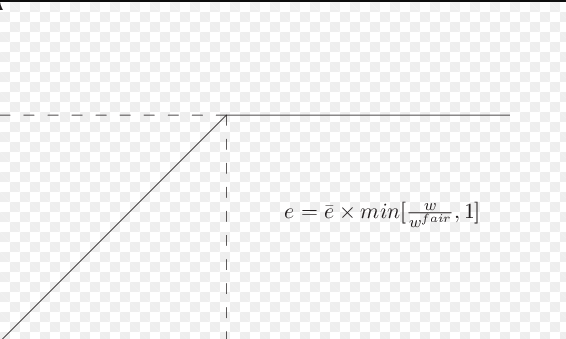
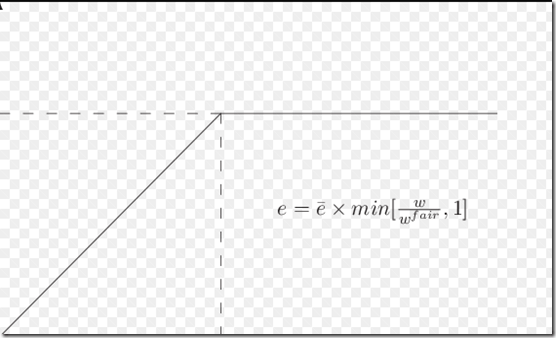
The fair-wage effort hypothesis is a theory of mass low-skilled unemployment

image

Living wage advocates make much of the demoralising effects of pay inequality on workplace productivity. In common with the efficiency wage hypothesis, this is another example of what Nozick (1974) called normative sociology; the study of what the causes of social problems ought to be. Again, living wage activists misconstrue what the fair-wage effort hypothesis was seeking to explain.

The fair-wage effort hypothesis aimed to fill gaps in the efficiency wage hypothesis by explaining why unemployment is so much higher among the lower skilled (Akerlof and Yellen 1988, 1990). Under the fair-wage effort hypothesis, workers slack off if paid less than they think they deserve:

The motivation for the fair wage-effort hypothesis is a simple observation concerning human behavior: when people do not get what they deserve, they try to get even (Akerlof and Yellen 1990, p. 256).

Lazear (1989, 1991) contends that employers too may want greater pay equity to temper over-competitiveness in teams. If pay and promotions in a team are linked to the relative performance of its members, large pay differentials may undermine co-operation and might encourage sabotage:

Very large pay spreads induce high effort, but they also create a work environment in the firm that is not very pleasant… individuals who are competing with one another can either seek to outperform others, or they can contribute to the failure of others. Such incentives can result in collusion (Dye, 1984) or in sabotage (Lazear, 1989). Thus, pay structure must strike a balance between providing incentives for effort and reducing the adverse consequences associated with this kind of industrial politics (Lazear and Shaw 2007, p. 95).

Lazear’s (1989, 1991) theory about the industrial politics arising from pay inequality stressed how sizable rewards to individual members of a team could lead to a lack of team play and lower team output. If the prizes were smaller for superior relative performance, the pay rise after a promotion or the annual performance bonus, there may be more teamwork (Lazear 1989, 1991). Akerlof and Yellen (1990) were correct in their insight that their hypothesis about fair-wage effort applies more to workers on lower wages with fewer chances of moving up promotion ladders and pay scales.

The fair-wage effort hypothesis is but another Keynesian macroeconomic theory of unemployment:

The hypothesis explains the existence of unemployment. Unemployment occurs when the fair wage w* exceeds the market-clearing wage. With natural specifications of the determination of w*, this hypothesis may explain why skill and unemployment are negatively correlated. In addition, it potentially explains wage differentials and labor market segmentation (Akerlof and Yellen 1990, p. 256).

The fair-wage effort hypothesis was developed as a descendant of the efficiency wage hypothesis because the latter cannot explain why wages are high for everyone working in high-paid industries:

All workers in better-paid industries tend to receive positive wage premia. That is, the wages of secretaries and engineers are highly correlated across industries. Ease of supervision and the magnitude of turnover costs might well be correlated across industries for a given occupation explaining, for example, why, say, skilled machinery operators receive positive wage premia in most industries. But there is no obvious reason why, say, secretaries, should be harder to supervise in the chemical industry where pay is high, than in the apparel industry where pay is low (Akerlof and Yellen 1988, p. 44).

The efficiency wage hypothesis also offered “no natural explanation” for why unemployment rates [JC1] are much higher among the lower-skilled (Akerlof and Yellen 1990). Skilled workers are probably more difficult to monitor than the unskilled so their unemployment rates should be higher than for the low-skilled as a worker discipline device but the contrary is the case (Akerlof and Yellen 1990).

The fair-wage effort hypothesis aimed to fill gaps in the efficiency wage theory of unemployment by explaining why low skilled unemployment is much higher both in recessions and in better times. Living wage activists must accept that their demands for workplace pay equity increase low-skilled unemployment under a Keynesian theory which they embrace with considerable enthusiasm.

If high wages are paid to the more skilled to attract the best applicants, demands for pay equity by their less skilled co-workers could price some of them out of the market leading to unemployment (Akerlof and Yellen 1988, 1990). In addition, pay equity norms are unlikely to respond quickly enough to fluctuations in aggregate demand so wages can be too high in recessions causing mass unemployment of the low skilled (Akerlof and Yellen 1988, 1990; Summers 1988). The unemployed cannot successfully offer to work for less than existing workers do in a recession because they cannot make a credible commitment to eschew fairness considerations once hired (Akerlof 2002).

An important premise of New Keynesian macroeconomics is demands for pay equity come at a price. At a price that is high enough for the efficiency wage and fair-wage effort hypotheses to be put as a comprehensive New Keynesian explanations of involuntary mass unemployment (Gordon 1990).

Both the efficiency wage hypothesis and the fair-wage effort hypothesis are attempts to flesh out a theory of extensive labour market dysfunction leading to mass unemployment. Living wage activists are using Keynesian theories of why wages are too high to argue for even higher wages.

We can save the environment AND fix public transit — with unicorns!

Bassett, Brash & Hide

Celebrating humanity's flourishing through the spread of capitalism and the rule of law

Truth on the Market

Scholarly commentary on law, economics, and more

The Undercover Historian

Beatrice Cherrier's blog

Matua Kahurangi

Celebrating humanity's flourishing through the spread of capitalism and the rule of law

Temple of Sociology

Celebrating humanity's flourishing through the spread of capitalism and the rule of law

Velvet Glove, Iron Fist

Celebrating humanity's flourishing through the spread of capitalism and the rule of law

Why Evolution Is True

Why Evolution is True is a blog written by Jerry Coyne, centered on evolution and biology but also dealing with diverse topics like politics, culture, and cats.

Down to Earth Kiwi

Celebrating humanity's flourishing through the spread of capitalism and the rule of law

NoTricksZone

Celebrating humanity's flourishing through the spread of capitalism and the rule of law

Homepaddock

A rural perspective with a blue tint by Ele Ludemann

Kiwiblog

DPF's Kiwiblog - Fomenting Happy Mischief since 2003

The Dangerous Economist

Celebrating humanity's flourishing through the spread of capitalism and the rule of law

Watts Up With That?

The world's most viewed site on global warming and climate change

The Logical Place

Tim Harding's writings on rationality, informal logic and skepticism

Doc's Books

A window into Doc Freiberger's library

The Risk-Monger

Let's examine hard decisions!

Uneasy Money

Commentary on monetary policy in the spirit of R. G. Hawtrey

Barrie Saunders

Thoughts on public policy and the media

Liberty Scott

Celebrating humanity's flourishing through the spread of capitalism and the rule of law

Point of Order

Politics and the economy

James Bowden's Blog

A blog (primarily) on Canadian and Commonwealth political history and institutions

Science Matters

Reading between the lines, and underneath the hype.

Peter Winsley

Economics, and such stuff as dreams are made on

A Venerable Puzzle

"The British constitution has always been puzzling, and always will be." --Queen Elizabeth II

The Antiplanner

Celebrating humanity's flourishing through the spread of capitalism and the rule of law

Bet On It

Celebrating humanity's flourishing through the spread of capitalism and the rule of law

History of Sorts

WORLD WAR II, MUSIC, HISTORY, HOLOCAUST

Roger Pielke Jr.

Undisciplined scholar, recovering academic

Offsetting Behaviour

Celebrating humanity's flourishing through the spread of capitalism and the rule of law

JONATHAN TURLEY

Res ipsa loquitur - The thing itself speaks

Conversable Economist

Celebrating humanity's flourishing through the spread of capitalism and the rule of law

The Victorian Commons

Researching the House of Commons, 1832-1868

The History of Parliament

Articles and research from the History of Parliament Trust

Books & Boots

Reflections on books and art

Legal History Miscellany

Posts on the History of Law, Crime, and Justice

Sex, Drugs and Economics

Celebrating humanity's flourishing through the spread of capitalism and the rule of law

European Royal History

Exploring the Monarchs of Europe

Tallbloke's Talkshop

Cutting edge science you can dice with

Marginal REVOLUTION

Small Steps Toward A Much Better World

NOT A LOT OF PEOPLE KNOW THAT

“We do not believe any group of men adequate enough or wise enough to operate without scrutiny or without criticism. We know that the only way to avoid error is to detect it, that the only way to detect it is to be free to inquire. We know that in secrecy error undetected will flourish and subvert”. - J Robert Oppenheimer.

STOP THESE THINGS

The truth about the great wind power fraud - we're not here to debate the wind industry, we're here to destroy it.

Lindsay Mitchell

Celebrating humanity's flourishing through the spread of capitalism and the rule of law

Alt-M

Celebrating humanity's flourishing through the spread of capitalism and the rule of law

croaking cassandra

Economics, public policy, monetary policy, financial regulation, with a New Zealand perspective

The Grumpy Economist

Celebrating humanity's flourishing through the spread of capitalism and the rule of law

International Liberty

Restraining Government in America and Around the World