The “1867 As Year Zero” School of Canadian History

J.W.J. Bowden's avatarJames Bowden's Blog

John Boyko’s Book on John A. Macdonald

Historian John Boyko appeared on The Agenda with Steve Paikin on 30 May in order to promote his new book, Sir John’s Echo: The Voice for a Stronger Canada. Boyko presents this warmed over case for Macdonald’s centralized view of federalism and his initial support for a “legislative union” (i.e., a unitary state) of amalgamating the various British North American colonies into one new colony with one order of government. Boyko therefore focuses on the division of powers contained in sections 91 and 92 of the British North America Act, 1867, and emphasizes his own support of the principle in the POGG Clause in section 91 that non-enumerated, residual authorities fall within the competence of the Parliament of Canada and not the provincial legislatures.

He subscribes to what I call The 1867 as Year Zero School of Canadian history: for him…

View original post 1,887 more words

The BBC think that the Speaker, John Bercow, is still a Tory (I bet he’s chuffed with that)

Prof. Colin R Talbot's avatarColin Talbot - my blog

All morning the BBC have been repeating that the Tories have won 318  seats in the House of Commons (expected to rise to 319).

But that is wrong, because they include Mr Speaker as a Tory. His seat is counted as a Tory seat, his votes as Tory votes. But he isn’t.

View original post 184 more words

Lofoten Islands Aurora

The election of the Speaker: myth and reality

Unknown's avatarThe Constitution Unit Blog

When the newly elected House of Commons meets on Tuesday, its first task will be the election of the Speaker. In this post, Andrew Kennon explains how this will work and separates some of the myths surrounding the process from reality.

When the newly elected House of Commons meets for the first time on Tuesday, the first business – even before swearing in all MPs – will be election of the Speaker. John Bercow, who won his Buckingham seat with a majority of over 25,000 on Thursday, is expected to be re-elected unopposed, though prior to the election there was some talk of a challenge. What are the myths and realities surrounding this process?

Is the Speaker always re-elected unopposed?

This is what has happened in practice. Every Speaker who has been re-elected to the House – normally with other parties not putting up rival candidates in the constituency…

View original post 1,806 more words

Simon & Garfunkel – Sounds Of Silence (Live Canadian TV, 1966)

How much market power do employers have and over whom?

The only labour markets with any significant evidence of a power of employers to keep wages down by the more than even a few percentage points are professional sports and professors (Boal and Ransom 1997, 2002; Ashenfelter, Farber and Ransom 2010; Hirsch 2008; Hirsch and Schumacher 2005). These professionals have few alternatives for their specialised skills. They invest up-front in skills demanded by one sport or one or two universities per city. It is in higher skilled markets where employers might take advantage of the more limited mobility of specialised human capital.


By contrast, the low-paid search in thick job markets because they can apply for most any unskilled vacancy in any industry that is albeit within their commuting radius (Hutt 1973; Alchian and Allen 1967, 1983; Manning and Petrongolo 2011). The higher skilled search in markets much thinner in near-by vacancies that open regularly which are well-matched to their idiosyncratic backgrounds (Lazear 2009; Fishback 1998; Manning 2006, 2011). The main hiring criteria for low-skilled vacancies is that the successful recruits be friendly and reliable (Osterman 2001). Little of their human capital is specialised and whose value depends on staying with one employer for a length of time.

Activists do not give employers their due for seeing entrepreneurial gain in tying their own hands to prevent opportunistic behaviour towards employees of all pay grades. Employers and the employee to accumulate specialised skills or experience have an incentive to share the costs and returns of that human capital to bind themselves to each other (Oi 1962, 1983a; Becker 1993). The employer pays for part of costs of specific human capital while the worker’s trainee wage pays for the rest. Employers then pay a premium over the wages the up-skilled worker could earn elsewhere to induce them to stay long enough to recoup their joint training investment (Leuven 2005; Becker 1993).

Many contractual and other arrangements emerge to reduce mischief in long-term relationships where one party depends on the other to stay in the relationship long enough for their specialised investment to be recouped (Alchian and Woodward 1987, 1988). Without long-term safeguards against opportunism after specialised assets have been sunk, many valuable relationships rich in specialised human capital might not be formed (Klein 1984, 1998; Klein, Crawford and Alchian 1978).

There is evidence that workers with similar skills in similarly attractive jobs, occupations and locations earn similar pay (Hirsch 2008). There can be unexpected shifts in the supply or demand for skills but these imbalances even themselves out once people have time to learn, update their expectations and adapt to the new market conditions (Ryoo and Rosen 2004; Bettinger 2010; Zafar 2011; Arcidiacono, Hotz and Kang 2012; Webbink and Hartog 2004). Skills supply and student enrolments can be ‘remarkably sensitive’ to changing career prospects (Ryoo and Rosen 2004).

Activists underrate the hand that the low-paid play. Employers are more likely to have power over the wages of higher skilled workers because of the more limited mobility of their human capital.

Despite these concerns about employer power over the wages of the more skilled, there is good evidence that the demand and supply of human capital responds to wage changes. Over- or under-supplied human capital leaves and enters in response to changes in wages until the returns from education and training even out with time (Ryoo and Rosen 2004; Arcidiacono, Hotz and Kang 2012; Ehrenberg 2004). As evidence of this equalisation of the returns on human capital across labour markets, the returns to post-school investments in human capital are similar – 9 to 10 percent – across alternative occupations, and in occupations requiring low and high levels of training, low and high aptitude and for workers with more and less education (Freeman and Hirsch 2001, 2008). Activists are proposing a living wage increase far larger than any upper-hand employers might play.

Illogic on the Minimum Wage

Jon Murphy's avatarA Force for Good

The Canadian Broadcasting Corporation (CBC) ran a piece promoting some supposed benefits to a minimum wage hike.  There are quite a few issues, both in the article and the study it cites.

View original post 1,013 more words

Mama Kitty’s Rescue

The Saints (I’m) Stranded (Brisbane TV 1976)

Corbyn’s History

Trump Offers To Testify Under Oath

jonathanturley's avatarJONATHAN TURLEY

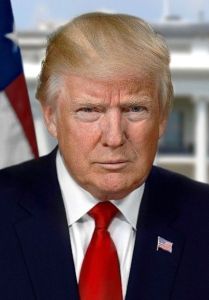
donald_trump_president-elect_portrait_croppedPresident Trump surprised people late Friday by announcing that he is “100 percent” willing to testify under oath about his interactions with James Comey.  There has been considerable speculation about Trump’s willingness to go under oath.  His counsel could have negotiated at least initially for an interview without going under oath.  As I have stated before, the greatest threat facing officials in a scandal of this kind is a false statements prosecution under 18 U.S.C. 1001.  Given Trump’s notorious habit for going off script, the risks of such a violation would be much higher for counsel prepping him for such a deposition or testimony.
View original post 282 more words

will sociology build the wall? on objectivity in social science

And they say economists are biased.

The discussion of the gini coefficient in different countries is misleading because to be poor in America is to be lower middle class in New Zealand, one of the comparison countries.

jeffguhin's avatarorgtheory.net

(The following is a guest post from Barış Büyükokutan)

ASA President-Elect Mary Romero’s call to put sociology in the service of social justice by doing away with “false notions of ‘objectivity’” triggered a fierce debate about the public mission of sociology. In opposition to Romero’s position and Juan Pablo Pardo-Guerra’s defense of that position, I would like to point out that objectivity is not opposed to social justice. On the contrary, objectivity is a prerequisite of any effective prosecution of injustice.

We live in a time period in which injustice is objectively a problem, both for scholars as a puzzle – i.e. “why so much injustice here but not there” – and for citizens as actual experiences. And we do not lack for decent methods of showing this objective reality. Take, for a very basic instance, the Gini coefficient, which is not just relatively easy to calculate but also easy…

View original post 2,117 more words

Tallest Man in History – Robert Wadlow 8ft11

Video

The Real Balance of Power in the House of Commons

Prof. Colin R Talbot's avatarColin Talbot - my blog

Well, I didn’t see that coming.

I will leave (for the moment) others to begin the unpacking of how the result happened. I want to just do a quick (and accurate) check on where this leaves the House of Commons and therefore power.

Firstly the Conservatives have won 317* seats at the time of writing (with 649 of 650 seats declared).

(*not 318 as the BBC are reporting. For some odd reason they are including the Speaker – who is no longer a member of any Party – as a Tory as I explain here.)

View original post 279 more words

THE COP21 AGREEMENT – JUST THE FACTS, PLEASE

climatewise101's avatarFriends of Science Calgary

Contributed by Robert Lyman © 2017

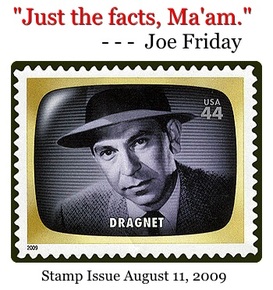
In the classic television series Dragnet, broadcast in the 1950’s, the main character was a deadpan detective named Joe Friday. Friday would cut through the stories being told to him by any witness by insisting, “Just the facts, please”. Dragnet became a model for many different police dramas over the years, and the advice, “Just the facts, please” took its place in the English language as a helpful reminder of how to get past much of the confusion surrounding any discussion.

just-the-facts

I thought of this as I read and listened to the comments in the broadcast and social media concerning the Trump Administration’s decision to withdraw the United States from the current United Nations agreement, reached at the Conference of the Parties in December 2015 (COP21), to deal with climate change. According to the media comments, the sky is truly falling and the United States…

View original post 1,640 more words

Previous Older Entries

Bassett, Brash & Hide

Celebrating humanity's flourishing through the spread of capitalism and the rule of law

Truth on the Market

Scholarly commentary on law, economics, and more

The Undercover Historian

Beatrice Cherrier's blog

Matua Kahurangi

Celebrating humanity's flourishing through the spread of capitalism and the rule of law

Temple of Sociology

Celebrating humanity's flourishing through the spread of capitalism and the rule of law

Velvet Glove, Iron Fist

Celebrating humanity's flourishing through the spread of capitalism and the rule of law

Why Evolution Is True

Why Evolution is True is a blog written by Jerry Coyne, centered on evolution and biology but also dealing with diverse topics like politics, culture, and cats.

Down to Earth Kiwi

Celebrating humanity's flourishing through the spread of capitalism and the rule of law

NoTricksZone

Celebrating humanity's flourishing through the spread of capitalism and the rule of law

Homepaddock

A rural perspective with a blue tint by Ele Ludemann

Kiwiblog

DPF's Kiwiblog - Fomenting Happy Mischief since 2003

The Dangerous Economist

Celebrating humanity's flourishing through the spread of capitalism and the rule of law

Watts Up With That?

The world's most viewed site on global warming and climate change

The Logical Place

Tim Harding's writings on rationality, informal logic and skepticism

Doc's Books

A window into Doc Freiberger's library

The Risk-Monger

Let's examine hard decisions!

Uneasy Money

Commentary on monetary policy in the spirit of R. G. Hawtrey

Barrie Saunders

Thoughts on public policy and the media

Liberty Scott

Celebrating humanity's flourishing through the spread of capitalism and the rule of law

Point of Order

Politics and the economy

James Bowden's Blog

A blog (primarily) on Canadian and Commonwealth political history and institutions

Science Matters

Reading between the lines, and underneath the hype.

Peter Winsley

Economics, and such stuff as dreams are made on

A Venerable Puzzle

"The British constitution has always been puzzling, and always will be." --Queen Elizabeth II

The Antiplanner

Celebrating humanity's flourishing through the spread of capitalism and the rule of law

Bet On It

Celebrating humanity's flourishing through the spread of capitalism and the rule of law

History of Sorts

WORLD WAR II, MUSIC, HISTORY, HOLOCAUST

Roger Pielke Jr.

Undisciplined scholar, recovering academic

Offsetting Behaviour

Celebrating humanity's flourishing through the spread of capitalism and the rule of law

JONATHAN TURLEY

Res ipsa loquitur - The thing itself speaks

Conversable Economist

Celebrating humanity's flourishing through the spread of capitalism and the rule of law

The Victorian Commons

Researching the House of Commons, 1832-1868

The History of Parliament

Articles and research from the History of Parliament Trust

Books & Boots

Reflections on books and art

Legal History Miscellany

Posts on the History of Law, Crime, and Justice

Sex, Drugs and Economics

Celebrating humanity's flourishing through the spread of capitalism and the rule of law

European Royal History

Exploring the Monarchs of Europe

Tallbloke's Talkshop

Cutting edge science you can dice with

Marginal REVOLUTION

Small Steps Toward A Much Better World

NOT A LOT OF PEOPLE KNOW THAT

“We do not believe any group of men adequate enough or wise enough to operate without scrutiny or without criticism. We know that the only way to avoid error is to detect it, that the only way to detect it is to be free to inquire. We know that in secrecy error undetected will flourish and subvert”. - J Robert Oppenheimer.

STOP THESE THINGS

The truth about the great wind power fraud - we're not here to debate the wind industry, we're here to destroy it.

Lindsay Mitchell

Celebrating humanity's flourishing through the spread of capitalism and the rule of law

Alt-M

Celebrating humanity's flourishing through the spread of capitalism and the rule of law

croaking cassandra

Economics, public policy, monetary policy, financial regulation, with a New Zealand perspective

The Grumpy Economist

Celebrating humanity's flourishing through the spread of capitalism and the rule of law

International Liberty

Restraining Government in America and Around the World