Unison v Lord Chancellor: the things that landmark constitutional cases are made of
28 Jul 2017 Leave a comment
in economics

 On Wednesday the UK Supreme Court ruled court fees for claims before employment tribunals, introduced by the coalition government in 2013, to be illegal. Christina Lienen argues that this judgement is likely to join the ranks of landmark constitutional decisions, given its characterisation of the UK constitution as founded in common law and therefore in the hands of judges rather than politicians.
On Wednesday, in a single majority judgement, the United Kingdom Supreme Court (‘UKSC’) declared the recently introduced court fees for claims before employment tribunals and employment appeal tribunal to be unlawful. In this post it is argued that Unison v Lord Chancellor [2017] UKSC 51 promises to join the ranks of constitutional landmark decisions owing to (i) the autochthonous choice of legal sources and particularly the reliance on common law constitutional rights, and (ii) the unequivocal commitment to the rule of law. Their significance is underpinned…
View original post 1,525 more words

Infographics: The History and Fall of the Berlin Wall
28 Jul 2017 Leave a comment
in economics

Last February, we marked the 26th anniversary of the fall of the Berlin Wall. On November 9, 1989, the structure that divided the city of Berlin into East and West, and was the source of tremendous political controversy, was brought down. While reunification has been a long and challenging process, Berlin has now become a thriving city, featuring some of the most active and exciting artist communities in the world. From graffiti to installation, youth culture has reclaimed the city to forge a brighter, more positive future. This advancement, in only a quarter of a century, is remarkable for those who lived in a brutally divided city.
Here are three infographics that highlight some of the history on the political motivation for the wall, iterations of development of the wall, and the overall significance of the fall of the wall.
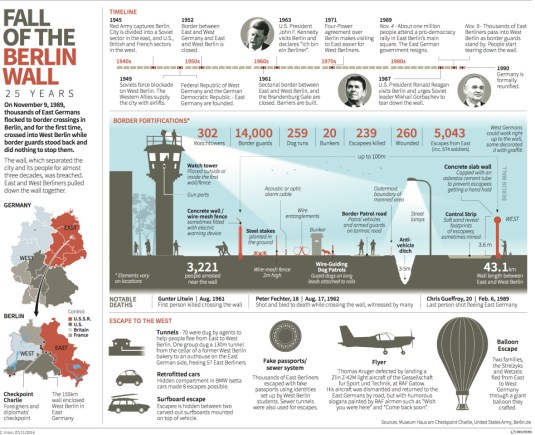
Via Thomson Reuters
 Via Visual Loop
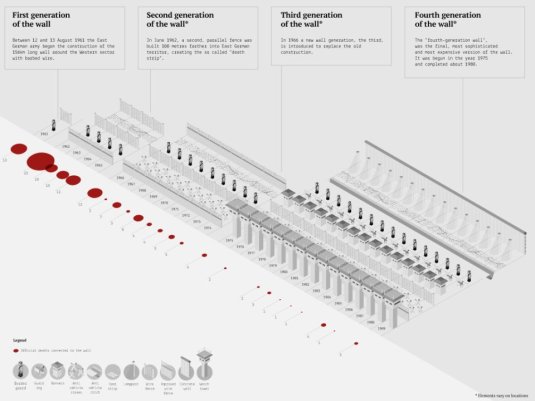 Via Sara Perozzi
View original post 23 more words
A Primer on Inequality, Growth, and Fairness
28 Jul 2017 Leave a comment
in economics

In addition to his exemplary work as a Senior Fellow for the Cato Institute, Johan Norberg narrates some great videos for Free to Choose Media. Here are some that caught my eye.
- The foolish and counterproductive War on Drugs.
- A grim consequence of Cuban communism.
- The real lesson to learn from Sweden.
But my favorite video, which I shared back in January, is his concise explanation of why policy makers should focus on fighting poverty rather than reducing inequality.
I’m posting it again to set the stage for a discussion on inequality and fairness.
Now let’s dig into the main topic for today.
A study by three academics from Yale’s Department of Psychology concludes that people want fairness rather than equality.
…there is no evidence that people are bothered by economic inequality itself. Rather, they are bothered by something that is often confounded with inequality: economic unfairness. Drawing upon…
View original post 1,462 more words

Michigan Judge Threatens To Throw Out Plea Bargain After Murderer Smirks Through Victim Statement
27 Jul 2017 Leave a comment
in economics

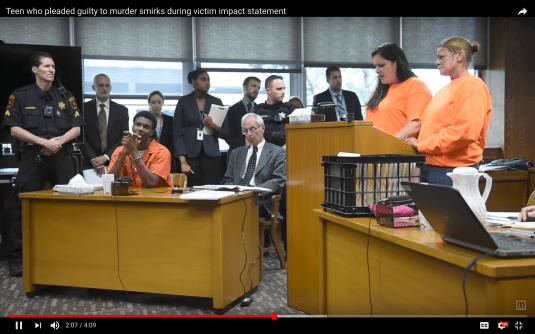 Defense counsel often discuss demeanor in court with our clients. One thing that we all agree on is that it is a uniquely bad idea to smirk during victim statements, particularly in a murder case. That is one lesson Danta Wright, 17, did not learn and it almost cost him the plea bargain negotiated with prosecutors.
View original post 149 more words
Judge Richard Posner Declares Support For Supreme Court Expansion Proposal
27 Jul 2017 Leave a comment
in economics
I have previously discussed the legendary career of Judge Richard Posner of the United States Supreme Court. Widely viewed as the father of Law and Economics, Posner remains one of greatest influences on American jurisprudence in the history of this country. I have long been a great admirer of his work and teach his theories as part of my torts course. It is for that reason that I was delighted when my co-counsel sent me the interview below where Judge Posner expressed support for the proposal that I have advanced for many years to reform the Supreme Court. Posner agrees with the proposal to expand the Supreme Court to nineteen members.
View original post 744 more words
 Utopia, you are standing in it!


Recent Comments