Activists have ample opportunities seek redress for their grievances through normal democratic means. This is especially so when the activist mounting the greater good defence are recently resigned members of Parliament or the immediate past leader of political parties.
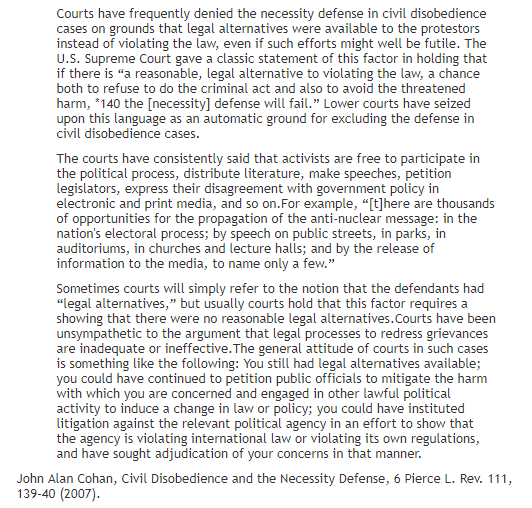
Source: The Case for Disallowing the Necessity Defense in Climate Change Cases – ProfessorBainbridge.com.
The necessity defence (or the defence for cannibalism on a lifeboat defence) exists only if
- if the harm that would have resulted from compliance with the law would have significantly exceeded the harm actually resulting from the defendant’s breach of the law.
- there is no legal alternative to breaking the law,
- the harm to be prevented is imminent, and
- there is a direct, causal connection between breaking the law and preventing the harm.
Left-wing activists will be happy to know that the defence is unavailable to anti-abortion protesters because there is no harm to be avoided if the practice under protest is specifically condoned by law. Mining and offshore drilling are also specifically authorised by law.
Most of all, the greater good defence will make no difference to what Greenpeace are protesting against. A one-day publicity stunt does not change the world, much less reduce the harm from climate change. Their protesting will never prevent a imminent harm.
The purpose of lawful, peaceful protest is to implore the majority to think again and perhaps change their mind. It is not the purpose of a lawful, peaceful protest to prevent another from going about their lawful occasions. Protests should never be a means of coercing or frightening others in a democracy into conforming to your wishes.
The great virtue of a democracy is it readily enables the people, over time, to be persuaded that what they took for granted is not so and change the law accordingly. Noisy protesters from across the political spectrum stage publicity stunts to catch the public’s eye in the hope of doing this.
 Utopia, you are standing in it!
Recent Comments