Construction is not a rising costs industry

The literatures on urban, housing and construction economics all suggest that construction is a constant costs industry (Glaeser, Gyourko and Saiz 2008). Differences in building costs in the wider construction industry arise from differences in: local topology, local regulatory environments, the extent of unionisation, and the level of local wages generally (Glaeser, Gyourko and Saiz 2008).
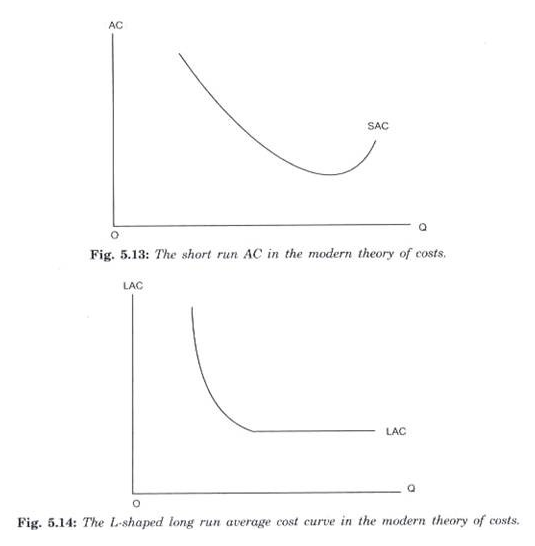
A constant costs industry can expand rapidly such as when a large project arises without putting pressure on costs. The construction industry everywhere developed with many small firms with prolific use of subcontractors much smaller than the head contractor. Firms in most industries including construction capture all available economies of scale at relatively small sizes. After that point where these scale economies are capture, there is a long region of production where the marginal cost of increases in production is constant (Stigler 1958, 1987; Barzel and Kochin 1992; and Shughart 1997).
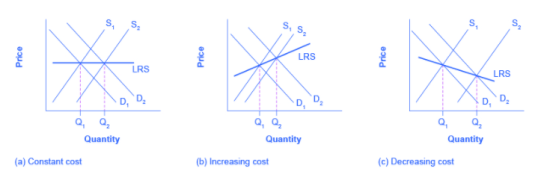
As an example of constant costs in construction, recall the construction boom in New Zealand between 2001 and 2008. The Department of Labour (2011) found the construction industry found a great many additional workers to meet this rapidly rising demand without large increases in labour costs. There was a 54% increase in employment between 2001 and 2008, from 125,000 in 2001 to 194,000 in 2008; employment across all industries over the same period increased by 23% (Department of Labour 2011). The majority of these new construction workers came from other industries with the rest were from outside the labour force or from relying on welfare benefits (Department of Labour 2011).

Despite this need to find a great mass of new workers, pay increases were only marginally higher than the construction industry than those across all industries, as the Department of Labour (2011) explains:

The Labour Cost Index (LCI), which adjusts for human capital and hours of work supplied, shows that wages in construction increased by 3.0% per year over this period compared with 2.8% for all industries. In what was a strong economy of the mid-2000s, the construction industry recruited many more workers without a relatively large increase in real labour costs.

The construction cost increases during the last housing boom were not due to input cost inflation. The industry wanted to build more houses on a faster timeline. This put a different type of pressure on costs.

Costs are sensitive to the speed of output as well as the total output planned (Alchian 1959; Stigler 1987). Producing the same thing sooner rather than later increases total, marginal, incremental, and average costs (Alchian 1959). Fast-tracking raises co-ordination costs, less efficient lower quality inputs must be used to increase the rate of production, and there is less time to identify the best inputs and lowest cost production processes. Wage premiums are paid for longer hours and lost weekends. There are few opportunities to learn by doing. Learning by doing reduces the cost of future output, but with fast tracking, more is produced now and less at the lower cost in the future (Alchian 1959; Stigler 1987).

Cost overruns is just not something that happens in the construction industry because costs rise rapidly with scale when a big project is underway. The industry is a constant costs industry. Something more fundamental must be driving cost blow-outs in road construction than purported diseconomies of scale.

Leave a comment

This site uses Akismet to reduce spam. Learn how your comment data is processed.

Bassett, Brash & Hide

Celebrating humanity's flourishing through the spread of capitalism and the rule of law

Truth on the Market

Scholarly commentary on law, economics, and more

The Undercover Historian

Beatrice Cherrier's blog

Matua Kahurangi

Celebrating humanity's flourishing through the spread of capitalism and the rule of law

Temple of Sociology

Celebrating humanity's flourishing through the spread of capitalism and the rule of law

Velvet Glove, Iron Fist

Celebrating humanity's flourishing through the spread of capitalism and the rule of law

Why Evolution Is True

Why Evolution is True is a blog written by Jerry Coyne, centered on evolution and biology but also dealing with diverse topics like politics, culture, and cats.

Down to Earth Kiwi

Celebrating humanity's flourishing through the spread of capitalism and the rule of law

NoTricksZone

Celebrating humanity's flourishing through the spread of capitalism and the rule of law

Homepaddock

A rural perspective with a blue tint by Ele Ludemann

Kiwiblog

DPF's Kiwiblog - Fomenting Happy Mischief since 2003

The Dangerous Economist

Celebrating humanity's flourishing through the spread of capitalism and the rule of law

Watts Up With That?

The world's most viewed site on global warming and climate change

The Logical Place

Tim Harding's writings on rationality, informal logic and skepticism

Doc's Books

A window into Doc Freiberger's library

The Risk-Monger

Let's examine hard decisions!

Uneasy Money

Commentary on monetary policy in the spirit of R. G. Hawtrey

Barrie Saunders

Thoughts on public policy and the media

Liberty Scott

Celebrating humanity's flourishing through the spread of capitalism and the rule of law

Point of Order

Politics and the economy

James Bowden's Blog

A blog (primarily) on Canadian and Commonwealth political history and institutions

Science Matters

Reading between the lines, and underneath the hype.

Peter Winsley

Economics, and such stuff as dreams are made on

A Venerable Puzzle

"The British constitution has always been puzzling, and always will be." --Queen Elizabeth II

The Antiplanner

Celebrating humanity's flourishing through the spread of capitalism and the rule of law

Bet On It

Celebrating humanity's flourishing through the spread of capitalism and the rule of law

History of Sorts

WORLD WAR II, MUSIC, HISTORY, HOLOCAUST

Roger Pielke Jr.

Undisciplined scholar, recovering academic

Offsetting Behaviour

Celebrating humanity's flourishing through the spread of capitalism and the rule of law

JONATHAN TURLEY

Res ipsa loquitur - The thing itself speaks

Conversable Economist

Celebrating humanity's flourishing through the spread of capitalism and the rule of law

The Victorian Commons

Researching the House of Commons, 1832-1868

The History of Parliament

Articles and research from the History of Parliament Trust

Books & Boots

Reflections on books and art

Legal History Miscellany

Posts on the History of Law, Crime, and Justice

Sex, Drugs and Economics

Celebrating humanity's flourishing through the spread of capitalism and the rule of law

European Royal History

Exploring the Monarchs of Europe

Tallbloke's Talkshop

Cutting edge science you can dice with

Marginal REVOLUTION

Small Steps Toward A Much Better World

NOT A LOT OF PEOPLE KNOW THAT

“We do not believe any group of men adequate enough or wise enough to operate without scrutiny or without criticism. We know that the only way to avoid error is to detect it, that the only way to detect it is to be free to inquire. We know that in secrecy error undetected will flourish and subvert”. - J Robert Oppenheimer.

STOP THESE THINGS

The truth about the great wind power fraud - we're not here to debate the wind industry, we're here to destroy it.

Lindsay Mitchell

Celebrating humanity's flourishing through the spread of capitalism and the rule of law

Alt-M

Celebrating humanity's flourishing through the spread of capitalism and the rule of law

croaking cassandra

Economics, public policy, monetary policy, financial regulation, with a New Zealand perspective

The Grumpy Economist

Celebrating humanity's flourishing through the spread of capitalism and the rule of law

International Liberty

Restraining Government in America and Around the World