Bill Maher Goes Off On UC Berkeley’s Treatment Of Ann Coulter: “Now The Cradle Of F*king Babies!”
17 Nov 2017 Leave a comment
in liberalism, television Tags: political correctness
Why the worst humans are able to rise to power? (cues from Hayek’s Road to Serfdom…)
17 Nov 2017 Leave a comment
in economics

As debates rage over the Mugabe era and whether Zimbabwe will see democracy or dictatorship.
Recent scholarship finds that while “democratization coups” have become more frequent worldwide, their most common outcome is to replace an incumbent dictatorship with a “different group of autocrats.”
Signals in Zimbabwe are mixed so far. Experts generally describe the latest developments as “an internecine fight” among inner-circle elites and ask two key questions: Which side will prevail, and will violence break out?
In my assessment, the answers hinge on Mnangagwa, a hard-nosed realist and survivor who was critical in securing Mugabe’s four-decade rule. Mnangagwa has an appalling human rights record. Many consider him responsible for overseeing a series of massacres between 1982 and 1986 known as the “Gukurahundi,” in which an estimated 20,000 civilians from the Ndebele ethnic group perished.
More recently, in 2008, civil society groups accused Mnangagwa of orchestrating electoral violence against the political opposition and rigging…
View original post 706 more words
How did dirty poor Bhutan became carbon negative @Greenpeace
17 Nov 2017 Leave a comment
in development economics, energy economics, environmental economics, global warming, growth disasters
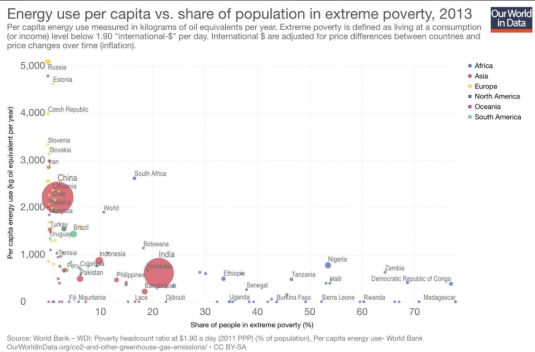
Access to clean fuels & tech for cooking essential in reducing indoor air pollution deaths in low-income nations… twitter.com/i/web/status/9…—
Hannah Ritchie (@HannahRitchie02) October 27, 2017
Improper Associations: The Profumo Affair and the Secret Truth About Stephen Ward
17 Nov 2017 Leave a comment
in economics

Thanks to Andrew Lloyd Webber’s musical, the Profumo Affair is once again in the public eye. Now, of course, we have a good idea about how the scandal developed and what it involved. Yet back in 1963, while it was taking place, most people literally didn’t know what to think. Even the Secretary of State for War’s own Cabinet colleagues were in the dark about much of what had gone on, so comprehensively had Profumo lied to them, and so implausible did many aspects of the case seem.

- John Profumo, Secretary of State for War in the early 1960s and Christine Keeler’s lover. Source: Getty.
The initial public inquiry, which was carried out by the Master of the Rolls Lord Denning, was deemed to be essential reading when it was first published in the autumn of 1963. Copies sold in their tens of thousands. And yet it is…
View original post 9,646 more words
From Exclusion to Expulsion to Acceptance: There Are No Good Options In Dealing With Senator Roy Moore
17 Nov 2017 Leave a comment
in economics


 Below is my column in USA Today on the plan to bar Roy Moore from taking his Senate seat, if he is elected in Alabama. For once in his checkered career, Moore would actually have the constitution on his side in challenging such efforts. Like the Kübler–Ross model of the stages of grief, the Senate may have to move from exclusion to expulsion to acceptance of a Senator Moore.
View original post 921 more words
Section 44: Would a student loan from the Commonwealth prove grounds for disqualification?
17 Nov 2017 1 Comment
in economics

Could the Commonwealth HELP loan scheme, that assists the vast majority of students to undertake tertiary or further education, give rise to yet another ground for disqualification under section 44 of the Constitution, which has seen 10 MPs and Senators depart the Parliament since the 2016 election, another candidate miss out on taking up a Senate seat, and a growing cloud over many more?
If it does, this might adversely affect the position of the newly elected Greens Senator for Western Australia, Jordon Steele-John, who, before taking up his seat this week, was undertaking a degree in politics by distance education at Macquarie University?
If this were found to be an issue, it would also affect the future nomination and election of students and recent graduates with student loans owing to the Commonwealth. While few students are in the box seat for winning an election, some run as…
View original post 1,188 more words
The USDA’s dietary recommendations have a changed a lot over the years
17 Nov 2017 Leave a comment
in health economics Tags: nanny state
Shell Shock – The Psychological Scars of World War 1 I THE GREAT WAR Special
17 Nov 2017 Leave a comment
in defence economics, health economics, war and peace Tags: mental illness, World War I
Why men streer away from interactive occupations
17 Nov 2017 Leave a comment
in discrimination, gender, human capital, labour economics, labour supply, occupational choice Tags: reverse gender gap
Yesteryear’s robots came for many more jobs
17 Nov 2017 Leave a comment
in economic history, industrial organisation, labour economics, labour supply, occupational choice, survivor principle, unemployment Tags: creative destruction, technological unemployment
Nicholas Falls: A British Ambassador Recalls the Russian Revolution
17 Nov 2017 Leave a comment
This is the first in a series of posts about Anglo-Russian relations in the 1910s and 1920s, exploring themes and stories connected to my book, The Secret Twenties: British Intelligence, the Russians and the Jazz Age (published by Granta, September 2017).
 Nicholas II, pictured in 1895, still young and perhaps hopeful early in his reign.
A century ago this week, Russia found herself in a state of turmoil with all her society, everyone from princes to peasants, frantically struggling to work out what the Tsar’s sensational abdication meant for them. Tsar Nicholas II, Emperor of All the Russias, had clung doggedly to his throne for more than twenty-two years, offering only a minimum of concessions to those of his subjects who wanted a fairer society while punishing many who dared to campaign for basic freedoms and a less autocratic regime. Revolution had long been prophesied but, when it came, it was nonetheless a great shock. Hundreds of years of unbroken one-person rule suddenly ended and the future was riven with insecurity.
This sense of uncertainty…
View original post 2,964 more words
The Demise of the Crown
17 Nov 2017 Leave a comment
in economics
The current queen acceded to the throne on 6 February 1952. This is the event that Britain and the Commonwealth are commemorating this week. (The decision to hold the commemoration in June was presumably taken in an attempt to beat the British weather – an attempt which we now know to have been unsuccessful.)
The details surrounding the new queen’s accession 60 years ago were decided upon not by her courtiers or herself but by the United Kingdom’s elected government, as was only fitting in a long-standing constitutional monarchy.
In 1952, that government was headed by Sir Winston Churchill, and at 11.30 am on 6 February, just a few hours after George VI’s death, he gathered his Cabinet in 10 Downing Street for a discussion of the most pressing arrangements that needed to be made.
To mark the Diamond Jubilee, I have reproduced the conclusions of that brief meeting below…
View original post 560 more words
 Utopia, you are standing in it!
Recent Comments