The West Wing: “We killed Yamamoto”
15 Dec 2017 Leave a comment
in laws of war, television, war and peace Tags: West Wing
The Emperor’s “courtly language”
14 Dec 2017 Leave a comment
in economics

New Yorker Letter from Japan (3/28/11, p. 73), “Aftershocks” by Evan Osnos, with a reference to a “courtly language”:
When Emperor Akihito appeared on television Wednesday — silver-haired, immaculate in a charcoal suit, speaking in a courtly language that most of his listeners do not understand — he expressed his “heartfelt hope that the people will continue to work hand in hand, treating each other with compassion, in order to overcome these trying times.”
This immediately struck me as very unlikely. I assumed that by “language” Osnos meant, as most people do in ordinary speech, ‘language variety’, in this case possibly a register or style of Japanese used in the Imperial court. But I was deeply suspicious of the idea that the Emperor would use, on such a grave occasion, while delivering a heartfelt message to his entire nation on television, a variety of Japanese that most of his audience…
View original post 890 more words
Hiroshima’s Shadow 3: the revisionist argument
14 Dec 2017 Leave a comment
in economics

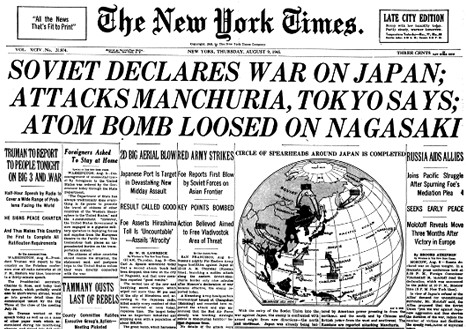
Revisionist historians deny that Hiroshima and Nagasaki were bombed in order to save American lives.
They say the Japanese high command was ready to surrender before the bombs were dropped and that, in any case, an invasion of Japan would not have caused the 1 million Allied casualties or 500,000 deaths that President Truman later claimed were averted.
The real reason for Hiroshima and Nagasaki, they say, is that American leaders thought the existence of the bomb and the U.S. willingness to use it would strengthen the American position in relation to the Soviet Union.
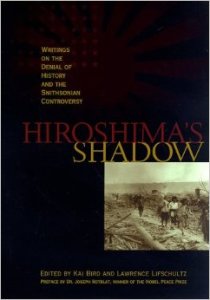 The essay collection, Hiroshima’s Shadow, which I am now reading, provides the documentary evidence for these arguments. The contributors include historians who know much more about this subject than I do, but historians disagree.
I think the revisionist arguments not as false, but as inconclusive. Yet I draw the same moral for our own…
View original post 1,141 more words
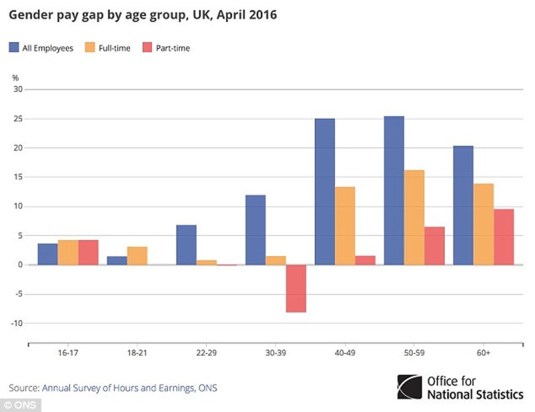
Why does unconscious bias against British women only really start at age 40?
14 Dec 2017 Leave a comment
History of economic thought: Putting Hayek,Keynes, Minsky and Friedman together…
14 Dec 2017 Leave a comment
in economics

Nice interview of Prof Brad DeLong (HT: Cafe Economics). Cafe Economics nicely sums it up as:
Interestingly, he puts Keynes and Friedman on one side, and Hayek and Minsky on the other side, when it comes to monetary policy responses to the business cycle. Economics is more nuanced than ideology.
:-)You would instead imagine Keynes and Minsky on one side and Hayek and Friedman on the other.
Delong says:
View original post 1,000 more words
UK Moves To Make Wolf Whistles and Misogynistic Speech A Hate Crime
14 Dec 2017 Leave a comment
in economics

 We have previously discussed the alarming rollback on free speech rights in the West, particularly in France (here and here and here and here and here and here) and England ( here and here and here and here and here and here and here and here and here and here). Much of this trend is tied to the expansion of hate speech and non-discrimination laws. Once allowed to criminalize speech, individuals and groups demand more and more prohibitions. England is in a free fall over free speech and this week is yet another example. The police have indicated that they are considering making wolf whistles the latest category of hate speech.
View original post 84 more words
Instead of what? @NZSuperfund contribution resumption @taxpayersunion
14 Dec 2017 Leave a comment
in politics - New Zealand, public economics
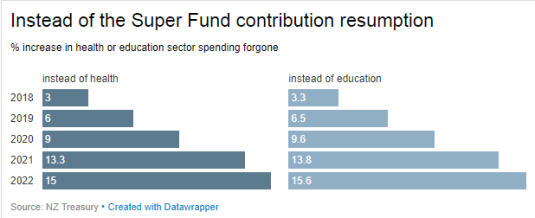
Would it have been cheaper just to raise the eligibility age to 67 for New Zealand superannuation? By 2022, either health or education spending could have been 15% higher.
French President Admits President Trump’s Climate Agenda is Winning
14 Dec 2017 Leave a comment
in economics
Keynes versus Hayek: A rerun of the 1930s
14 Dec 2017 1 Comment
in economics

by Mario Rizzo
[This was submitted to the Financial Times as a possible op-ed piece. Unfortunately, it was rejected. Nevertheless, it seems to me that most readers of the financial press are still unaware of just how fundamental a challenge F.A. Hayek made to the economics of J.M.Keynes. Hayek’s challenge often gets homogenized with other free-market approaches that are still macro-economic in nature. Hayek questions the macroeconomic way of thinking.]
Robert Skidelsky wrote in the Financial Timesthat recent debates among economists are a rerun of the disagreements between John Maynard Keynes and the U.K. Treasury in the early 1930s. To a certain extent this is true. But it might be more instructive to pay some attention to another debate in the 1930s. This is the debate between Keynes and Friedrich Hayek.
View original post 538 more words
Predictably Rational: A Brilliant Book by Richard B. McKenzie
14 Dec 2017 Leave a comment
in economics
McKenzie explained behavoural economics thus “The moral of my sequence of classroom experiments is simple: You can easily prove that people are irrational if you tightly constrain the choice environment, barring choosers from knowing what others are doing, preventing choosers from correcting errant decisions, and ensuring that “bad” choices do not have economic (and monetary) consequences, with subsequent effects on people’s incentives to learn from and act on their own and others’ errant choices. In such environments, drawing out irrational decisions is like shooting fish in a barrel.”
by Mario Rizzo
This is the time of the year that various publications recommend Christmas books or the best books of 2010. (I have never known what a Christmas — or summer — book is. Are they supposed to be light reading? I don’t believe in reading “light.” When I am in the mood for that, I watch TV.) In any event, I have a serious book to recommend.
Every so often a brilliant book comes out on a topic of great academic importance that is in danger of not getting the attention it deserves. I am thinking about Predictably Rational: In Search of Defenses for Rational Behavior in Economics by Richard B. McKenzie.
View original post 358 more words
Free Markets Are the Way to Create Prosperity, not Foreign Aid
14 Dec 2017 Leave a comment
in economics

January 2, 2016 by Dan Mitchell
There are many reasons why I’m not a big fan of the United Nations. Like other international bureaucracies, it supports statist policies (higher taxes, gun control, regulation, etc) that hinder economic development and limit human liberty by increasing the burden of government
Some people tell me that I shouldn’t be too critical because the U.N. also helps poor people with foreign aid. Indeed, the U.N. has a very active project to encourage rich nations to contribute 0.7 percent of their economic output to developing nations.
I generally respond to these (in some cases) well-meaning folks by explaining that there’s a big difference between good intentions and good results. If you examine the evidence, it turns out that redistribution from rich nations to poor nations is just as counterproductive as redistribution within a society.
An article in The Economist succinctly…
View original post 1,360 more words
Foreign aid and economic progress
14 Dec 2017 Leave a comment
in economics

If you’d like to understand how poor countries can succeed, take a look at this op-ed by Daron Acemoglu and James Robinson. Highlights:
[H]uge aid flows appear to have done little to change the development trajectories of poor countries, particularly in Africa. Why? Poverty is created by economic institutions that systematically block the incentives and opportunities of poor people to make things better for themselves, their neighbours and their country.
[Foreign aid success requires] using financial and diplomatic clout to help create room for inclusive institutions to grow.
In short: don’t throw money at poorly run countries, help them develop better political systems and ignore them if they don’t.
 Utopia, you are standing in it!
Recent Comments