Bryan Caplan thinks 80% of education is signalling. I think it is no more than 50%. One reason is the times I have worked with managers and colleagues who are not economists doing policy analysis work.
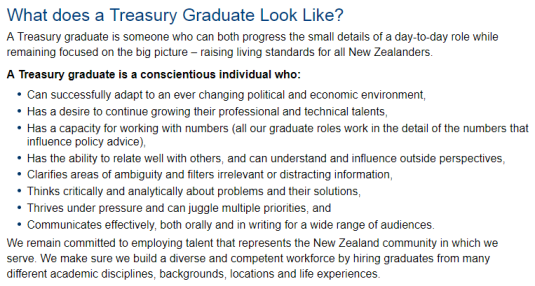
If education is 80% signalling, people from noneconomic backgrounds should be as good as those with economic backgrounds particularly at the more senior levels as they gain experience and the economists forget their university training.
My experience with managers who are not economists at the Treasury, and the Department of Labour was they were difficult to deal with compared to the one manager I had that did have an economics degree. They simply did not know what they were doing on a number of occasions, often substituting their own opinions based on what they would say in the pub for good economic analysis. They did not know any better. They are not gone through microeconomics 101 that showed how many common explanations of things did not work if scrutinised according to the economic way of thinking. They are often resentful of economists as colleagues because they kept pointing out what they could not do or what unintended consequences might spring up.
When the manager had training in economics, considerable more progress could be made both in argument and then working out how to tailor it to a ministerial audience.
As for colleagues who were policy analyst with no economic training, they seem to lack the ability to define what the problem was, develop options and check for unintended consequences. They certainly had no idea how to marshal evidence to support competing options and test the evidence in front of them, much less have a general background knowledge of an area to be able to quickly change their mind away from their private opinions in the light of new arguments and evidence.
Most of all, both the managers and policy analysts who I worked with who did not have economic training did not know what they did not know. It was the Dunning Kruger effect. They did not know there are literatures on this issue and they could not remember even in sketch outline that there was research in this area and many well-known facts and results is what with a well-known uncertainties. They suffered the overconfidence of amateurs.
In time, it got so frustrating that I would ask a Socratic question about that was an interesting question be it about rent control, minimum wages, employment law, exchange rates, industry policy or financial crises, and wonder if anyone had looked into that at universities. Reading econometrics results taught me that if the main result is not in doubt, that there is at least not mixed evidence or a few countervailing studies, the econometricians are not working hard enough for PhD scholarships and academic tenure.
Luke Froeb made considerable progress by simply redefining market failure as a business opportunity, a missing market or missing product. Whenever people talked of the market failure, I would ask who could profit from fixing that market failure.
To be fair, I always thought the quality of economic analysis would double if everyone remembered the first 6 weeks of microeconomics 101. I gained the impression when I was a graduate at the Australian Department of Finance.
Watching non-economists do macroeconomic policies is frightening in that they have no idea how to tell fallacies from good analysis. I spotted that in the prime minister’s department in the mid-1980s in Australia when everyone got deeply concerned about the current account deficit because everyone else was deeply concerned about it and it attracted a lot of newspaper headlines saying it was a problem.
Also, I noticed as I got older, ideas rejected 10-20 years ago were recycled. Because I understood the economics behind those ideas, I remembered them in their new disguises and remembered the relevant literature that developed since their last appearance.
I also worked with many econometricians in the public sector. I learnt enough econometrics to the graduate level to be able to talk to them. I never pretended I could do their job and most of their job was based on what they learnt at University and then refined in the workplace.
Finally, I found out in the kitchen at parties in Canberra in the 1980s and 1990s that strangers would come up and abuse you as soon as they found out there is an economist about. They would tell me how ignorant economists were and did not know anything about this, that and the other. I would then point to the vast literatures on every one of those topics. They still has to be done these days even to academic economists who should know better.
 Utopia, you are standing in it!
Feb 01, 2018 @ 04:56:42
Reblogged this on The Inquiring Mind and commented:
This post is well worth reading and makes some excellent points. Many of the points are relevant in other disciplines as well.
LikeLiked by 1 person