

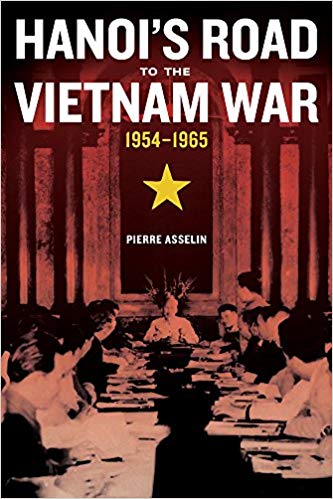
If you have any doubt that the war waged by North Vietnam against the Republic of (South) Vietnam and the United States was, above all, a political one, Pierre Asselin’s Hanoi’s Road to the Vietnam War, 1954-1965 (University of California Press, 319 pp., $55), should change your mind.
Asselin, a Hawaii Pacific University history professor who specializes in the Vietnam War, has come up with a well-researched, in-depth look at the decision-making process in Hanoi from the signing of the Geneva Accords in 1954 to the start of the American war in 1965. He makes a strong case that North Vietnam’s communist leaders—led by the General Secretary of the Vietnamese Communist Party, Le Duan, who wrested real power away from the slightly less doctrinaire nationalist/communist Ho Chi Minh—were dogmatic revolutionaries who shaped their war against the Americans in three “separate but related modes of struggle”: the political, diplomatic and military.
View original post 178 more words
 Utopia, you are standing in it!
Recent Comments