Fascination of fraud by a central bank

by Alain Naef (Postdoctoral fellow at the University of California, Berkeley)
This research was presented at the EHS conference in Keele in 2018 and is available as a working paper here. It is also available as an updated 2019 version here.
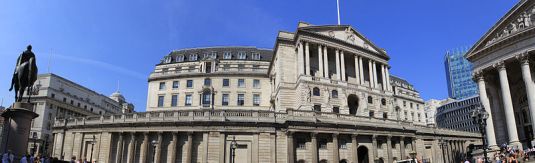 The Bank of England. Available at Wikimedia Commons.
The 1960s were a period of crisis for the pound. Britain was on a fixed exchange rate system and needed to defend its currency with intervention on the foreign exchange market. To avoid a crisis, the Bank of England resorted to ‘window dressing’ the published reserve figures.
In the 1960s, the Bank came under pressure from two sides: first, publication of the Radcliffe report (https://en.wikipedia.org/wiki/Radcliffe_report) forced publication of more transparent accounts. Second, with removal of capital controls in 1958, the Bank came under attack from international speculators (Schenk 2010). These contradictory pressures put the Bank in an awkward…
View original post 858 more words
 Utopia, you are standing in it!

Recent Comments