
by Janette Rutterford and Dimitris P. Sotiropoulos (The Open University Business School)
The full article from this blog is forthcoming in the Economic History Review
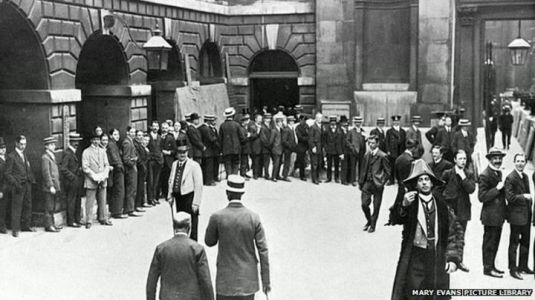 Mary Evans Picture Library
UK investment trusts (the British name for closed-end funds) were at the forefront of financial innovation in the global era before World War I. Soon after the increase in investment choice facilitated by Companies Acts in the 1850s and 1860s – which allowed investors limited liability – investment trusts emerged to invest in a diverse range of securities across the globe, thereby offering asset management services to individual investors. They rapidly became a low-cost financial vehicle for so-called “averaging” of risk across a portfolio of marketable securities without having to sacrifice return. UK investment trusts were the first genuine historical paradigm of a sophisticated asset management industry.
Formed as trusts from the the late 1860s, by the 1880s, the vast majority…
View original post 788 more words
 Utopia, you are standing in it!
Recent Comments