
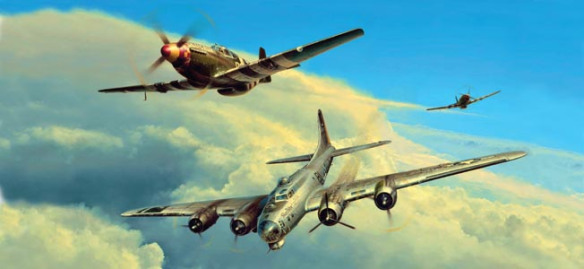
A damaged B-17 bomber being protected by two P-51 fighters.
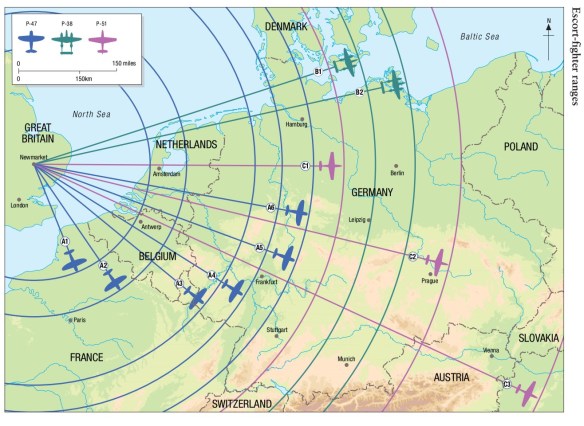

In the Second World War the bedrock of US strategic bombing tactics in Europe was formation flying in a self-defending 54-aircraft combat wing, which was both dangerous and physically exhausting. Extreme physical effort was required from the pilot to keep station in the turbulence generated by hundreds of propellers. The pilots flying in wing positions depended on the skill of element leaders right up to combat wing level. Poor flying by the leaders, and the constant seesawing of positions, added to pilot fatigue and ran the risk of collisions or breaking the formation, thus providing Luftwaffe day fighters with “cold meat”—isolated aircraft.
Flying consisted of sliding the B-17 Flying Fortress and B-24 Liberator bombers around to maintain the integrity of the formation. Banking was dangerous because of the close proximity of other aircraft. Frequent throttle changes were required, which could…
View original post 1,207 more words
 Utopia, you are standing in it!
Recent Comments