
by William Quinn (Queen’s University, Belfast)
A special issue on the Tricentenary of the South Sea Bubble was published on The Economic History Review as open access, and it is available at this link
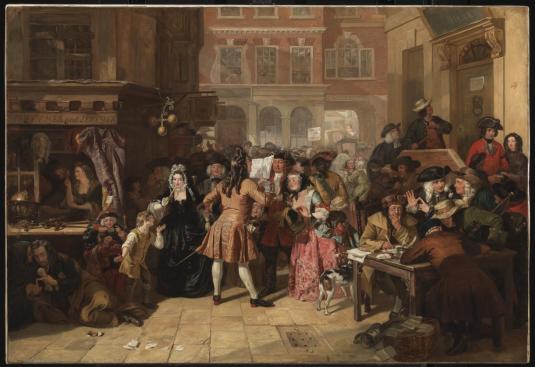 Edward Matthew Ward (1847) The South Sea Bubble, a Scene in ‘Change Alley in 1720. Available at Tate Gallery
In 1720, the British Parliament approved a proposal from the South Sea Company to manage the government’s outstanding debt. The Company agreed to issue shares, some of which would be bought using government annuities rather than cash. The Company would then pay the government a reduced rate of interest on these annuities. The government’s debt burden would be reduced, and in exchange, the Company believed it had gained the opportunity to establish itself as a competitor to the Bank of England (Kleer, 2012).
Superficially, the scheme didn’t make much sense. How would the public be convinced to…
View original post 824 more words
 Utopia, you are standing in it!
Recent Comments