
A carbon dividend takes the revenue from auctions of emissions units for the ETS and gives it back to households. This year, the sale of emissions units will raise around $1.3 billion.* That is around $750 per household.
The following two charts show a) low-income households spend more of their incomes on carbon than other households, but b) have a smaller carbon footprint.
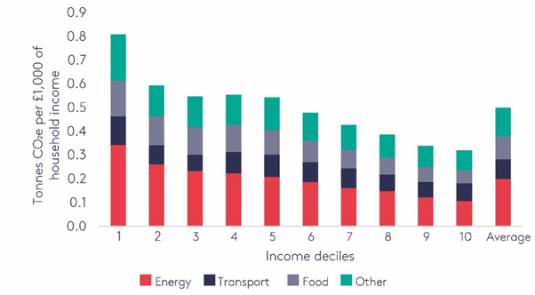
Source: Figure 4.3, Report 2.
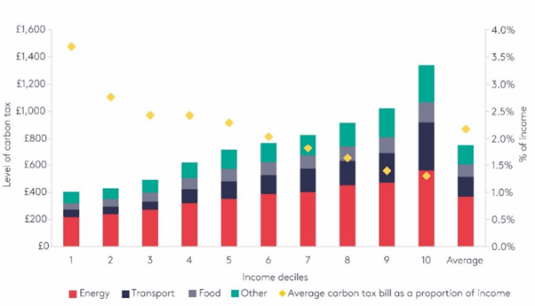
Source: Figure 4.2, Report 2.
The charts come from a UK analysis by the London School of Economics. I know of no equivalent analysis for New Zealand, although these findings from Infometrics appear consistent.
So what does this mean?
Carbon pricing is generally thought to be regressive because low-income households spend a higher share of their incomes on goods and services which produce or lead to emissions.
However, a carbon dividend reverses this, making carbon pricing progressive. Giving…
View original post 521 more words
 Utopia, you are standing in it!
Recent Comments