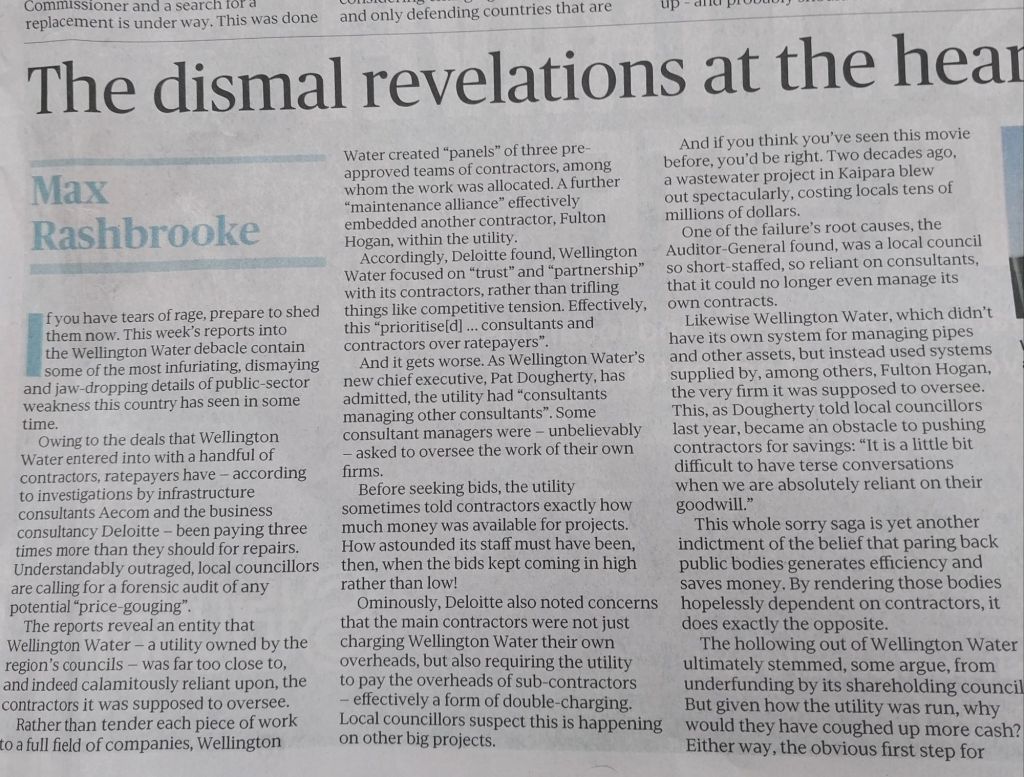
Max Rashbrooke has been kidnapped again to be replaced by a neoliberal doppelganger
08 Mar 2025 Leave a comment
in applied price theory, comparative institutional analysis, economics of bureaucracy, industrial organisation, managerial economics, market efficiency, organisational economics, politics - New Zealand, Public Choice, public economics Tags: privatisation
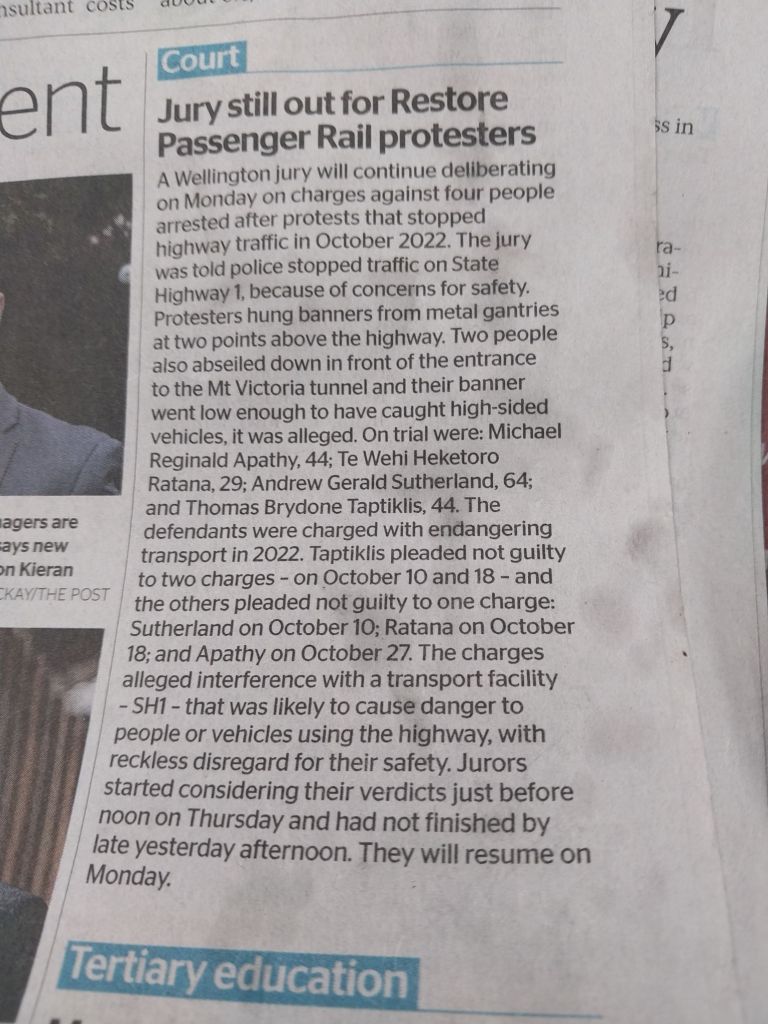
Jury nullification in the air for terrorists
08 Mar 2025 Leave a comment
in economics of climate change, economics of crime, environmental economics, environmentalism, global warming, law and economics, politics - New Zealand Tags: climate activists, juries
How Much Do Tariffs Raise Prices?
08 Mar 2025 Leave a comment
in applied price theory, economic history, history of economic thought, industrial organisation, international economics, politics - USA Tags: 2024 presidential election, free trade, tariffs
We break down how much of a tariff is ‘passed through’ to customersBy Jason Douglas, Anthony DeBarros and Danny Dougherty of The WSJ. Excerpts:”For example, a 10% tariff on shoes from China would raise their sticker price 4% or so, but on wine or olive oil from Italy, almost 10%.Why the difference? Tariffs aren’t the…
How Much Do Tariffs Raise Prices?
The Licensing Racket
08 Mar 2025 Leave a comment
in applied price theory, economics of bureaucracy, entrepreneurship, human capital, income redistribution, industrial organisation, labour economics, labour supply, law and economics, occupational choice, occupational regulation, property rights, Public Choice, rentseeking
I review a very good new book on occupational licensing, The Licensing Racket by Rebecca Haw Allensworth in the WSJ. Most people will concede that licensing for hair braiders and interior decorators is excessive while licensing for doctors, nurses and lawyers is essential. Hair braiders pose little to no threat to public safety, but subpar […]
The Licensing Racket
Driving a Stake Through Stakeholder Capitalism
07 Mar 2025 Leave a comment
in economics of climate change, economics of regulation, energy economics, entrepreneurship, environmental economics, environmentalism, financial economics, global warming, politics - USA Tags: climate activists, greenwashing, regressive left
E, S, G does not cover core financial risks. We’re looking to assess financially-relevant environmental, social and governance factors, not financially-relevant financial factors.” Got that? Yup. It’s total hogwash.
Driving a Stake Through Stakeholder Capitalism
Down But Not Out: The Supreme Court Rules 5-4 Against the Freezing $2 Billion in USAID Funds
07 Mar 2025 Leave a comment
in law and economics, politics - USA Tags: 2024 presidential election, constitutional law

In an interesting 5-4 split, the Supreme Court has denied the Trump Administration’s application for a stay of a district court’s temporary restraining order (TRO) against the Administration’s effort to freeze $2 billion in funds from the U.S. Agency for International Development. The Administration is down by one vote but hardly out in the fight […]
Down But Not Out: The Supreme Court Rules 5-4 Against the Freezing $2 Billion in USAID Funds
Spoiling for a Fight: Why the Administration’s Loss Last Night May Be Not Just Expected But Welcomed
07 Mar 2025 Leave a comment
in law and economics, politics - USA Tags: 2024 presidential election, constitutional law

Late Saturday, D.C. District Judge Amy Berman Jackson ruled that President Donald Trump violated federal law in firing Hampton Dellinger, head of the Office of Special Counsel. Jackson’s decision is forceful, well-written, and challengeable under existing precedent. Indeed, it may have just set up an appeal that both presidents and professors have long waited for […]
Spoiling for a Fight: Why the Administration’s Loss Last Night May Be Not Just Expected But Welcomed
Should we ditch the word “gender”?
06 Mar 2025 1 Comment
in discrimination, economics of education, gender, law and economics, liberalism, Marxist economics, politics - USA Tags: Age of Enlightenment, conjecture and refutation, free speech, philosophy of science, political correctness, regressive left, sex discrimination

I’ve written sentences like this many times: “While biological sex is a binary, gender in humans forms more of a spectrum.” But I was never really sure what “gender” meant. I know that it’s generally synonymous with “sex”, but that is clearly not what I meant when I spoke as I did above. What did […]
Should we ditch the word “gender”?
RICHARD PREBBLE: Letter of resignation from the Waitangi Tribunal
06 Mar 2025 Leave a comment
in constitutional political economy, discrimination, economic history, economics of bureaucracy, law and economics, politics - New Zealand, property rights, Public Choice, rentseeking Tags: Age of Enlightenment, constitutional law, free speech, political correctness, racial discrimination, regressive left
Hon Tama Potaka Minister of Maori Development 28 February 2025 Dear Minister, After careful consideration I must resign as a Member of the Waitangi Tribunal. The treaty is not just our founding document, it makes New Zealand unique. Two peoples peacefully agreeing to form a nation. Over the summer I have been reading Tribunal reports […]
RICHARD PREBBLE: Letter of resignation from the Waitangi Tribunal
Should we ditch the word “gender”?
06 Mar 2025 Leave a comment
in economics of education, economics of media and culture, health economics, liberalism, Marxist economics, politics - USA Tags: conjecture and refutation, free speech, gender gap, philosophy of science, political correctness, regressive left, sex discrimination
I’ve written sentences like this many times: “While biological sex is a binary, gender in humans forms more of a spectrum.” But I was never really sure what “gender” meant. I know that it’s generally synonymous with “sex”, but that is clearly not what I meant when I spoke as I did above. What did […]
Should we ditch the word “gender”?
Peter Navarro Conducts a Master Class In Looking Only at That Which Is Seen
06 Mar 2025 Leave a comment
in applied price theory, history of economic thought, industrial organisation, international economic law, international economics, International law, survivor principle Tags: current account, free trade, tariffs
TweetHere’s a letter to USA Today. Editor: Defending Pres. Trump’s aluminum tariffs, Peter Navarro focuses exclusively on the effects of these tariffs on U.S. aluminum producers (“Trump tariffs will save American jobs and level the playing field,” Feb. 28). He points out what no serious defender of free trade denies, namely, that punitive taxation of…
Peter Navarro Conducts a Master Class In Looking Only at That Which Is Seen
Climate Crusade Is a Dead End
06 Mar 2025 Leave a comment
in econometerics, economic history, economics of climate change, economics of regulation, energy economics, environmental economics, environmentalism, global warming Tags: climate activists, climate alarmism

This post presents the main points and exhibits from Professor de Lange’s presentation February 26, 2025. Most images are self explanatory, with some excerpts in italics lightly edited from captions, and some added images as well. H/T Bud Bromley. Prof. de Lange demonstrates that there is no credible climate crisis, and that there is much […]
Climate Crusade Is a Dead End
The Great Green Rebranding: Climate Policies Shift from “Saving the Planet” to “Creating Jobs”
06 Mar 2025 1 Comment
in economics of climate change, energy economics, environmental economics, environmentalism, global warming, labour economics, labour supply
Green energy advocates like to talk about job creation, but they ignore the elephant in the room: the cost. Renewable energy projects require vast amounts of taxpayer funding, and as we’ve seen with massive spending packages like the Inflation Reduction Act, this kind of government largesse is inflationary.
The Great Green Rebranding: Climate Policies Shift from “Saving the Planet” to “Creating Jobs”
This week’s Bill Maher clip
05 Mar 2025 Leave a comment
in liberalism, Marxist economics, politics - USA, television, TV shows Tags: 2024 presidential election, 2028 presidential election
In this latest nine-minute comedy/news bit from Bill Maher’s “Real Time,” a show that included Rahm Emanuel and Fareed Zakaria, Maher suggests who the Dems should run for President and Vice-President in 2028. Ths clip, called “New Rule: The next Democratic Star” proffers a solution to the waning popularity of the Democratic Party and the […]
This week’s Bill Maher clip
Adrian Orr resigns
05 Mar 2025 Leave a comment
in business cycles, economic history, economics of bureaucracy, fiscal policy, inflation targeting, labour economics, macroeconomics, monetary economics, politics - New Zealand, Public Choice, unemployment Tags: economics of pandemics, monetary policy
Adrian Orr has resigned as Reserve Bank Governor. I normally try to highlight the good as well as the bad when someone resigns, but I have to admit in this case I struggle. I welcomed his appointment in 2017. I noted the currency rose on his appointment and that he had a very good legacy […]
Adrian Orr resigns


Recent Comments