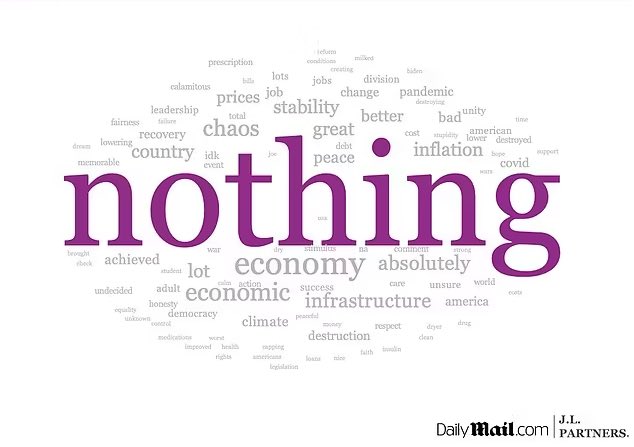
This is the last full day of Joe Biden’s dismal presidency, so let’s do what we did with Justin Trudeau and reflect on his pathetic legacy. I’ve already provided my own economic assessment of Biden’s record, so now let’s review how he is seen by others. We’ll start with the American people. According to a […]
Spare a thought for what our national day was meant to be, compared with what it has become. Before 1973 a small ceremony took place at Waitangi each 6 February to commemorate the signing of the Treaty. Only Northland had a holiday. Then Norman Kirk promised during the 1972 election campaign to establish a national…
In yesterday’s post, I noted a number of opportunities for research on the economics of social media. At least one of those opportunities intersected with the impact of traditional media. So, I was interested to read this new article by Elliott Ash, Sergio Galletta, Matteo Pinna (all ETH Zurich), and Christopher Warshaw (George Washington University), published…
In his final week as president, Joe Biden again invoked liberal professors to justify a plainly absurd constitutional argument by declaring that the 28th Amendment is now ratified. By invoking “leading legal constitutional scholars,” Biden only added redundancy to absurdity in claiming that the Equal Rights Amendment is now law. Unfortunately, this pattern has been […]
Below is my column in Fox.com on President Joe Biden’s last-minute declaration that the 28th Amendment is now part of the United States Constitution. It appears that our president sees dead amendments, but that is not the greatest thing that should worry you. Here is the column:
The Fed, which some claim is an unconstitutional body anyway, has noticed the US is changing its leader, so has performed a political manoeuvre by deciding that from now on ‘greening the financial system’ – whatever that means – is somebody else’s problem, officially at least. The decision follows on from various leading banks leaving […]
After a vacation hiatus, Bill Maher is back with a monologue called, “New rules: political firestorm.” Here he parses blame for the L.A. fires between unavoidable causes (no rain, lots of brush) and avoidable ones (blockheaded politicians). The latter, he says, involves cuts in the firse-department budget, stolen or nonfunctional hydrants, empty reservoirs, exposed power […]
Several recent tweets(xeets) about tech talent re-ignited the conversation about native-born STEM workers and American policy. For the Very Online, Christmas 2024 was about the H-1B Elon tweets. Elon Musk implies that “elite” engineering talent cannot be found among Americans. Do Americans need to import talent? What would it take to home grow elite engineering […]
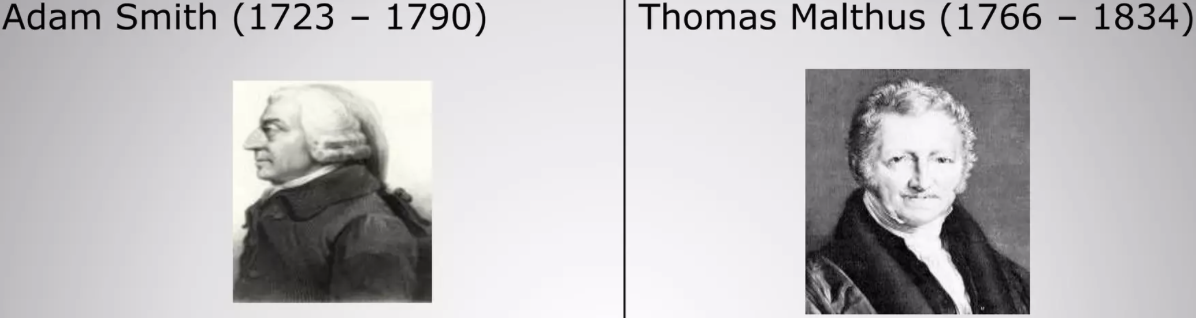
Tweet… is from page 53 of the late, great Harold Demsetz’s excellent 2008 book, From Economic Man to Economic System: Adam Smith and Thomas Malthus differed in their forecasts of mankind’s future. Smith (1776), in his Wealth of Nations, offered an optimistic view, basing this on his understanding of the new economic system that began…
Radio NZ reports: Traffic in Manhattan’s central business district fell by 7.5 percent last week and 273,000 fewer cars entered the borough’s central business district after the first congestion pricing fee in the US took effect on 5 January, New York City transit officials said on Monday. The fee was designed to reduce traffic and raise billions […]
Lab-grown diamonds are gaining share, but they might be getting too cheap and largeBy Jinjoo Lee of The WSJ. Excerpts:”After a postpandemic surge in demand in 2021 and 2022, natural-diamond prices are down about 8% compared with the first quarter of 2020, while lab-grown diamond prices are down 75%” [if they are substitutes for each…
Why Evolution is True is a blog written by Jerry Coyne, centered on evolution and biology but also dealing with diverse topics like politics, culture, and cats.
In Hume’s spirit, I will attempt to serve as an ambassador from my world of economics, and help in “finding topics of conversation fit for the entertainment of rational creatures.”
“We do not believe any group of men adequate enough or wise enough to operate without scrutiny or without criticism. We know that the only way to avoid error is to detect it, that the only way to detect it is to be free to inquire. We know that in secrecy error undetected will flourish and subvert”. - J Robert Oppenheimer.




Recent Comments