Review of “A Man of Iron: The Turbulent Life and Improbable Presidency of Grover Cleveland” by Troy Senik
14 Oct 2022 Leave a comment
Rodger Finlay: The Treasury’s incident report
13 Oct 2022 Leave a comment

Regular readers will recall that since June I’ve been on the trail of events surrounding the appointment of Rodger Finlay as, first, a “transitional board” member (attending actual Board meetings) and then a full Reserve Bank Board member, at the same time that he was chair of NZ Post, the majority owner of Kiwibank, an entity subject to Reserve Bank prudential regulation and supervision. From 1 July, the new Reserve Bank Board had legal responsibility for all the powers the Reserve Bank had on prudential policy and implementation. Finlay’s term as NZ Post chair was due to expire on 30 June, but processes were in train that saw Cabinet reappoint him on 13 June.
The most recent post was here. The story gets a little complicated, and there have been various documents (from the Minister of Finance and from The Treasury), and comments from the Minister or his office…
View original post 538 more words
Power Prices: With Wind & Solar Obsession – The Only Way Is Up and Up and Up
13 Oct 2022 Leave a comment

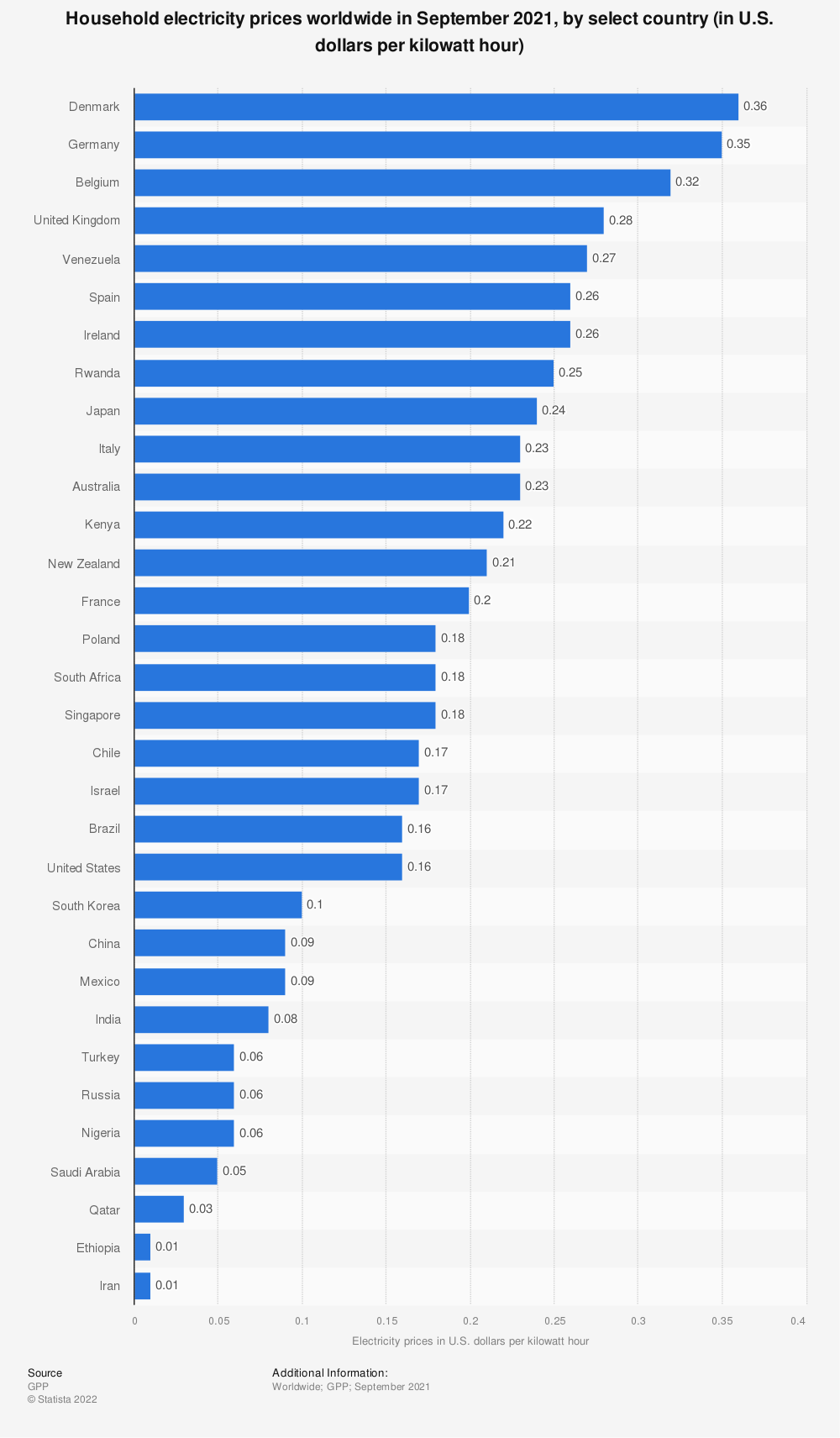
Rocketing power prices is one inevitable consequence of the so-called ‘inevitable’ wind and solar transition. Germans know it, so do Californians, South Australians and Danes. Brits are learning fast, too.
Of course, the propaganda units that run cover for renewable energy rent seekers pretend otherwise. Francis Menton wades through their dross to reveal what Europe’s erstwhile power consumers are now living with, on a daily basis.
Cost Of The Green Energy Transition: Who You Gonna Believe, Some Research Assistants From Oxford Or Your Lyin’ Eyes?
Manhattan Contrarian
Francis Menton
16 September 2022
Over in Europe, and particularly in those countries in the vanguard of the green energy transition, the enormous costs of this folly have begun to hit home. In the UK, average annual consumer energy bills were scheduled to rise as of October 1 to £3549/year, from only £1138/year just a year ago. (The figure may now get reduced…
View original post 1,855 more words
October 12, 1537: Birth of Edward VI, King of England and Ireland
13 Oct 2022 Leave a comment

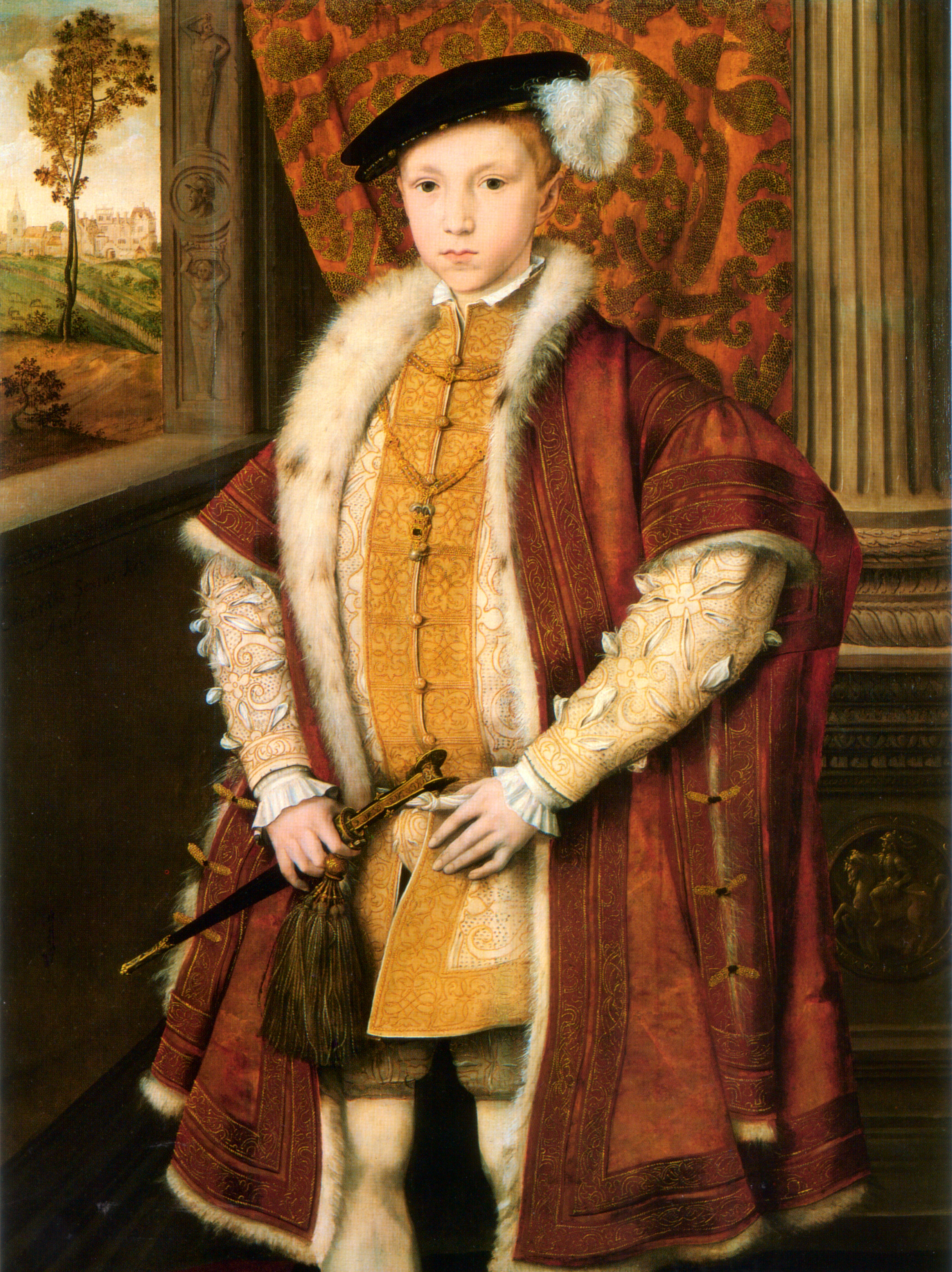
Edward VI (October 12, 1537 – July 6, 1553) was King of England and Ireland from January 28, 1547 until his death on July 6, 1553.
Edward was born on October 12, 1537 in his mother’s room inside Hampton Court Palace, in Middlesex. He was the son of King Henry VIII by his third wife, Jane Seymour. Throughout the realm, the people greeted the birth of a male heir, “whom we hungered for so long”, with joy and relief. Te Deums were sung in churches, bonfires lit, and “their was shott at the Tower that night above two thousand gonnes”.
Queen Jane, appearing to recover quickly from the birth, sent out personally signed letters announcing the birth of “a Prince, conceived in most lawful matrimony between my Lord the King’s Majesty and us”.
 Edward was christened on October 15, with his half-sisters, the 21-year-old Lady Mary as godmother and the…
View original post 867 more words
Appointing an MPC
13 Oct 2022 Leave a comment
In my post yesterday I noted in passing that the Reserve Bank Board’s Annual Report had made no mention of their decision to recommend during the year the reappointment of two external MPC members (Bob Buckle and Peter Harris), notwithstanding the huge issues there appeared to be (inflation, and large monetary losses) around the handling of monetary policy. Perhaps it made sense to reappoint them, but the Board gave the public no sense of their reasoning or of what effort they had made to understand the contributions Messrs Buckle and Harris had made. Perhaps, after all, they had fought valiantly but fruitlessly to hold back the Governor’s excesses? (ok, just kidding, but you never quite know).
And then I remembered that months ago I had lodged an Official Information Act request with the Minister of Finance
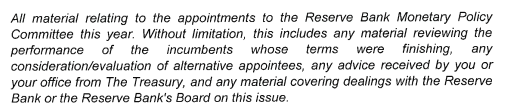
and had not done anything with the response I had received in June.
There…
View original post 1,482 more words
The consequence of cutting livestock numbers to tackle farm emissions? A culling of support for Labour in rural areas, perhaps
12 Oct 2022 Leave a comment

Has the Ardern government just shot itself in the foot?
Despite its poll ratings slipping in recent months, it nourished hopes of returning to power next year. But its “world-first” policy to cut greenhouse gases with farm-level pricing, effectively making 20% of NZ’s sheep and beef farms uneconomic, could result in it bleeding votes in most of the regional electorates it won in 2020.
The unpalatable truth is just dawning on the country: cutting agricultural emissions means cutting food and fibre output. And that means slashing the export income on which NZ depends.
Clearly the Cabinet ministers adopting the policy announced yesterday believed they could “sell” it on the basis that NZ would be leading the world, in cutting agricultural emissions.
In the event, they have been met with shrieks of outrage from farm lobby groups.
View original post 450 more words
Titles of Royalty and Nobility within the British Monarchy: Baron
12 Oct 2022 Leave a comment
The word baron comes from the Old French baron, from a Late Latin barō “man; servant, soldier, mercenary” (so used in Salic law; Alemannic law has barus in the same sense). The scholar Isidore of Seville in the 7th century thought the word was from Greek βᾰρῠ́ς “heavy” (because of the “heavy work” done by mercenaries), but the word is presumably of Old Frankish origin, cognate with Old English beorn meaning “warrior, nobleman”.
Cornutus in the first century already reports a word barones which he took to be of Gaulish origin. He glosses it as meaning servos militum and explains it as meaning “stupid”, by reference to classical Latin bārō “simpleton, dunce”; because of this early reference, the word has also been suggested to derive from an otherwise unknown Celtic *bar, but the Oxford English Dictionary takes this to be “a figment”.
Britain and Ireland
In the Peerage of England…
View original post 1,633 more words
Accountability document with no accountability
12 Oct 2022 Leave a comment
Decades ago when I was young Reserve Bank annual reports were – uninteresting accounts aside – mostly a bit of an essay on the economy (I got to write some of 1984’s and if I recall correctly one sentence survived to publication). Since the Bank had no independent authority over anything – power rested with the Minister of Finance – that model of Annual Report made a certain amount of sense. If there was any “accountability” involved, it was mostly about judging the fine line involved in offering some analysis without at the same time unduly upsetting the Minister of Finance. (The Bank was, at least in principle, accountable for analysis and advice offered to the Minister, but nothing much of that ever saw the light of day, the then recent innovation of the OIA notwithstanding).
These days, of course, the Reserve Bank is a power in the land, conducting…
View original post 1,533 more words
Bandwagon Fallacy regarding the Safety of You Know What
12 Oct 2022 Leave a comment

Using logical thinking is an effective way of solving problems and rooting out untruths. Unfortunately, logic can be replaced in many instances with repeated phraseology that has been absorbed and memorised for quick regurgitation without thought, such as arguments using the Bandwagon Fallacy:
- X is popular.
- Popular things are always true (unstated).
- Therefore, X is true.
Here is the Bandwagon Fallacy argument used to justify the safety of The Shots:
- 11 million + shots have been given to people in NZ.
- Popular things are always safe (unstated).
- Therefore, the shots are safe.
Implied in this fallacy is the idea that if the shots were not safe, then people would be seeing the effects in those around them, that damage would be widespread and noticeable. However, ironically the argument is then used against anyone who says the shots are not safe because they…
View original post 522 more words
The Democrat Party: “an elitist cabal of warmongers driven by cowardly wokeness”
12 Oct 2022 Leave a comment

Oh but this is going to hurt, and judging by the online Twitter meltdowns from Leftists it’s a burn that’s going to last a long time, certainly past the Mid-Term elections next month.
Just a few years ago Tulsi Gabbard, as a House Rep. from Hawaii, was being talked up as yet another youthful face of a rising Democrat Party poised to do great things in the 21st century. Military veteran, mutli-ethnic, female, etc. She was the Vice-Chair of the Democrat National Committee (DNC). When she ran for the Democrat Presidential nomination in 2019 she did better than many others with higher profiles but faded for the usual reasons such young, first-time candidates do; lack of money and support from inside the upper echelons of the Democrat Party – including the DNC – who eventually plumped for “moderate” and easily controlled Joe Biden over True Believer Socialist Bernie Sanders.
View original post 651 more words
Star Trek: Season 2, Episode Twenty-One “Patterns of Force”
12 Oct 2022 Leave a comment

Stardate: 2268 (technically no stardate is given for this episode)
Original Air Date: February 16, 1968
Writer: John Meredyth Lucas
Director: Vincent McEveety
“Even historians fail to learn from history…”

The Enterprise is searching for John Gill (David Brian), a missing Federation historian. Gill is a widely respected intellectual among Starfleet, he once taught Kirk during his Starfleet days, and even Spock praises Gill for his treatment of earth history as a series of “causes and motivations” rather than a mere timeline of events. Gill had been sent by the Federation as a “cultural observer” of the planet Ekos some years prior, but he has since disappeared. What happened? First, a bit of exposition about Ekos. The Ekosians are known to be a primitive warlike people, living in a state of anarchy, whereas its sister planet of Zeon is known to be technologically advanced. As the…
View original post 1,367 more words
Liz Truss to ban solar projects on farms
11 Oct 2022 Leave a comment

 Image credit: BBC
Some pushback against the excesses of climate obsession.
– – –
Liz Truss is poised to ban solar projects from most farms in England in a move that will dismay climate change campaigners and some Tory backbenchers, says Yahoo News.
The prime minister has long been opposed to solar farms on agricultural land, condemning them as “a blight on the landscape” when she was environment secretary in 2014.
And during the Tory leadership campaign this summer, she said she wanted to see farmers producing food with crops and livestock, “not filling fields with paraphernalia like solar farms”.
View original post 199 more words
Why Wind & Solar ‘Transition’ Means End of Reliable & Affordable Power – Forever
11 Oct 2022 Leave a comment

The destruction of once reliable and affordable electricity supplies is so evidently deliberate, it can no longer be put down to ignorance, alone.
Nothing but brazen ideology sits beneath the claim that we are a heartbeat away from a transition to an all wind and sun powered future. We are continually told that, putting aside the need for a few trillion dollars’ worth of imaginary grid-scale storage systems, we’re almost there.
Well, that’s the meme, anyway.
Back on terra firma, things haven’t exactly panned out as planned unless, of course, the plan was economic destruction starting with entrenched energy poverty and, ultimately, deindustrialisation.
If you’re looking to understand what the ‘inevitable transition’ means for you, Britain’s power pricing and supply calamity is as good a place as any to start.
James McSweeney and Paul Homewood layout what’s in store below.
British Energy Planning (A Horror Story)
The Critic
James McSweeney
View original post 2,115 more words
Leah Trueblood: What is the ‘purpose’ of the Scottish Independence Referendum Bill?
11 Oct 2022 Leave a comment

 What is the purpose of the referendum proposed in the Scottish Independence Referendum Bill? Is it, as s 1 (1) of the Bill itself says ‘to ascertain the views of the people of Scotland?’ Or is the aim – either directly or indirectly – the dissolution of the United Kingdom? If the purpose is only to ascertain the views of Scots, the Lord Advocate suggests, then it cannot impact reserved matters. Her suggestion is that the referendum cannot impact reserved matters because the referendum is merely advisory, and so it can have no legal effect if it has no legal impact. This post argues that it is right to construe the purpose of the Bill narrowly, as only ascertaining the views of Scots. Even the narrow purpose of ascertaining the views of Scots, however, still relates to reserved matters. To see why, it is necessary to distinguish between the
View original post 1,756 more words


Recent Comments