What is Public Choice Theory? Geoffrey Brennan
03 Aug 2022 Leave a comment
in applied price theory, comparative institutional analysis, constitutional political economy, Gordon Tullock, James Buchanan, Public Choice, public economics Tags: expressive voting, rational ignorance
Electric Car Obsession
02 Aug 2022 Leave a comment

 Times Square Billboard
World Economic Forum Urges Public To Eliminate Ownership Of Private Vehicles
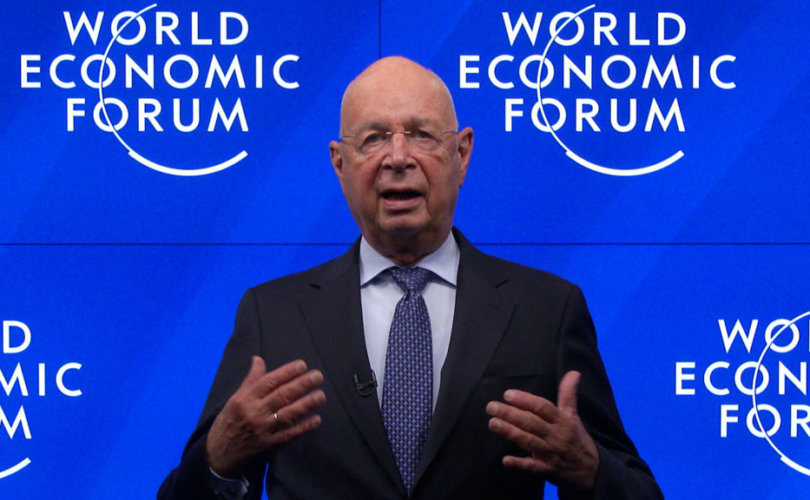 The World Economic Forum is advocating for the abolition of “wasteful” private vehicle ownership for the planet’s greater good as the organization attempts to advance its “Great Reset” agenda and transform the world so that the average person will “own nothing.”
“We need a clean energy revolution, and we need it now,” states a WEF’s July 18 article titled, “3 circular economy approaches to reduce demand for critical metals.”
“But this transition from fossil fuels to renewables will need large supplies of critical metals such as cobalt, lithium, nickel, to name a few. Shortages of these critical minerals could raise the costs of clean energy technologies,” the forum continues.
The unelected globalist group recommends the public “go from owning to using” by implementing “vehicle sharing initiatives” to decrease mass reliance on critical metals.
“The average car…
View original post 191 more words
Grid-Scale Power Storage Myth Busted: Giant Batteries Can’t Save Unreliable Wind & Solar
02 Aug 2022 Leave a comment

It only takes a moment’s reckoning to appreciate that the grid-scale storage electricity generated by wind or solar is a perfect nonsense.
Those profiting from hopelessly intermittent wind and solar still claim that mega-batteries are the solution to their obvious lack of reliability. Others point to pumped hydro and even ridiculously claim that “excess” wind and solar can be converted into ‘green’ hydrogen gas; the latter is total nonsense, thanks to the laws of physics and economics.
But then there is the gargantuan scale of the task if the object is to store sufficient wind and solar generated electricity to account for the period after sunset and sunrise when solar producers nothing and calm weather when wind power does likewise.
David Wojick has taken a keen interest in the subject over the last few years. Here he is again, demonstrating how the grid-scale storage of wind and solar-generated electricity is…
View original post 769 more words
August 1, 1714: Accession of George Louis, Elector of Hanover, Duke of Brunswick-Lüneburg as King of Great Britain and Ireland
02 Aug 2022 Leave a comment
Fifty-six Catholics with superior hereditary claims were bypassed.

George I (May 28, 1660 – June 11, 1727) was King of Great Britain and Ireland from August 1, 1714 and ruler of the Duchy and Imperial Electorate of Brunswick-Lüneburg (Hanover) within the Holy Roman Empire from January 23, 1698 until his death in 1727. He was the first British monarch of the House of Hanover.
George Louis was born on May 28, 1660 in the city of Hanover in the Duchy of Brunswick-Lüneburg in the Holy Roman Empire. He was the eldest son of Ernst August, Duke of Brunswick-Lüneburg, and his wife, Sophia of the Palatinate.
Sophia was the granddaughter of King James I-VI of England, Scotland and Ireland through her mother, Elizabeth Stuart, Queen of Bohemia, the wife of Elector Friedrich V of the Palatinate, who was briefly King of Bohemia.
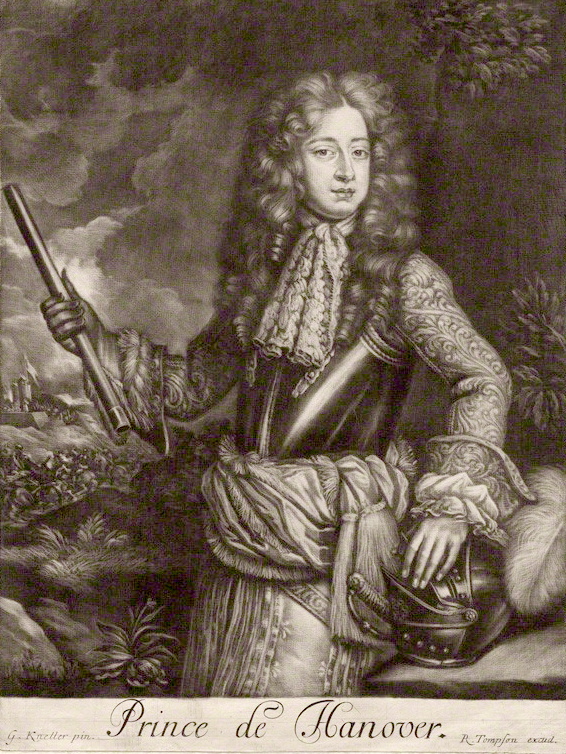 George in 1680, aged 20, when he was Prince of Hanover. After a painting by Sir Godfrey…
View original post 1,751 more words
August 1, 1914: Russia declares war on Germany
02 Aug 2022 Leave a comment
Nicholas II (May 18, 1868 – July 17, 1918), known in the Russian Orthodox Church as Saint Nicholas the Passion-Bearer, was the last Emperor of Russia, King of Congress Poland and Grand Duke of Finland, ruling from 1 November 1894 until his abdication on March 15, 1917.
Nicholas Alexandrovich was the eldest son of Emperor Alexander III of Russia and Princess Dagmar of Denmark the daughter of King Christian IX of Denmark and Princess Louise of Hesse-Cassel.
On November 26, 1894 Emperor Nicholas II married his cousin Princess Alix of Hesse and by Rhine the daughter of Grand Duke Ludwig IV of Hesse and by Rhine and Princess Alice of the United Kingdom.
Princess Alix converted to the Russian Orthodox Church and was renamed Alexandra Feodorovna.
On June 28, 1914 Archduke Franz Ferdinand of Austria-Este, heir to the Austro-Hungarian throne, was assassinated by a Bosnian Serb nationalist, Gavrillo Princeps, in…
View original post 554 more words
The Papacy: The Second Crusade and An English Pope (1144-1159)
02 Aug 2022 Leave a comment

Ten years came and went, and in this decade there were no less than four popes –Celestine II, Lucius II, Eugenius (“Eugene”) III, and Anastasius IV. It was an era marked by constant infighting between the two chief ruling families of Rome (Frangipani and Pierleoni) as well as the continual rise of King Roger II in Sicily. Lucius II was publicly stoned to death (perhaps by accident) after allowing the Senate to be reinstated in Rome, while Eugenius was a gentle soul who was easily driven from Rome amidst the heat of battle. However, abroad the Crescent was now conquering the Cross, as Edessa in present-day Turkey fell to an Arab army under Imad ed-Din Zengi. Thus Pope Eugenius sought the help of Louis VII of France and his wife Eleanor of Aquitaine to raise a Frankish army (Louis and Eleanor were soon to separate on grounds of sanguinity before…
View original post 682 more words
Reviewing Covid monetary policy – Part 2
02 Aug 2022 Leave a comment

In yesterday post, the first in this series, I tried to review and assess the Reserve Bank’s preparedness and its policy response to the Covid economic shock in the first 2-3 months (January to April 2020). They weren’t very well prepared, as it turned out, and this probably contributed to them rushing (and rushing The Treasury and the Minister) into some elements of the response that bore financial risks that were grossly proportionate to the likely economic or financial returns. But on the information they had at the time, and the way most other forecasters and commentators were thinking about the likely economic implications of Covid (and associated other policy responses), there wasn’t much doubt that a significant monetary policy response – easing monetary conditions – was well-warranted at the time. But there were mistakes – some perhaps not that consequential as it turned out (the pledge not to change…
View original post 3,315 more words
Expressive Voting – Public Choice Theory – Geoffrey Brennan
02 Aug 2022 Leave a comment
in applied price theory, comparative institutional analysis, constitutional political economy, economics of information, Public Choice Tags: expressive voting
How Tunneling in New York is Easier Than Elsewhere
01 Aug 2022 Leave a comment

I hate the term “apples-to-apples.” I’ve heard those exact three words from so many senior people at or near New York subway construction in response to any cost comparison. Per those people, it’s inconceivable that if New York builds subways for $2 billion/km, other cities could do it for $200 million/km. Or, once they’ve been convinced that those are the right costs, there must be some justifiable reason – New York must be a uniquely difficult tunneling environment, or its size must mean it needs to build bigger stations and tunnels, or it must have more complex utilities than other cities, or it must be harder to tunnel in an old, dense industrial metropolis. Sometimes the excuses are more institutional but always drawn to exculpate the political appointees and senior management – health benefits are a popular excuse and so is a line like “we care about worker rights/disability rights…
View original post 941 more words
Lucas and Sargent on Optimization and Equilibrium in Macroeconomics
01 Aug 2022 Leave a comment

In a famous contribution to a conference sponsored by the Federal Reserve Bank of Boston, Robert Lucas and Thomas Sargent (1978) harshly attacked Keynes and Keynesian macroeconomics for shortcomings both theoretical and econometric. The econometric criticisms, drawing on the famous Lucas Critique (Lucas 1976), were focused on technical identification issues and on the dependence of estimated regression coefficients of econometric models on agents’ expectations conditional on the macroeconomic policies actually in effect, rendering those econometric models an unreliable basis for policymaking. But Lucas and Sargent reserved their harshest criticism for abandoning what they called the classical postulates.
Economists prior to the 1930s did not recognize a need for a special branch of economics, with its own special postulates, designed to explain the business cycle. Keynes founded that subdiscipline, called macroeconomics, because he thought that it was impossible to explain the characteristics of business cycles within the discipline imposed…
View original post 2,037 more words
The Depressing Reincarnation of Build Back Better
01 Aug 2022 Leave a comment

One of the best things about 2021 was the fact that Congress did not approve Joe Biden’s economically debilitating plan to raise taxes and expand the welfare state.
 His so-called Build Back Better plan was a very bad mix of class-warfare tax policy and redistributionist spending policy.
But one of the worst things about 2022 may be the reincarnation of a slimmed-down version of Biden’s plan.
Simply stated, the “slimmed-down version” of a terrible piece of legislation is bad news – even if it is possible to envision something even worse.
The Wall Street Journal‘s editorial on the package illustrates why it is bad news that Senator Joe Manchin is trying to rescue Biden’s statist agenda.
As the economy slouches near recession, Majority Leader Chuck Schumer and West Virginia Sen. Joe Manchin…unveiled a tax-and-spending deal that they call the Inflation Reduction Act.
Is their aim to reduce inflation…
View original post 470 more words
Reviewing Covid monetary policy – Part 1
01 Aug 2022 Leave a comment
After last week’s posts on the Reserve Bank’s handling of monetary policy, I thought it might be worthwhile to stand back and attempt a series of posts this week on how the Reserve Bank has handled things (mainly monetary policy) over the two and half years since, in late January 2020, Covid became an economic issue for New Zealand. In today’s post, I will look at the Bank’s preparedness and their responses over the first three months or so. In a second post, probably tomorrow, I will look at their handling of policy over the following year or so, and a third post will look at the more recent period. If it seems worthwhile, I might attempt a final post bringing it all together.
It is hardly a secret that I do not have a high regard for the Governor, but in this series I will be seeking to offer…
View original post 3,468 more words
Utterly Pointless: Why Intermittent Wind & Solar Can’t Cut Carbon Dioxide Gas Emissions
31 Jul 2022 Leave a comment
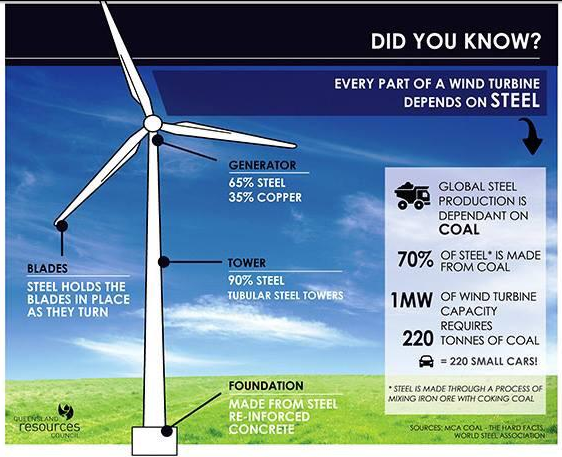
For renewable energy rent-seekers, the claim that wind and solar reduce carbon oxide gas emissions is a necessary and endlessly repeated lie. The necessity comes from the fact that without that (utterly false) premise the wind and solar industries would have been dead and buried, years ago. Incapable of ever supplying power as and when power consumers need it, wind and solar generators are responsible for a product with absolutely no commercial demand. Hence the massive subsidies.
For the record, STT is not overly concerned about human-generated carbon oxide gas and doesn’t accept the notion that it is ‘carbon pollution’. Plants crave the stuff and couldn’t care less whether comes from a volcano, peat bog or coal-fired power plant.
But, for those who worry about human-generated CO2, back in August 2014, STT posed the following question: How Much CO2 Gets Emitted to Build a Wind Turbine? Since then, that post has…
View original post 772 more words
Star Trek: Season 2, Episode Eight “I, Mudd”
31 Jul 2022 Leave a comment
Stardate: 4513.3 (2268)
Original Air Date: November 3, 1967
Writer: Stephen Kandel, David Gerrold (uncredited)
Director: Marc Daniels
“What is a man but that lofty spirit, that sense of enterprise, that devotion to something that cannot be sensed, cannot be realized but only dreamed! The highest reality.”

In this goofy Harry Mudd sequel episode, a crewman named Norman (Richard Tatro) begins acting strangely and he rather quickly locks the ship’s controls and hijacks the entire vessel. He stiffly addresses the bridge (referring to himself as “we”) by stating that the Enterprise will arrive at a new intended destination in four solar days. Norman then reveals himself to be an android and then promptly shuts himself down while the ship speeds toward its unknown destination.
Several days later, the Enterprise arrives at an uncharted planet, classified a “Class-K” planet (meaning a planet which can be adapted for life…
View original post 876 more words


Recent Comments