The 1997 Labour government’s constitutional reform programme: 25 years on
18 Jun 2022 Leave a comment


25 years have passed since the Labour election win of 1997, which preceded a plethora of constitutional changes, including partial reform of the House of Lords, devolution to Scotland, Wales and Northern Ireland, and the Human Rights Act. Tom Leeman summarises the contributions of three expert speakers (Professor Robert Hazell, Baroness (Shami) Chakrabarti and Lord (Charlie) Falconer of Thoroton) at a recent Unit event to mark the anniversary.
This year marked a quarter of a century since the victory of Tony Blair’s New Labour in the 1997 General Election on 1 May. Blair’s first government embarked upon a programme of constitutional reform, many elements of which, such as devolution, the Human Rights Act (HRA), and the status of hereditary peers in the Lords, still spark debate in the UK today.
To mark the anniversary and discuss the Blair government’s constitutional legacy the Unit convened an event with three…
View original post 1,081 more words
House of Cards: Wind & Solar ‘Transition’ Delivers Total Energy System Collapse
18 Jun 2022 Leave a comment


A house of cards has more structural integrity than a power generation system that depends on sunshine and breezes. Australia’s unfolding renewable energy debacle is a case in point.
Total daily collapses solar output (aka ‘sunset’) and total collapses in wind power output (aka ‘calm weather’) are at the heart of a power pricing and supply calamity, with daily power rationing the new normal.
The massive subsidies to wind and solar were designed to destroy the profitability of reliable coal-fired generators, which they duly did.
The political brains trust and their apologists in the MSM have been railing against coal-fired power as “dirty” and the personification of “evil” for years now. And yet, when a coal-fired power plant takes one or two of its several generating units off-line for repairs or maintenance, the same mob howls ‘blue murder’, accusing the plant’s owners of an underhand conspiracy aimed at undermining the…
View original post 1,124 more words
The African War 46 BC
18 Jun 2022 Leave a comment

Context
After the death of Gnaeus Pompeius (Pompey) in September 48 BC, forces loyal to his cause (the ‘Pompeians’) rallied in north Africa (modern-day Tunisia). They were given support by King Juba of Numidia.
Caesar, arriving back in Rome from the East (whose pacification, starting in Egypt, moving through Syria and into Turkey, are described in The Alexandrine War), quelled a mutiny in Campania. He took steps to relieve debtors. Loyal followers were given rewards i.e. governorships and priesthoods. Some were enrolled in the senate to fill gaps. Repentant Pompeians were forgiven i.e. there was no bloodbath as under the dictators earlier in the century, Sulla or Marius.
At the very end of 47 BC Caesar was elected consul and sailed to Africa to defeat this last holdout of Pompeians. The Pompeian forces were led by Quintus Caecilius Metellus Scipio, along with Titus Labienus, Publius Attius Varus, Lucius Afranius…
View original post 5,697 more words
Bank of England falls further behind in race to tame inflation
18 Jun 2022 Leave a comment

The Bank of England’s Monetary Policy Committee (MPC) has raised interest rates by just a quarter point, to 1.25 per cent. This was the fifth increase in as many meetings, but still leaves rates near historic lows. In my view, this was a mistake.
This decision is hard to square with April’s consumer price inflation figure of 9 per cent, or the Bank’s own expectations that the CPI measure will now top 11 per cent in October. Nonetheless, the MPC judged (by a majority of 6 to 3) that not enough had happened since it last met in May to justify a different pace of tightening.
To be fair, there were no ‘game changers’ in the latest economic data. The April GDP figures were a little weaker than expected and there are still few signs of the wage-price spiral that some fear. Against this, other indicators suggest that private sector…
View original post 837 more words
It sounds better in the original German
18 Jun 2022 Leave a comment

Hot on the heels of the Democrat Party amping up the pressure on Supreme Court Justices over the anticipated overthrow of the current abortion SCOTUS rulings – with illegal protests (no arrests so far) outside the homes of selected Justices by “Ruth Sent Us” and multiple arson attacks on pregnancy centres across the country by “Jane’s Revenge” – comes this lovely little indicator of how the Democrats think when democracy doesn’t go their way:
“This is, in my opinion, a diseased Republican Party. And it needs to be cured and cleansed,” Houlahan said. “So the stakes of having a Republican, as an example, in my seat are more than just policy differences. They are democracy, in my opinion.”
Mmmmmm…. cleansing! Tasty, tasty cleansing.
Ms Houlahan won her competitive Pennsylvania seat in 2020 but is now facing strong headwinds for re-election thanks to Biden being underwater in her state, with…
View original post 420 more words
France 2022 fourth round (legislative runoffs)
18 Jun 2022 Leave a comment

Sunday is the final round of the four-round French election–two rounds for president, two for National Assembly. Thus the legislative runoffs are now upon us. Although we have the unusual case of a honeymoon election in which the leader of an opposition alliance is proclaiming he is running for prime minister, probably the only real question in the results is whether the just-reelected President Macron gets a assembly majority or not. (See earlier planting for discussion of such points.)
In advance of the runoffs, I been poking around in the statements (profession de foi) that candidates make available. It’s a great resource for anyone wanting study patterns in the way the candidates and parties/alliances communicate. I am not about to look at this systematically, but I note a few stark differences in presentation. (Most of the following is based on a comment by me at the earlier…
View original post 737 more words
Karl du Fresne on virtue signalling, Kiri Allan, Three Waters and secret donations
18 Jun 2022 Leave a comment

This article was published today on Karl du Fresne’s blog (HERE).
Newly promoted minister Kiritapu Allan has said what a lot of people think but feel unable to say.
She lashed out in a tweet against “tokenistic” use of te reo by employees of DOC “as an attempt to show govt depts are culturally competent”. She told Stuff she encouraged the use of the Maori language, but wanted it used “with integrity”.
“You want to use te reo, you use it with integrity and use it responsibly,” Stuff quoted Allan as saying. “This isn’t a ‘everybody go out and use mahi and kaupapa’ and say you have a deep and enduring relationship with te ao Māori.”
Of course this shouldn’t apply only to DOC, where Allan was in charge before this week’s cabinet reshuffle resulted in her elevation to the justice portfolio. The same message could be directed…
View original post 1,322 more words
Watergate at 50: Why the ‘heroic-journalist’ myth still defines the scandal
17 Jun 2022 Leave a comment

This essay was first published at the Conversation news siteon June 14, 2022, and appears here slightly edited.
In their dogged reporting of the Watergate scandal, Washington Post reporters Bob Woodward and Carl Bernsteinuncovered the crimes that forced Richard Nixon to resign the presidency in August 1974.
That version of Watergate has long dominated popular understanding of the scandal, which unfolded over 26 months, beginning June 17, 1972.
It is, however, a simplistic trope that not even Watergate-era principals at the Post embraced. The newspaper’s publisher during Watergate, Katharine Graham, pointedly rejected that interpretation during a program 25 years ago at the now-defunct Newseum (the “museum of news“) in suburban Virginia.
“Sometimes, people accuse us of ‘bringing down a president,’ which of course we didn’t do, and
 Nixon quits: Not the Post’s doing
shouldn’t have done,” Graham said. “The processes that caused [Nixon’s]…
View original post 801 more words
June 16, 1586: Mary I, Queen of Scots names King Felipe II of Spain as hier and successor
17 Jun 2022 Leave a comment

Felipe II (May 21, 1527 – September 13, 1598) was the son of Emperor Charles V and Isabella of Portugal. Felipe II inherited his father’s Spanish Empire and was the King of Spain from 1556, and succeeded as King of Portugal in 1580 following a dynastic crisis. Felipe II was King of Naples and Sicily from 1554 until his death in 1598.
Felipe II was also jure uxoris King of England and Ireland during his marriage to Queen Mary I of England and Ireland from 1554 until her death in 1558. He was also Duke of Milan from 1540. From 1555, he was Lord of the Seventeen Provinces of the Netherlands. Upon Mary I of England’s death, the throne went to her half-sister as Queen Elizabeth I. Felipe had no wish to sever his tie with England, and had sent a proposal of marriage to Elizabeth.
However, she delayed in…
View original post 605 more words
Happy Birthday Stan Laurel
16 Jun 2022 Leave a comment



Stan Laurel was born Arthur Stanley Jefferson on the 16th of June in Ulverston, Lancashire in England, 1890. His father was a vaudeville performer and this led Stan to being a stage performer too. He didn’t get much schooling and this resulted to the joining of Fred Karno’s Troupe where Stan understudied the future star, Charles Chaplin. In 1912 they went on a tour to America where Chaplin remained, but Stan went straight back to England. In 1916 he returned to the States and did an impersonation of Charlie Chaplin and the act was called “The Keystone Trio” and it was quite successful. What I find ironic is that although there is no doubt that Charlie Chaplin was a genius, his comedy dated badly. Whereas Stan Laurel’s comedy, and especially as part of the comedic duo Laurel and Hardy, it still is fresh today. It was actually quite progressive. The…
View original post 537 more words
Blackout Nation: Australians Latest Victims of Subsidised Wind & Solar Chaos
16 Jun 2022 Leave a comment
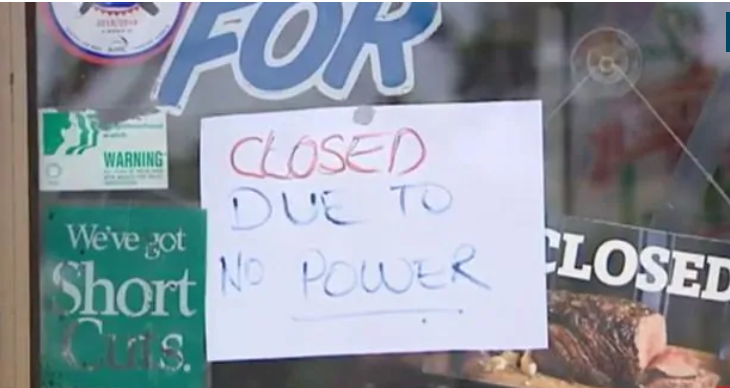
That Australia’s Eastern Grid is on the brink of collapse with a complete ‘system black’ on the cards comes as no surprise.
The $7 billion in annual RET subsidies pocketed by wind and solar generators were designed to allow them to underbid Australia’s reliable and affordable coal-fired generators, destroying their profitability and, ultimately, driving them off the grid. As a direct consequence, Australia’s Eastern Grid (that covers QLD, NSW, Victoria, Tasmania and SA) is literally on the brink of collapse. The new Federal Labor government is in a flat panic, using Stalinist bully boy tactics in the vain hope of undoing the inevitable consequences of the so-called ‘inevitable transition’ to wind and solar. The market for electricity has been co-opted by governments, and taxpayers will be left to foot an enormous bill to compensate generators forced to dispatch power at a loss, on top of the $billions in subsidies already…
View original post 2,290 more words
The Queen’s Platinum Jubilee: what does the future hold for the monarchy?
16 Jun 2022 Leave a comment


The Platinum Jubilee was a time for celebration, but it also provoked many questions about the future of the monarchy, and what it might look like under the next monarch. In this post, Robert Hazell and Bob Morris attempt to answer those questions, relying on their detailed knowledge of modern European monarchies.
The Platinum Jubilee celebrated the Queen’s dedication to public service throughout her long reign, tinged with a certain apprehensiveness about the future now that reign is in its final years. It generated a blizzard of media requests from around the world, which mostly clustered around the same set of questions:
- How can a hereditary monarchy be part of a modern democracy?
- Will public support for the monarchy outlive support for the Queen?
- What kind of King will Prince Charles be? What changes might he want to introduce?
- What is the future of the monarchy in the realms, the…
View original post 1,377 more words
Ted Hill, the Khmer Rouge and Australian Maoism, 1977-1980
16 Jun 2022 Leave a comment

This piece was originally posted at my Patreon here. For more content, please subscribe.
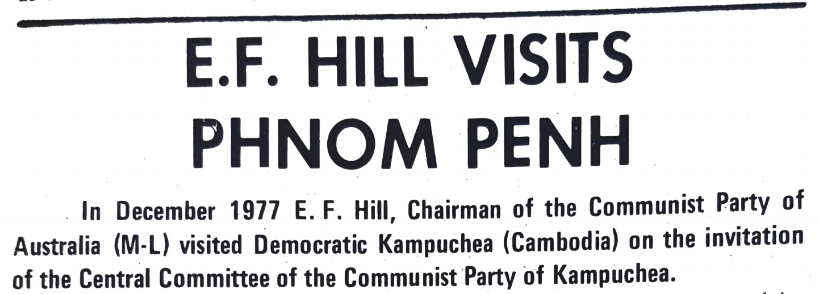
Throughout the nearly four years of its existence, the Pol Pot regime in Cambodia (which called itself Democratic Kampuchea) invited a number of Western sympathisers to observe the regime and (hopefully) provide eyewitness accounts back in the West. Infamously, this ended in tragedy for British academic Malcolm Caldwell, who was killed in the dying days of the Khmer Rouge’s time in power. After four members of the Communist Party (Marxist-Leninist) from the United States travelled to Kampuchea in 1978, one of the leading members of the party, Daniel Burstein, became disillusioned with what he saw there. Although he initially wrote defences of the regime, by 1980 he was walking back from this initial assessment, which led to internal divisions and soul searching within the CP(M-L). As…
View original post 3,154 more words


Recent Comments