The Original Climate Crisis: How the Little Ice Age Devastated Early Modern Europe

oldbrew's avatarTallbloke's Talkshop

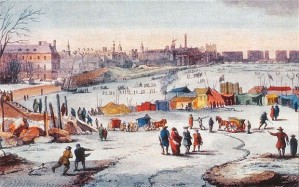
Frost fair
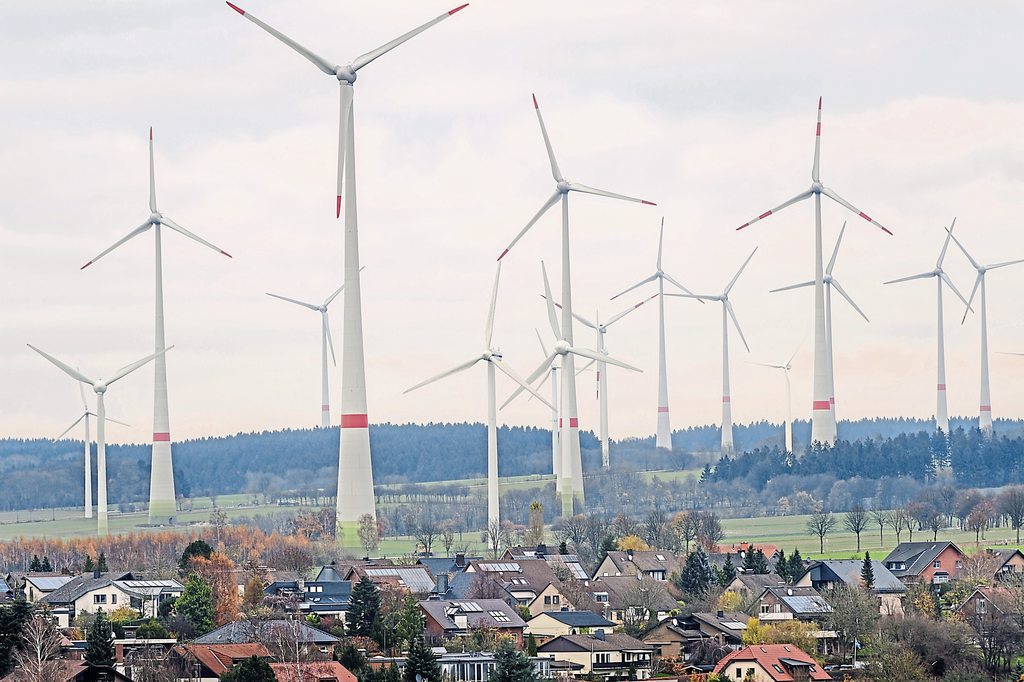
The key phrases in this article could be: ‘Whatever its causes’ and ‘Average temperatures in the British Isles cooled by 2°C’. Climate science is unable to offer a specific explanation, although theories abound, but natural variation for whatever reasons is built-in and always will be. Quantifying it remains out of reach, but computer models are still supposed to be the answer to everything climate.
– – –
Just as the UK was recovering from storms Eunice and Franklin, scientists of UN’s Intergovernmental Panel on Climate Change (IPCC) released a landmark report warning of a future with spiraling weather extremes, fiercer storms, flash flooding, and wildfires, says The Conversation (via Singularity Hub).

This isn’t the first time that Britain has experienced drastic climate change, however. By the 16th and 17th centuries, northern Europe had left its medieval warm period and was languishing in what is sometimes called the…

View original post 283 more words

David K. Backus Memorial Lecture 2019: Timothy J. Kehoe

The Economics of War, Part II: Trade Restrictions Make a Nation Weaker

Dan Mitchell's avatarInternational Liberty

Way back in 2010, I explained that Paul Krugman was wrong to think that wars were good for the economy.

Indeed, he was more wrong than usual. The additional spending for the military isn’t “stimulus,” so his usual Keynesian argument was misguided.

Moreover, he didn’t seem to understand that wars also destroy existing wealth.

Today we are going to look at how war can teach us another economic lesson.

The United States and other major nations have responded to Russia’s assault on Ukraine by imposing trade restrictions with Russia.

If protectionists are correct, these steps (effectively imposing an extreme Russian version of Biden’s “buy America” policy) should strengthen Putin.

Yet that’s obviously not the purpose of the sanctions.

Instead, officials from western nations understand that these trade barriers will weaken Russia’s economy.

By the way, this isn’t the only example of nations using trade restrictions to hurt their enemies.

View original post 176 more words

No End Date For Coal & Nuclear: Gas Crunch Drives Germany’s Grand Renewables Backflip

stopthesethings's avatarSTOP THESE THINGS

A month or so back, Germany’s green-infested government was talking up the end of coal and nuclear power plants; the last phase in its ‘inevitable’ transition to an all wind and sun-powered future, as the wind and sun cult would have it.

Well. That was then, this is now.

With the squeeze on Russian gas and oil supplies, Germany (among others) has been forced to meet reality, head-on.

All of a sudden, even its rabid the anti-fossil fuel Greens have backflipped on plans to kill off Germany’s nuclear and coal-fired plants. Necessity being, in this case, the mother of ideological reinvention.

Tsvetana Paraskova tells the tale of how reality is driving Germany’s grand renewables reversal.

Germany Goes For Full Energy Policy Overhaul Amid Ukraine Crisis
Oil Price
Tsvetana Paraskova
28 February 2022

The Russian invasion of Ukraine upended the energy policy of Germany. In just a few days since Putin…

View original post 655 more words

Still No Global Warming, Cool February Land and Sea

Ron Clutz's avatarScience Matters

a62edf0f39de560a219b7262163b0d45

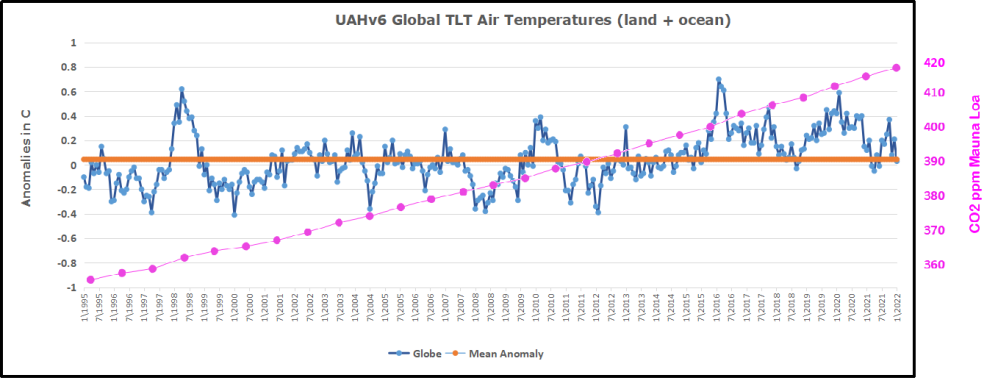
The post below updates the UAH record of air temperatures over land and ocean.  But as an overview consider how recent rapid cooling has now completely overcome the warming from the last 3 El Ninos (1998, 2010 and 2016).  The UAH record shows that the effects of the last one were gone as of April 2021, again in November, 2021 and now in January and February 2022. (UAH baseline is now 1991-2020).

For reference I added an overlay of CO2 annual concentrations as measured at Mauna Loa.  While temperatures fluctuated up and down ending flat, CO2 went up steadily by ~55 ppm, a 15% increase.

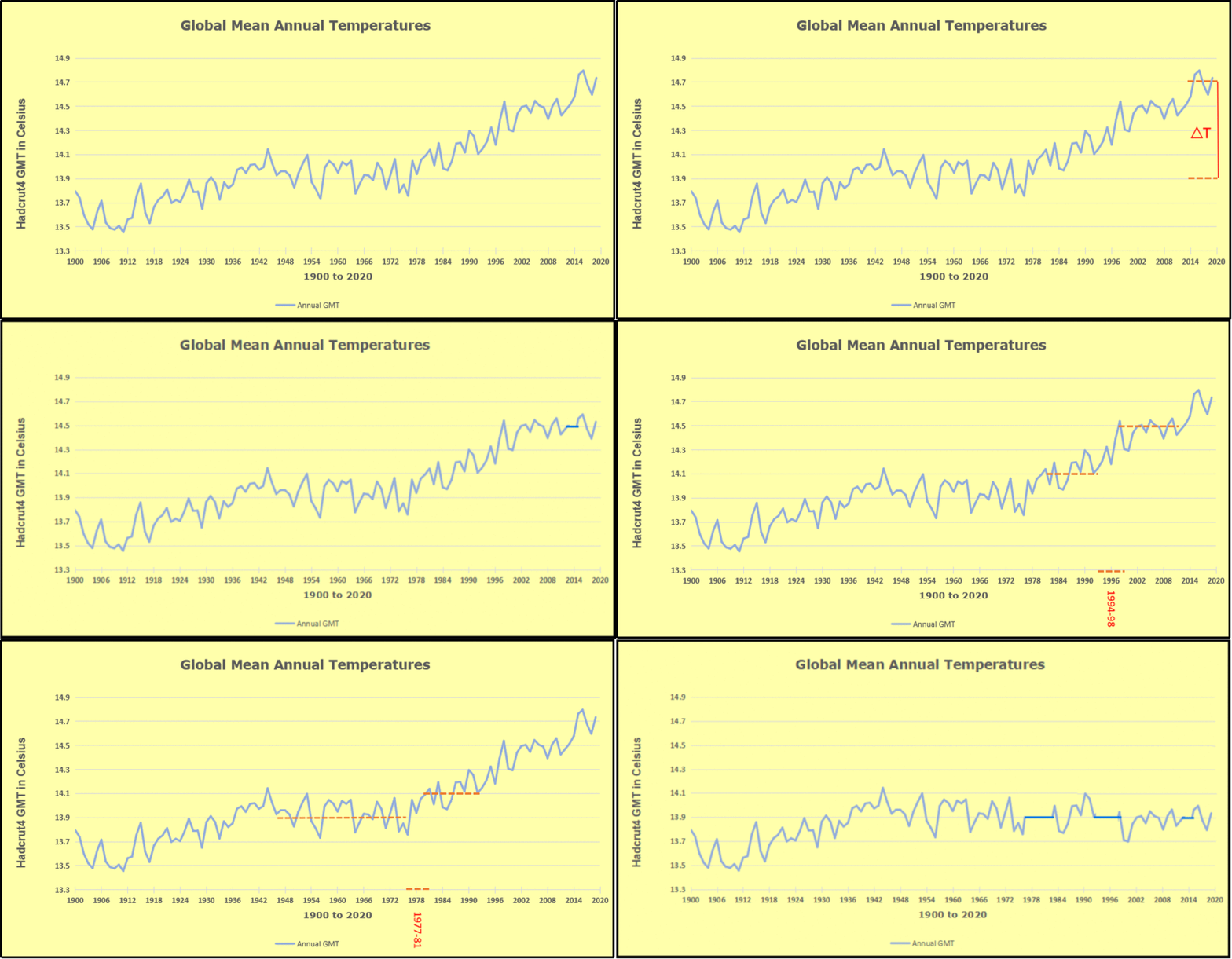
Furthermore, going back to previous warmings prior to the satellite record shows that the entire rise of 0.8C since 1947 is due to oceanic, not human activity.

gmt-warming-events

The animation is an update of a previous analysis from Dr. Murry Salby.  These graphs use Hadcrut4 and…

View original post 1,147 more words

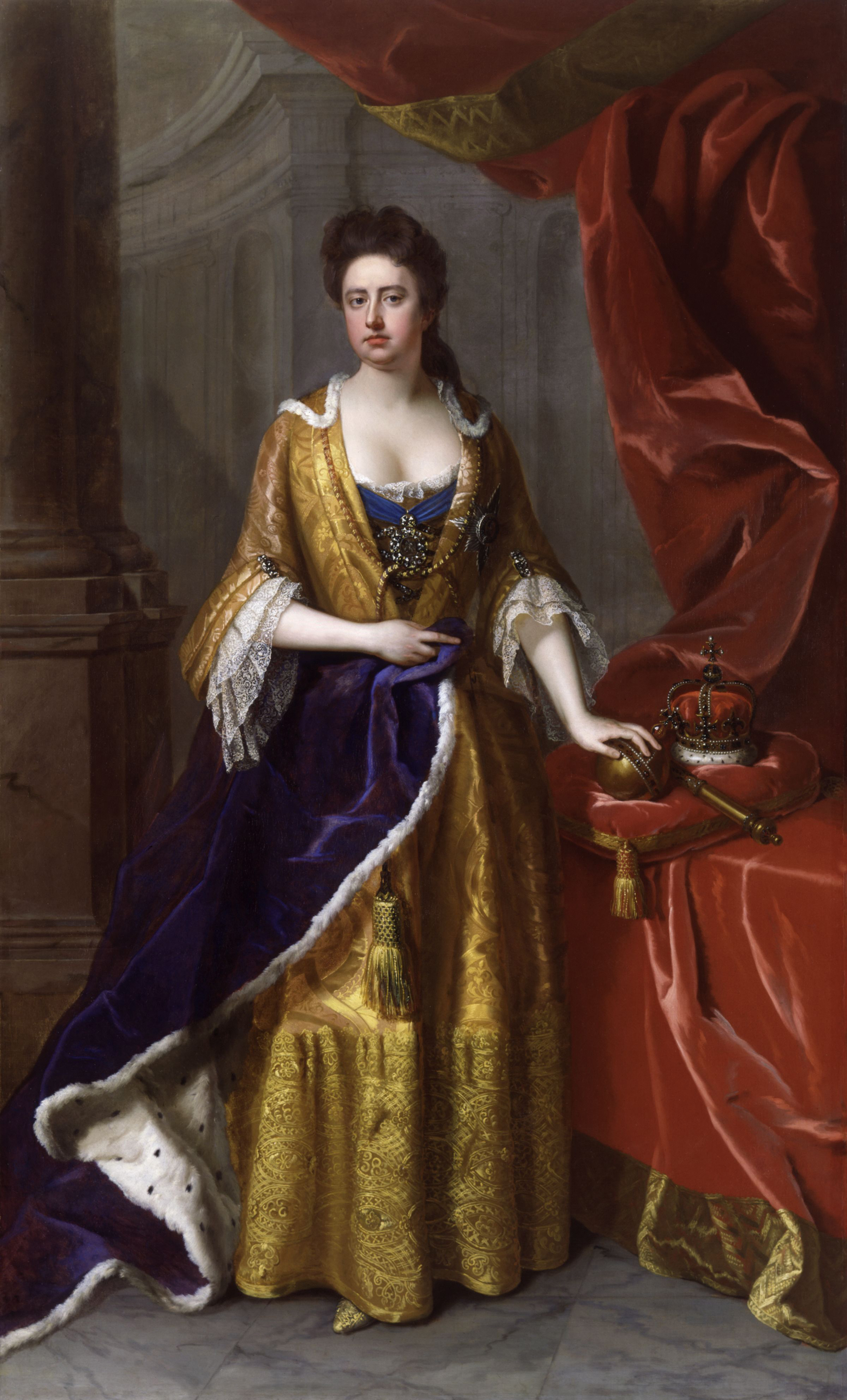
Accession of Queen Anne of England, Scotland and Ireland. Part IV.

liamfoley63's avatarEuropean Royal History

William of Orange invaded England on November 5, 1688 in an action known as the Glorious Revolution, which ultimately deposed King James II-VII of England, Scotland and Ireland. Forbidden by James to pay Mary a projected visit in the spring of 1687, Anne corresponded with her and was aware of the plans to invade.

On the advice of the Churchills, Anne refused to side with James after William landed and instead wrote to William on November 18, declaring her approval of his action. Churchill abandoned the unpopular King James on the 24th. Prince George followed suit that night, and in the evening of the following day James issued orders to place Sarah Churchill under house arrest at St James’s Palace.

Anne and Sarah fled from Whitehall by a back staircase, putting themselves under the care of Bishop Compton. They spent one night in his house, and subsequently arrived at Nottingham…

View original post 753 more words

Image

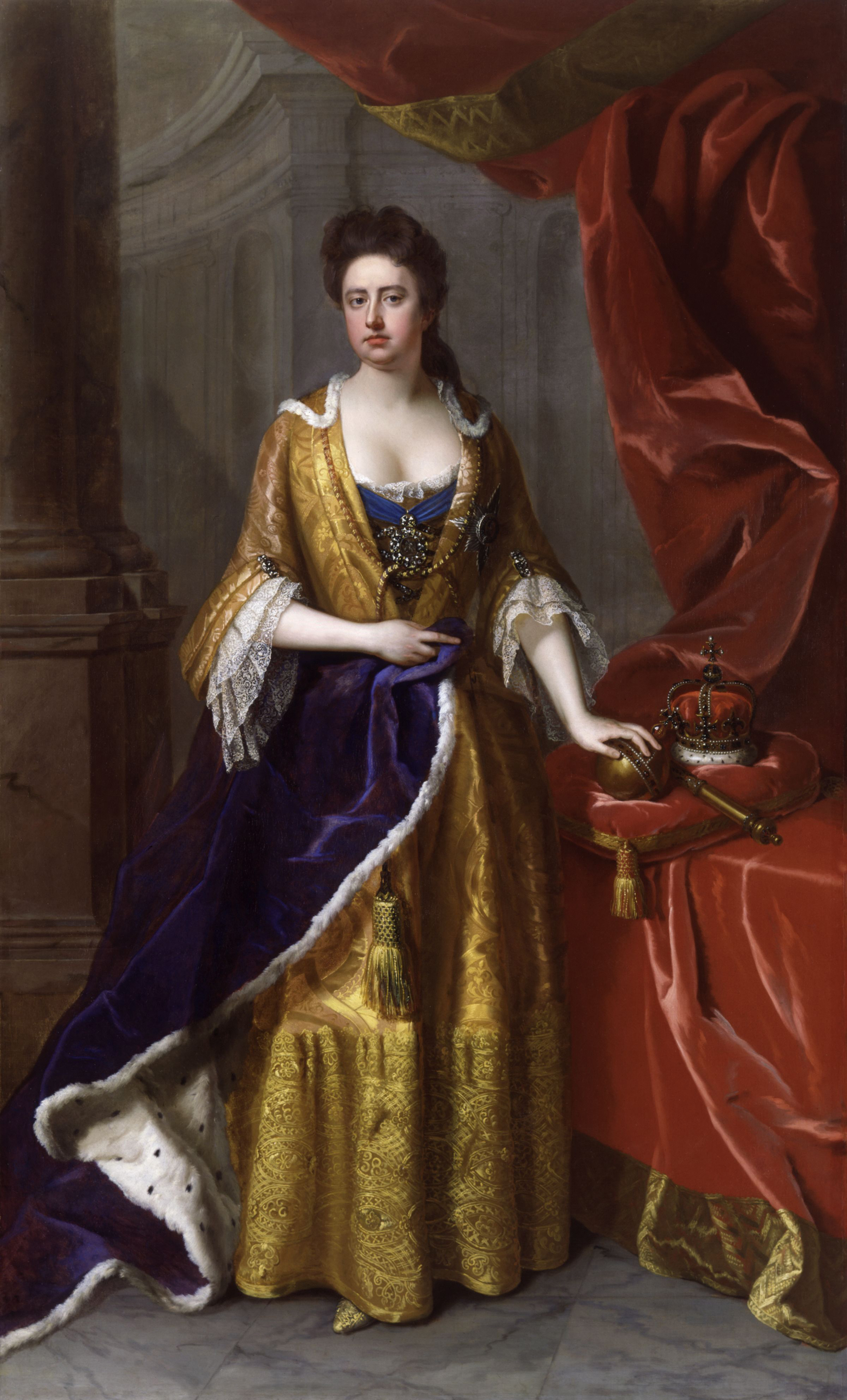
March 11, 1708: Queen Anne becomes last British monarch to veto legislation.

liamfoley63's avatarEuropean Royal History

The Scottish Militia Bill 1708 (known formerly as the Scotch Militia Bill) was a bill that was passed by the House of Commons and House of Lords of the Parliament of Great Britain in early 1708.

However, on March 11, 1708, Queen Anne of Great Britain and Ireland, withheld Royal Assent on the advice of her ministers for fear that the proposed militia would be disloyal. This was due to the sudden appearance of a Franco-Jacobite invasion fleet en route to Scotland which gave ministers second thoughts, at the last minute, about allowing it to reach the statute books. It was the last occasion on which the Royal Veto was used.

Content

The bill’s long title was “An Act for settling the Militia of that Part of Great Britain called Scotland”. Its object was to arm the Scottish militia, which had not been recreated at the Restoration. This happened…

View original post 186 more words

Image

Russia, The US, and Crude Data

Zachary Bartsch's avatarEconomist Writing Every Day

Overall, I’ve been disappointed with the reporting on the US embargo against Russian oil. The AP reported that the US imports 8% of Russia’s crude oil exports. But then they and other outlets list a litany of other figures without any context for relative magnitudes. Let’s shine some more light on the crude oil data.*

First, the 8% figure is correct – or, at least it was correct as of December of 2021. The below figure charts the last 7 years of total Russian crude oil exports, US imports of Russian crude oil, and the proportion that US imports compose. That 8% figure is by no means representative of recent history. The average US proportion in 2015-2018 was 7.8%. But the US share as since risen in level and volatility. Since 2019, the US imports compose an average of 11.9% of all Russian crude oil exports.

As an exogenous shock…

View original post 757 more words

Crash (2004) Review

Great Books Guy's avatarGreat Books Guy

Crash (2004) Director: Paul Haggis

★★

Crash is a bleak, depressing, sappy socio-political “message” movie. At the time of its release it was widely praised, even winning Best Picture at the Oscars in 2005. While I can appreciate a film with an anti-bigotry message, Crash just gets more ridiculous and overtly sentimental with time. It does not rank among the greatest of the Best Picture winners in my view.

Crash is a panorama-film. It tells the story a variety of parallel lives, people living empty, broken lives in Los Angeles, people filled with prejudice and hatred and, above all, distance from one another. So they come violently crashing into one another in a string of car accidents, robberies, and gun violence. The plot concerns a struggling Iranian family who runs a shop with a broken door, so they call a Latino locksmith who has already been accused of being…

View original post 196 more words

Accession of Queen Anne of England, Scotland and Ireland. Part III.

liamfoley63's avatarEuropean Royal History

When Charles II died in 1685, Anne’s father became King James II of England and Ireland and also King James VII of Scotland. To the consternation of the English people, James began to give Catholics military and administrative offices, in contravention of the Test Acts that were designed to prevent such appointments.

Anne shared the general concern, and continued to attend Anglican services. As her sister Mary lived in the Netherlands, Anne and her family were the only members of the royal family attending Protestant religious services in England. When her father tried to get Anne to baptise her youngest daughter into the Catholic faith, Anne burst into tears. “The Church of Rome is wicked and dangerous”, she wrote to her sister, “their ceremonies—most of them—plain downright idolatry.” Anne became estranged from her father and stepmother, as James moved to weaken the Church of England’s power.

In early 1687, within…

View original post 343 more words

Power Price Punishment: Cost of Subsidised Wind & Solar Killing Productive Industry & Enterprise

stopthesethings's avatarSTOP THESE THINGS

Reliance on intermittent wind and solar guarantees rocketing power prices and chaotic supply. Price spikes and/or power rationing when the sun sets or calm weather sets in are the death knell for a range of energy-hungry businesses and industries. Manufacturing and mineral processing are usually the first to disappear, when the true costs of running with the unreliables start to bite.

The State of Virginia provides the perfect example, with a push for an all wind and sun powered future in the not-too-distant future.

David Stevenson adds up the whopping costs and the non-existent benefits of Virginia’s plans to run on sunshine and breezes below.

Cost and Reliability Implications of the Virginia Clean Economy Act
Caesar Rodney Institute
David T Stevenson
10 January 2022

Virginia legislation requires electric power to come 100% from renewable sources by 2045. Specific targets are set for the amount of solar and onshore wind, offshore…

View original post 876 more words

The Failure of Bidenomics, Part VI

Dan Mitchell's avatarInternational Liberty

Having addressed Biden’s track record on subsidies, inflation, protectionism, household income, and fiscal policy, let’s finish our series by reviewing the president’s record on regulatory issues.

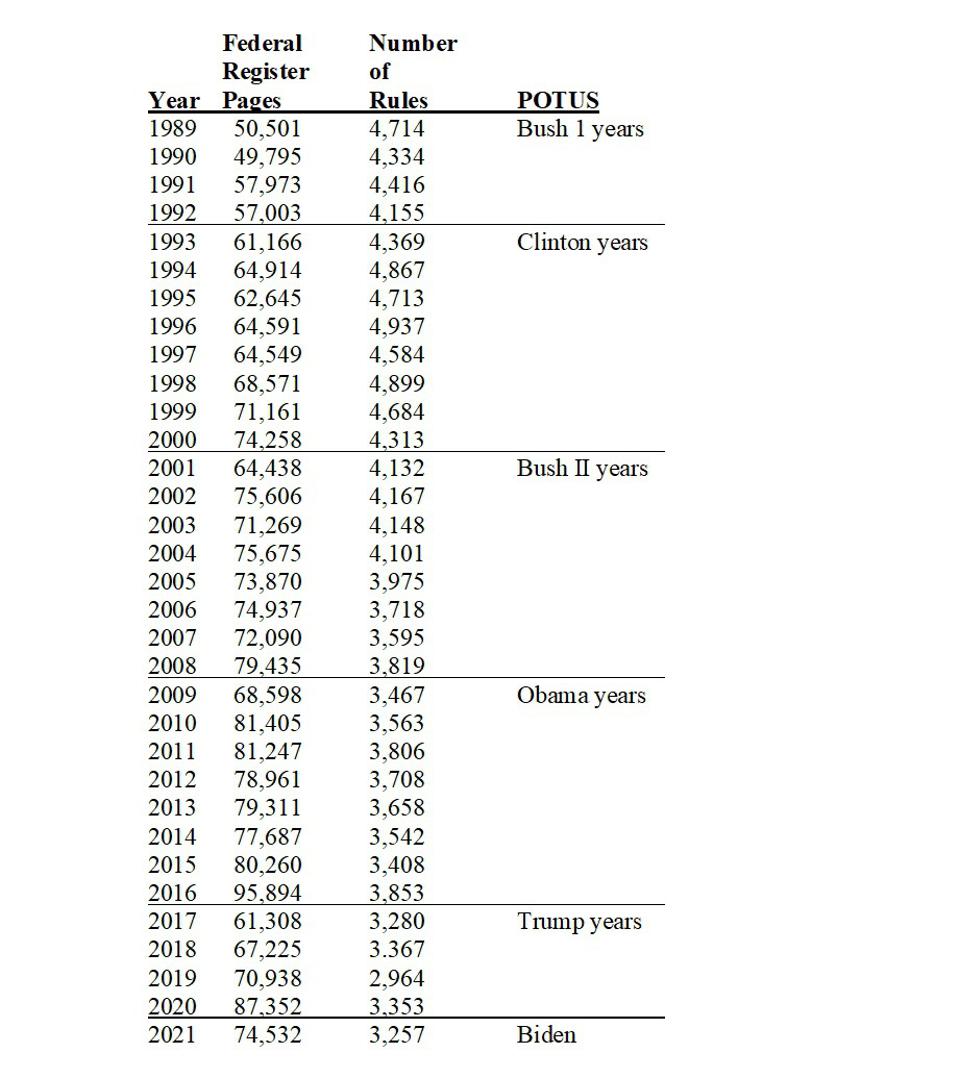
The first place to start is the Federal Register, which is Uncle Sam’s official site for new rules.

Though it gives us conflicting information. The number of pages (a crude measure of regulatory zeal, as I noted a few years ago) actually decreased during Biden’s first year. But only compared to Trump’s last year.

To understand what’s really going on, let’s look at the Forbesarticle from which the above table was taken.

Clyde Wayne Crews of the Competitive Enterprise Institute sifts through the data and concludes that Biden is a fan of expanded red tape.

The Federal Register is the daily depository of rules and regulations produced by hundreds of federal departments and agencies. …Under Biden, the regulatory…

View original post 714 more words

Accession of Queen Anne of England, Scotland and Ireland: Part II.

liamfoley63's avatarEuropean Royal History

In November 1677, Anne’s elder sister, Mary, married their Dutch first cousin Willem III of Orange, at St James’s Palace, but Anne could not attend the wedding because she was confined to her room with smallpox. By the time she recovered, Mary had already left for her new life in the Netherlands. Lady Frances Villiers contracted the disease, and died. Anne’s aunt Lady Henrietta Hyde (the wife of Laurence Hyde) was appointed as her new governess. A year later, Anne and her stepmother visited Mary in Holland for two weeks.

Anne’s father and stepmother retired to Brussels in March 1679 in the wake of anti-Catholic hysteria fed by the Popish Plot, and Anne visited them from the end of August. In October, they returned to Britain, the Duke and Duchess of York to Scotland and Anne to England. She joined her father and stepmother at Holyrood Palace in Edinburgh from…

View original post 357 more words

March 1672: The Declaration of Indulgence

Paul Seaward's avatarThe History of Parliament

In March 1672 Charles II issued a document to remove harsh sanctions against religious non-conformity. But what brought about this ‘Declaration of Indulgence’ and why was a supposedly tolerant measure met with heavy criticism? History of Parliament Director Dr Paul Seaward explores…

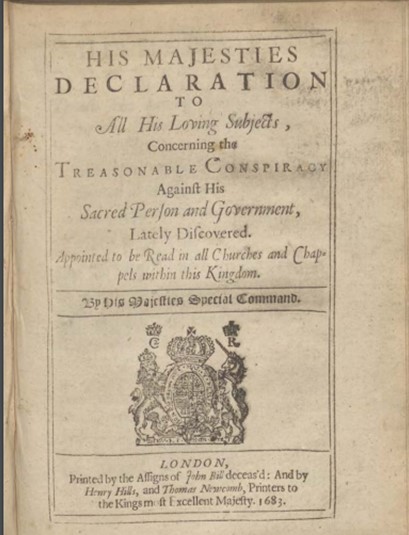
On 15 March 1672, 350 years ago, the English government issued a document headed His Majesty’s Declaration to all his loving subjects, but which has become known as the Declaration of Indulgence. It was an astonishing statement, reversing the position of English monarchical governments since Elizabeth I towards Protestant religious dissent or nonconformity. Not only that, but in explicitly suspending a large body of parliamentary legislation which required church attendance and forbade the holding of alternative religious meetings (‘conventicles’) outside the framework of the Church of England it overrode the authority of parliament itself.

“His Majesties Declaration to All His Loving Subjects, Concerning the Treasonable Conspiracy Against…

View original post 1,099 more words

Image

The House of Lords amendment to the Dissolution and Calling of Parliament Bill returns appropriate power to MPs: they should accept it

The Constitution Unit's avatarThe Constitution Unit Blog

The House of Lords has amended the government’s Dissolution and Calling of Parliament Bill to require House of Commons approval for early general elections. Tom Fleming and Meg Russell explore what MPs should consider when the bill returns to the Commons. They argue that the Lords amendment deserves support, as it provides an important limit on Prime Ministers’ power to call early elections, and avoids drawing either the monarch or the courts into political controversy.

Background

The Dissolution and Calling of Parliament Bill seeks to change how early general elections are called in the UK. Specifically, it aims to restore the Prime Minister’s control of election timing, by repealing the Fixed-term Parliaments Act 2011 (FTPA).

Before 2011, general elections were required at least every five years. However, the Prime Minister could ask the monarch to dissolve parliament during that period, resulting in an earlier election. The FTPA removed this…

View original post 1,585 more words

Previous Older Entries Next Newer Entries

Arin’s Substack

Celebrating humanity's flourishing through the spread of capitalism and the rule of law

David Andolfatto

Celebrating humanity's flourishing through the spread of capitalism and the rule of law

Monetary Non-Neutrality

Celebrating humanity's flourishing through the spread of capitalism and the rule of law

Reason Magazine

Celebrating humanity's flourishing through the spread of capitalism and the rule of law

Coyote Blog

Celebrating humanity's flourishing through the spread of capitalism and the rule of law

Thoughts from the North

Celebrating humanity's flourishing through the spread of capitalism and the rule of law

Fardels Bear

A History of the Alt-Right

Vincent Geloso

Econ Prof at George Mason University, Economic Historian, Québécois

Bassett, Brash & Hide

Celebrating humanity's flourishing through the spread of capitalism and the rule of law

Truth on the Market

Scholarly commentary on law, economics, and more

The Undercover Historian

Beatrice Cherrier's blog

Matua Kahurangi

Celebrating humanity's flourishing through the spread of capitalism and the rule of law

Temple of Sociology

Celebrating humanity's flourishing through the spread of capitalism and the rule of law

Velvet Glove, Iron Fist

Celebrating humanity's flourishing through the spread of capitalism and the rule of law

Why Evolution Is True

Why Evolution is True is a blog written by Jerry Coyne, centered on evolution and biology but also dealing with diverse topics like politics, culture, and cats.

NoTricksZone

Celebrating humanity's flourishing through the spread of capitalism and the rule of law

Homepaddock

A rural perspective with a blue tint by Ele Ludemann

Kiwiblog

DPF's Kiwiblog - Fomenting Happy Mischief since 2003

The Dangerous Economist

Celebrating humanity's flourishing through the spread of capitalism and the rule of law

Watts Up With That?

The world's most viewed site on global warming and climate change

The Logical Place

Tim Harding's writings on rationality, informal logic and skepticism

Doc's Books

A window into Doc Freiberger's library

The Risk-Monger

Let's examine hard decisions!

Uneasy Money

Commentary on monetary policy in the spirit of R. G. Hawtrey

Barrie Saunders

Thoughts on public policy and the media

Liberty Scott

Celebrating humanity's flourishing through the spread of capitalism and the rule of law

Point of Order

Politics and the economy

James Bowden's Blog

A blog (primarily) on Canadian and Commonwealth political history and institutions

Science Matters

Reading between the lines, and underneath the hype.

Peter Winsley

Economics, and such stuff as dreams are made on

A Venerable Puzzle

"The British constitution has always been puzzling, and always will be." --Queen Elizabeth II

The Antiplanner

Celebrating humanity's flourishing through the spread of capitalism and the rule of law

Bet On It

Celebrating humanity's flourishing through the spread of capitalism and the rule of law

History of Sorts

WORLD WAR II, MUSIC, HISTORY, HOLOCAUST

Roger Pielke Jr.

Undisciplined scholar, recovering academic

Offsetting Behaviour

Celebrating humanity's flourishing through the spread of capitalism and the rule of law

JONATHAN TURLEY

Res ipsa loquitur - The thing itself speaks

Conversable Economist

In Hume’s spirit, I will attempt to serve as an ambassador from my world of economics, and help in “finding topics of conversation fit for the entertainment of rational creatures.”

The Victorian Commons

Researching the House of Commons, 1832-1868

The History of Parliament

Articles and research from the History of Parliament Trust

Books & Boots

Reflections on books and art

Legal History Miscellany

Posts on the History of Law, Crime, and Justice

Sex, Drugs and Economics

Celebrating humanity's flourishing through the spread of capitalism and the rule of law

European Royal History

Exploring the Monarchs of Europe

Tallbloke's Talkshop

Cutting edge science you can dice with

Marginal REVOLUTION

Small Steps Toward A Much Better World