Deep ‘Green’ Punishment: Power Prices Set To Double In Wind Power Obsessed Britain
08 Feb 2022 Leave a comment

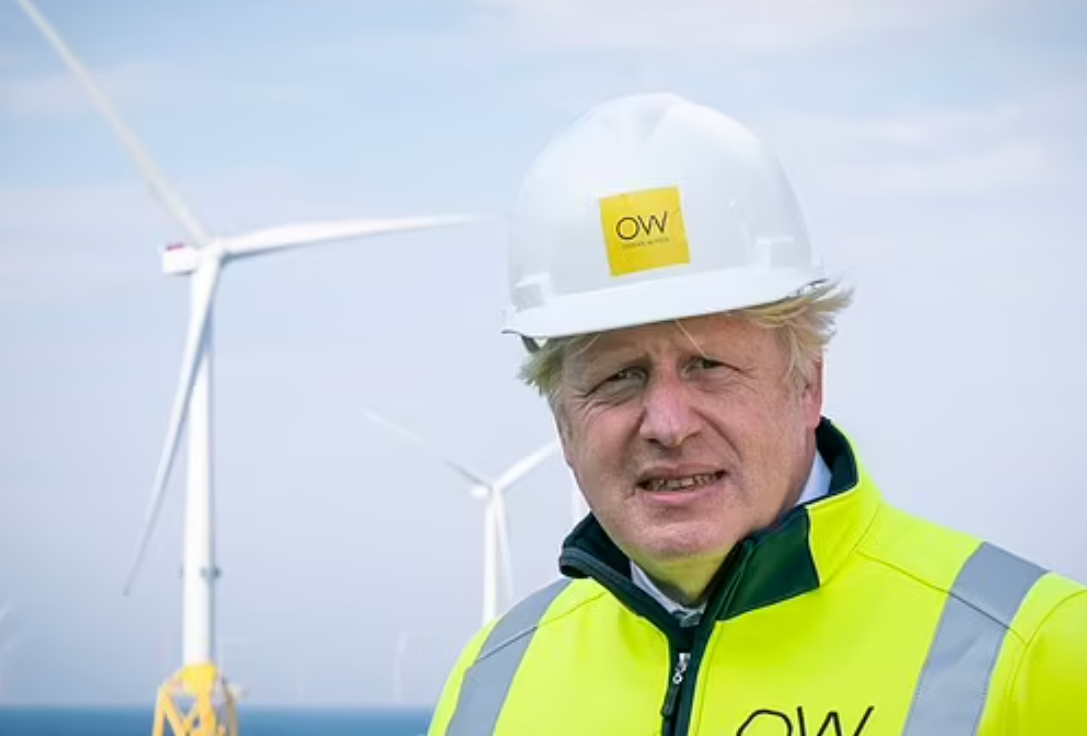
Thanks to the UK’s love affair with intermittent wind power, Brit’s power bills will double this April when a legislated price cap is lifted; UK power prices are already amongst the highest in Europe. And there is much worse to come.
Instead of coming to grips with its self-inflicted renewable energy calamity, its energy brains trust is behaving more like the three wise monkeys: seeing, hearing and speaking no evil against doling out even more subsidies for wind and solar.
True enough, Boris Johnson has plenty of other fish to fry at the moment, but with gas and electricity prices spiralling out of control, you’d think he would start addressing his country’s energy woes. But, not a bit of it.
Ross Clark takes us back a decade to where it all began.
Myopic politicians are wilfully blind to the truth about green energy
The Telegraph
Ross Clark
1 January 2022
View original post 1,479 more words
EPJ Scientific Study : There Is No ‘Climate Crisis’
08 Feb 2022 Leave a comment

INCONVENIENT study out of the esteemed EU Physical Journal Plus (EPJ) reaffirming that the “Climate Crisis” narrative is yet another deliberate and deceitful eco-slogan designed to frighten you into belief and compliance.
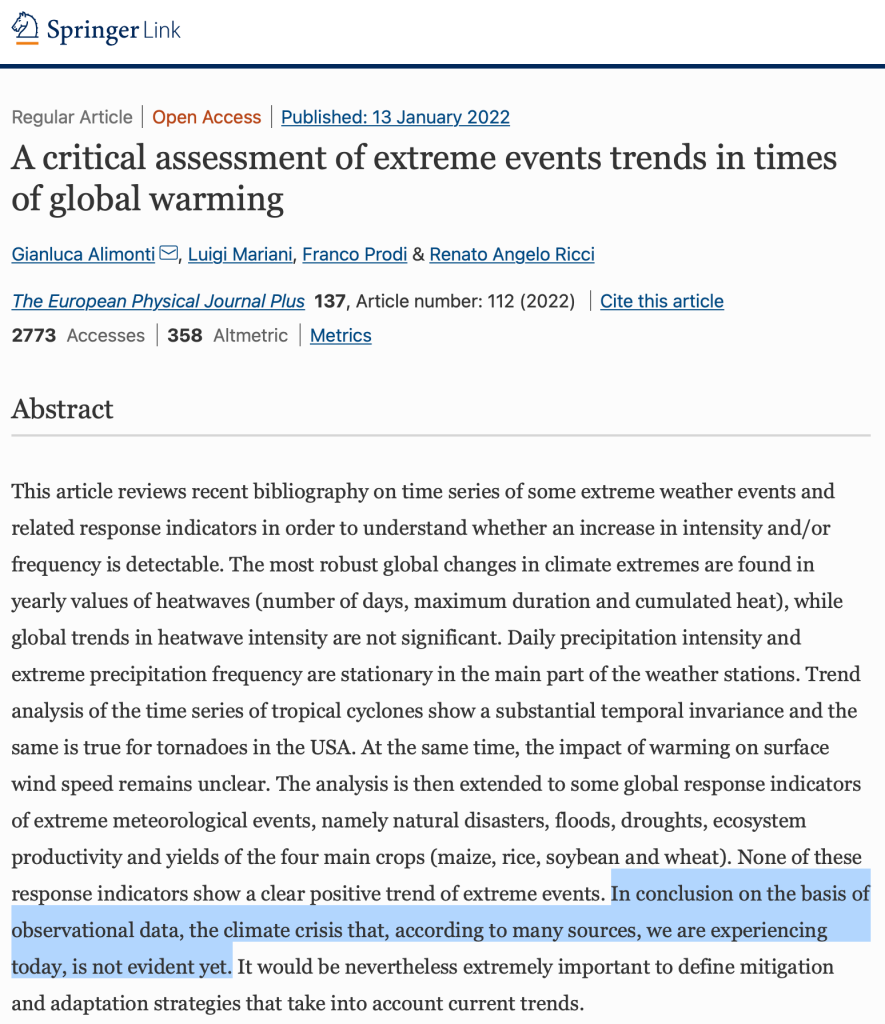
A critical assessment of extreme events trends in times of global warming | SpringerLink
Key quote: “…on the basis of observational data, the climate crisis that, according to many sources, we are experiencing today, is not evident yet.”
•
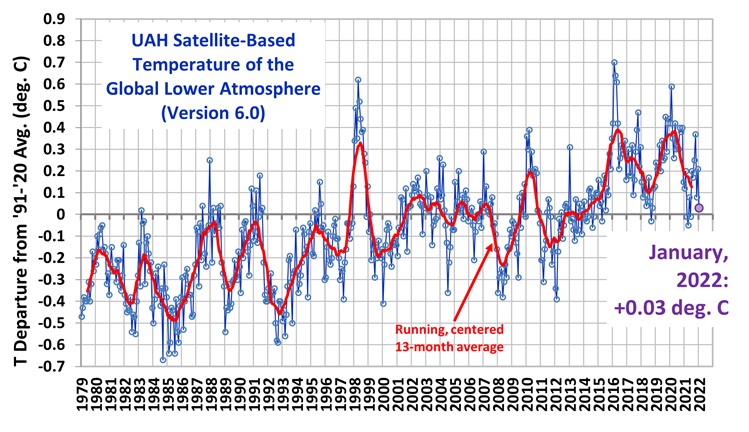
The latest data from UAH / NASA satellites shows that “global warming” is not a “crisis” either. January anomaly indicating a mere 0.03°C average rise in global temps over the past 40 years.
•
EXTREME WEATHER related :
UAH / NASA Satellite Global Temperature related :
View original post 3 more words
Longest Reigning British Monarchs
07 Feb 2022 Leave a comment

In honor of Her Majesty’s Platinum Jubilee I am updating the list of the longest reigning monarchs in British History.
This list covers the Kingdom of the Anglo-Saxons, England, Scotland, England and Scotland, Great Britain and the United Kingdom.
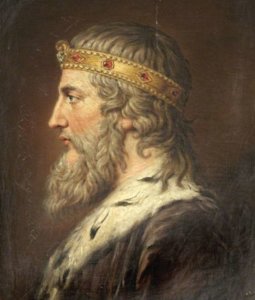 Alfred the Great, King of the Anglo-Saxons
1. Queen Elizabeth II of the United Kingdom ~ 70: years
2. Queen Victoria of the United Kingdom ~ 63 years, 216 days
3. King George III of the United Kingdom ~ 59 years, 96 days
4. King James VI of Scotland ~ 57 years, 246 days*
5. King Henry III of England ~ 56 years, 30 days
6. King Edward III of England ~ 50 years, 147 days
7. King William I of Scotland ~ 48 years, 360 days
8. Queen Elizabeth I of England ~ 44 years, 127 days
9. King David II of Scotland ~ 41 years, 260 days
10. King…
View original post 800 more words
Planet of the Apes (1968) Review
07 Feb 2022 Leave a comment

Planet of the Apes (1968) Director: Franklin J. Schaffner
“Take your stinking paws off me you damn dirty ape!”
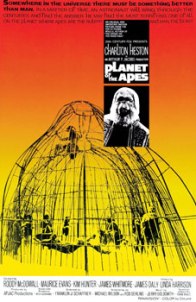
★★★★★
Released at the same time as Stanley Kubrick’s groundbreaking 2001: A Space Odyssey, Planet of the Apes is a brilliant science fiction film based on La Planète des singes(1963) by French writer Pierre Boulle. It explores a variety of compelling themes –evolutionary biology, space/time travel, and the nature of prejudice (appropriate for its themes Planet of the Apes was released one day before the death of Martin Luther King Jr). Television’s golden writer Rod Serling was hired to write the script (originally intended to be a Twilight Zone spin-off), but after a year or so Serling departed the project so the script cycled through different writers eventually settling on Michael Wilson, writer of Bridge on the River Kwai. Apparently the final script contained numerous departures from Boulle’s…
View original post 1,071 more words
Milton Friedman Why free markets work
07 Feb 2022 Leave a comment
in applied price theory, comparative institutional analysis, development economics, economic history, economics of regulation, growth disasters, growth miracles, history of economic thought, income redistribution, industrial organisation, international economics, liberalism, Marxist economics, Milton Friedman, property rights, Public Choice, survivor principle Tags: capitalism and freedom
Economic Growth Is the Best Way to Help the Poor, not Redistribution in Pursuit of Coerced Income Equality
06 Feb 2022 Leave a comment

Switzerland’s left-wing party has instigated a referendum for November 24 that asks voters to limit pay ranges so that a company wouldn’t be able to pay top employees more than 12 times what they’re paying their lowest-level employees.
I talked with Neil Cavuto about this proposal and made several (hopefully) cogent points.
Since Swiss voters already have demonstrated considerable wisdom (rejecting a class-warfare tax proposal in 2010 and imposing a cap on government spending in 2001), I predicted they will reject the plan. And I pointed out that Switzerland’s comparatively successful system is a result of not letting government have too much power over the economy.
But I don’t want to focus today on the Swiss referendum. Instead, I want to expand on my final point, which deals with the misguided belief by some on the left that the economy is a fixed pie and that you have…
View original post 298 more words
Europe’s Self-Inflicted Energy Catastrophe Driven By Hopelessly Unreliable Wind & Solar
06 Feb 2022 Leave a comment

Anyone looking for a taste of what the ‘transition’ to wind and solar might look like, need look no further than Europe. The best (worst) examples, Germany and the UK are in the middle of self-inflicted energy debacles, with many of their neighbours not far behind.
Mass wind droughts – that lasted months at the tail end of 2021 – made it evident that Europe’s overreliance on chaotically intermittent wind power is the product of a grand and collective delusion, driven by dogged and unshakeable ideology; not the first case of collective madness that Germans have experienced, that’s for sure.
Whereas the French retreated from their nuclear power retreat in response to the Big Calm, the Germans remain determined to shut their nuclear power plants, for good.
Being able to tap into coal-fired power from Poland and nuclear power from France is the only reason the Germans can engage in…
View original post 1,091 more words
Blame Canada’s Politicians for Trucker Protests
06 Feb 2022 Leave a comment

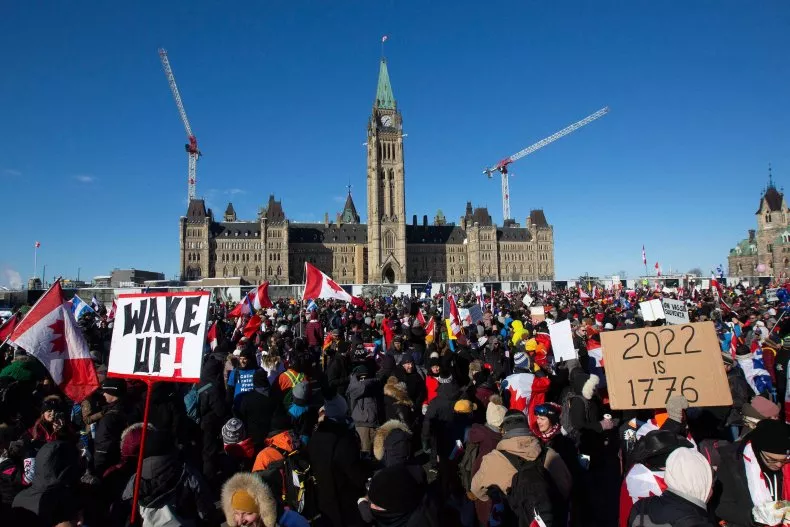 Supporters arrive at Parliament Hill for the Freedom Truck Convoy to protest against Covid-19 vaccine mandates and restrictions in Ottawa, Canada, on January 29, 2022. – Hundreds of truckers drove their giant rigs into the Canadian capital Ottawa on Saturday as part of a self-titled “Freedom Convoy” to protest vaccine mandates required to cross the US border. LARS HAGBERG / AFP/GETTY IMAGES
Raheem Kassam points the finger in the right direction in his Newsweek article Canada’s Politicians Only Have Themselves to Blame for Trucker Protests. Excerpts in italics with my bolds and added images.
If the prime minister of a North African or Middle Eastern nation was forced into hiding by a protest occupying his capital city, Dick Cheney and Hillary Clinton would materialize from thin air to call for U.S.-backed regime change.
“Government Loses Popular Support,” newspaper headlines would blare, amid calls for sanctions, State Department-NGO initiatives and…
View original post 694 more words
Reporting from Vietnam: A Review of ‘The Uncensored War: The Media and Vietnam’ by Daniel Hallin
06 Feb 2022 Leave a comment

News reports can sometimes be the most depressing things we see and hear on a daily basis. So much information is pumped out and consumed by the general public. The advent of social media and constant sharing of facts and misinformation has made communication among the people a harsh landscape. Stories and images shape our perception of the world and its people so we must be careful of what we internalize. Fifty years ago, news stories that occupied major time blocks prominently featured the Vietnam War. Given the divisiveness of the Vietnam War, many have argued that media and news outlets played a prominent role in the United States’ negative outcome. The high amount of reporting on stalemates, low troop morale, and coverage of the anti-war movement fostered conditions where the American public killed any support and led to the collapse of South Vietnam. This attitude amongst historians, journalists, and…
View original post 767 more words
How should the education and training sector respond to the Tiriti o Waitangi provisions in the Act?
06 Feb 2022 Leave a comment

How should the education and training sector respond to the Tiriti o Waitangi provisions in the Act?
The education sector must respond to Tiriti o Waitangi provisions outlined in S9 of The Education and Training Act 2021.
High-level expectations include honouring Te Tiriti, acknowledging its principles, andsupporting Māori-Crown relationships. Plans, policies and curricula are expected to reflect tikanga Māori, mātauranga Māori and te ao Māori. Instruction in tikanga Māori and te reo Māori are encouraged. Schools are expected to achieve equitable outcomes for Māori students.
The challenge is to understand Te Tiriti, including its context and limitations, and draw on guidance it can offer to achieve better outcomes for students and learners, including in workplace learning.
Anne Salmond’s Iwi vs Kiwi: Beyond the Binary offers insights into Te Tiriti and the issues associated with it. Te Tiriti can also be seen as a foundation for inclusive democracy in New…
View original post 2,835 more words
Comparing Economic Growth: United States vs. Europe
06 Feb 2022 Leave a comment
A key principle of economics is convergence, which is the notion that poorer nations generally grow faster than richer nations.
For instance, battle-damaged European nations grew faster than the United States in the first few decades after World War II.
But, starting in the 1980s, that convergence stopped. And not because Europe reached American levels of prosperity. Even the nations of Western Europe never came close to U.S. levels of per-capita economic output.
Moreover, European countries then began to lose ground for the rest of the 20th century.
And that process is continuing. Here’s a recent tweet from Robin Brooks, the Chief Economist of the Institute of International Finance, which shows that the United States was growing faster than Europe before the pandemic and is now growing faster than Europe after the pandemic.
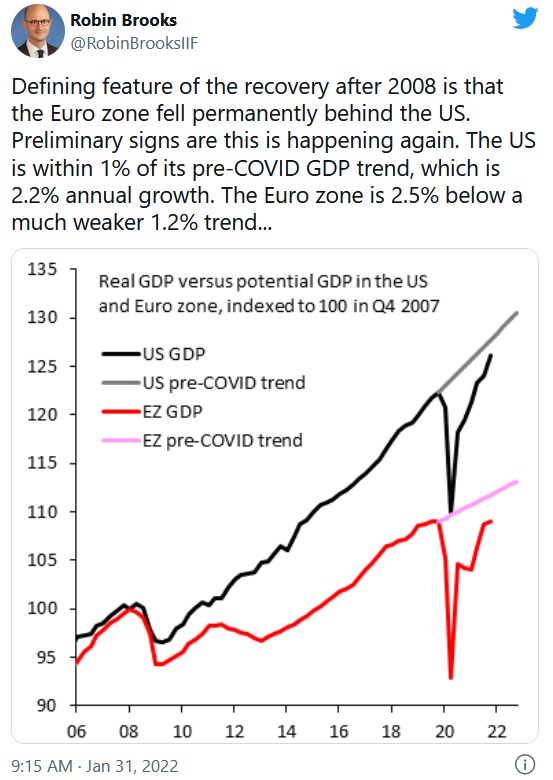
In other words, we’re seeing divergence.
Sven Larson addressed this same issue in a new…
View original post 485 more words


Recent Comments